The Mass Air Flow Sensor: Its Role, Failures, and Prevention Methods
table of contents:
|
The Mass Air Flow Sensor: Its Role, Failures, and Prevention Methods
The Mass Air Flow (MAF) sensor plays a critical role in engine efficiency and fuel consumption. However, when it fails, it can lead to serious issues to your car without prior warning. So, what are the common causes of failure, and how can they be prevented?
What is a Mass Air Flow Sensor?
- The MAF sensor is a key component of the engine management system. It accurately measures the volume of air entering the engine and sends this data to the Engine Control Unit (ECU), which then adjusts the amount of fuel needed to ensure optimal combustion.
- The sensor operates using fine wires or a thin film that detects airflow. However, these elements can be easily affected by dust or dirt buildup, which compromises measurement accuracy and engine performance.
Components of the MAF Sensor
The MAF sensor consists of several main parts, including:
- Outer Housing: Typically made from heat- and corrosion-resistant materials to withstand the harsh engine environment.
- Hot Wire or Hot Film Element: This is the core measuring component. It is electrically heated and cooled by incoming air. The change in its temperature is used to calculate the volume of air passing through.
- Electronic Circuitry: Contains components that convert the sensor’s readings into electrical signals, which are then sent to the ECU for processing.
Importance of the MAF Sensor
- Enhances fuel efficiency by precisely adjusting the air-to-fuel ratio, ensuring optimal combustion and reducing fuel consumption.
- Provides accurate data that improves engine responsiveness and operational efficiency.
- Helps reduce harmful emissions by ensuring complete combustion.
What Does the MAF Sensor Do?
The MAF sensor is central to engine management. It provides real-time data on incoming air volume. Its key functions include:
- Precisely measuring the intake airflow using a hot wire or film sensitive to air temperature changes.
- Sending real-time data to the ECU, which adjusts fuel injection accordingly to achieve ideal combustion.
- Reducing fuel consumption and enhancing overall vehicle efficiency.
- Boosting engine performance, throttle response, and horsepower.
- Lowering harmful exhaust emissions through complete combustion.
- Assisting in detecting faults such as leaks or blockages via irregular readings.
- Enabling the engine to adapt to changing environmental conditions, such as altitude, temperature, and humidity.
Symptoms of a Faulty MAF Sensor
A malfunctioning MAF sensor can lead to various issues affecting vehicle performance. Early detection of these signs can help diagnose the problem and take timely action. Key symptoms include:
- Increased fuel consumption due to incorrect air-fuel ratio calibration.
- Poor acceleration and power loss caused by insufficient airflow, leading to incomplete combustion.
- Difficulty starting the engine or unexpected stalling due to an imbalanced air-fuel mixture.
- The “Check Engine” warning light appearing on the dashboard, often signaling engine management issues.
- Abnormal exhaust emissions, such as black or gray smoke from incomplete combustion.
- Engine vibration or rough idle caused by inconsistent air intake.
- Strong fuel odor due to unburnt fuel.
- High idle RPM as the system attempts to compensate for incorrect air readings.
- Struggles during low-speed driving or under heavy load, such as sluggish response or difficulty climbing hills.
Causes of MAF Sensor Failure
Several factors can lead to MAF sensor failure, affecting its accuracy and efficiency. Common causes include:
- Not replacing or cleaning the air filter regularly, leading to dust accumulation on sensor components and inaccurate readings.
- Oil leaks or exposure to chemicals near the sensor can contaminate it and degrade its performance.
- Severe vibrations or shocks from rough terrain or accidents may damage internal components.
- Exposure to extreme heat beyond the sensor’s operating limits can cause failure.
- Moisture or water entering the sensor may damage the electronic circuitry, especially if it lacks proper sealing.
- Natural wear and tear over time can reduce sensor efficiency, eventually leading to failure.
- Improper installation or faulty wiring connections can result in malfunction or sensor shutdown.
- Using non-OEM or low-quality replacement parts may lead to early failure or incompatibility with the engine system.
How to Prevent MAF Sensor Failure
To prevent MAF sensor damage, consider the following tips:
- Replace the air filter regularly to maintain clean airflow and minimize dirt accumulation on the sensor.
- Avoid using chemicals near the sensor to prevent contamination.
- Drive carefully on rough roads to reduce exposure to shocks and vibrations.
- Conduct periodic vehicle inspections to detect leaks or issues that may affect sensor performance.
- Use genuine replacement parts to ensure compatibility, reliability, and optimal sensor function.
FAQs
Related Blogs

Driving License Renewal on Absher: Requirements and Steps
Table of Contents:
|
Driving license renewal in Saudi Arabia is done electronically through the Absher platform under traffic services, without visiting traffic offices, provided you complete the regulatory requirements such as paying the fees and completing a medical examination. This electronic service covers private driving licenses and motorcycle licenses only, and the remaining validity of the license must be less than 365 days. This guide explains the requirements as shown on the official service page at the time of writing, the renewal and delivery steps, why a request may not proceed, and how it differs from renewing the vehicle registration (Istimara).
What Is the Driving License Renewal Service on Absher and Who Can Use It?
The driving license renewal page on the National Portal describes a service that lets individuals renew their driving license electronically, easily and efficiently, without visiting traffic offices. It lists the service duration as immediate and the delivery channels as the website portal and smartphone apps. The Absher service guide defines the beneficiary as a citizen or resident who is registered and activated on the Absher platform.
So first make sure your Absher account is active and that you can log in, then check your license type. According to the prerequisites tab, the service covers renewing private driving licenses and motorcycle licenses only. If your license is of another type, do not assume this service will accept it; ask the official traffic channels about the right procedure for your case.
What Are the Published Driving License Renewal Requirements?
The official service page lists the following requirements. Use the table as a checklist before logging in to Absher, while following what the service displays for your case when you apply. Requirements may be updated, and the service page at the time you apply is the reference.
| Requirement as Shown on the Service Page | What to Check Before Starting |
| A private or motorcycle driving license | The license type recorded in your details |
| Payment of license renewal fees through government payments via banks | That payment was actually made for the correct service, not just that a payment screen was opened |
| Payment of traffic violations, if any | The status of any violations recorded against you before applying |
| Remaining license validity of less than 365 days | Your expiry date, using the driving license information service |
| A medical examination through a certified medical center | That the examination was done at a certified center |
The required documents tab repeats payment of any violations, payment of the renewal fees and the medical examination, and does not mention uploading photos or extra papers. Do not rely on circulated lists that add unpublished documents. If you have violations, review how to check and pay traffic violations before starting the renewal.
What Are the Steps for Driving License Renewal on Absher?
The following steps are taken from the service page on the National Portal. If the menus look different in your interface, look for the driving license renewal service under traffic services, and do not choose a similarly named service such as vehicle registration renewal.
- Log in to the Absher platform.
- Select “My Services”.
- Choose “Traffic” from the services list.
- Select the “Renew Driving License” service.
- Read the service description, terms and conditions, then select “Next”.
- Review your personal information, specify the renewal period (2 years, 5 years or 10 years), then select “Confirm Renewal”.
- Fill in your National Address details for license delivery.
- Review the entered data.
- Pay the delivery fees using a card (Visa, Mada, Mastercard).
- A message confirms that the driving license renewal is completed.
Note that the payment inside these steps is for delivery. For the renewal fees themselves, the prerequisites tab says they are paid through government payments via banks. This guide does not state amounts for any period; follow what the service shows for your case. Before filling in the address, make sure your National Address is correct, because it is used for the license delivery request.
Closing the screen or completing a payment alone does not prove the renewal is complete. Check for the success message, then review your license details before repeating any step if your session was interrupted.
Why Can License Renewal Fail to Proceed, and What Should You Check?
The service page does not publish a list of error messages, but the published requirements help you identify which item to review. Always start with the text of the message shown in your account, then compare it with the following possibilities:
- The remaining validity of the license is not less than 365 days; check the expiry date through the driving license information service.
- The renewal fees have not been paid or the payment has not appeared yet; review the transaction status and receipt before paying again.
- There are unpaid traffic violations; do not assume that filing a dispute replaces this requirement before its outcome is clear.
- There is no medical examination from a certified medical center.
- The license type is not covered, because the service is limited to private and motorcycle licenses.
- The account is not registered or activated on Absher, since the service guide defines the beneficiary as a registered and activated user.
If the message is unclear, note its text, the time of the attempt and the stage where you stopped, then contact the official support channels shown on the service page. Never share your password or verification code with anyone, and do not treat a failed attempt as a final rejection without confirmation from the competent authority.
How Does Driving License Renewal Differ From Istimara Renewal?
The two documents are often confused because both are called a license. The driving license belongs to the driver, while the Istimara is the vehicle registration and relates to the car itself. Each therefore has its own Absher service and its own requirements, so do not apply the conditions of one to the other.
The medical examination and the remaining license validity are published requirements for driving license renewal and have nothing to do with the condition of your car. If what you need to renew is the vehicle document, follow the guide to vehicle registration renewal on Absher and why it may fail, which explains that service’s requirements and steps.
Likewise, vehicle insurance does not appear among the driving license renewal requirements on the service page. If you are reviewing your car insurance at the same time for other reasons, read about comprehensive versus third-party car insurance to choose a suitable policy.
Frequently Asked Questions About Driving License Renewal
Can I renew my driving license without visiting a traffic office?
Yes, according to the official service page: the service is electronic through Absher without the need to visit traffic offices, provided the regulatory requirements are completed. If your case cannot proceed, follow the service message and the competent authority’s guidance.
How early can I renew my license before it expires?
The prerequisites tab requires the remaining validity of the license to be less than 365 days. You can check your license validity electronically through the driving license information service listed among the related services.
Is a medical examination required for driving license renewal?
Yes. The official page lists a medical examination through a certified medical center among both the prerequisites and the required documents. Complete the examination at a certified center before starting the service.
What renewal periods are available?
The service steps mention choosing the renewal period of 2 years, 5 years or 10 years while reviewing your details. Choose from the options shown to you and review what applies to each option as displayed in the service.
How do I receive my license after renewal?
The steps include filling in your National Address details for license delivery and then paying the delivery fees by card. The National Portal also lists a digital driving license display service among the related services, which is separate from renewal.
Conclusion
Prepare the driving license renewal requirements first: pay the fees and any violations, complete the medical examination at a certified center, and confirm that the remaining validity meets the published condition. Then follow the steps on Absher and check for the success message. If the request cannot proceed, address the item identified in the message or request clarification through the official channels.

Mojaz Report: How to Read Used Car History and Its Limits
Table Of Contents:
|
A Mojaz report helps you read a used car’s history through the records available; it does not deliver a final verdict on its condition. Start by matching the vehicle’s identity, then read mileage, accident and maintenance records chronologically and compare them with documents and the car’s current condition. No accident record does not mean accident-free, and missing mileage readings do not validate the odometer. Use the report to identify seller questions and professional inspection priorities before deciding to buy, not as a replacement for inspection.
What does a Mojaz report show, and what are its limits?
The official Mojaz homepage (in Arabic) says it brings together key historical vehicle data from official sources in one report. Its report outline lists vehicle information, odometer reading history, accident records, maintenance and repairs, warranty information, spare parts, vehicle reputation and related images.
These are section names presented by the service, not a promise that every section contains data for every car. Read what is actually available, and do not turn a blank field into a positive or negative finding. Likewise, do not infer a specific rating or acceptance standard from the vehicle reputation heading; use any accompanying explanation and ask about unclear descriptions before relying on them.
Start by matching the car and the report version
Before discussing findings, establish that the report belongs to the actual car being offered. Ask to see the full version rather than a cropped image of a reassuring section, and match its identification details to the vehicle documents and the car. Do not rely on a similar colour or general description, or dismiss an identification mismatch as a minor error without checking.
- Check the VIN if shown, comparing every character with the documents and its designated location on the car; seek professional help if anything is unclear.
- Note the report date if visible, distinguishing it from the event dates inside; a recent report may contain only an older record.
- Write down any data mismatch and ask for an explanation before evaluating mileage or accidents or concluding the agreement.
For identification details and their locations, see the guide to vehicle identification numbers, while paying attention to the name of each identifier in the document you are reading.
How do you read odometer records chronologically?
Read the date of each distance reading, not just the last number. Put the available readings in order from oldest to newest, then compare the latest with the car’s odometer during the viewing. Check measurement units first; do not directly compare figures expressed in different units. Your aim is to understand the sequence and identify questions, not estimate true mileage from cabin appearance alone.
- Write the date and reading exactly as shown, distinguishing report information from something the seller says or a figure on an invoice.
- If a later reading is lower than an earlier one, request a documented explanation and discuss possibilities with a professional; the inconsistency warrants a pause but is not a standalone diagnosis of tampering.
- If there is a long gap, ask for documents covering that period; do not assume the car was unused throughout it.
- If there are no readings at all, note that mileage has not been verified through this method instead of automatically accepting the current figure.
If the seller mentions an odometer replacement, ask for the work record and evidence of readings before and after replacement, if available. Do not fill a missing sequence with estimates or treat consistent readings alone as a guarantee that the entire usage history is known.
How should you interpret accident records and available images?
If an accident record appears, read its details as written and compare them with repair documents supplied by the seller. Do not reduce the assessment to a record count or label damage minor or severe without supporting information. A report may describe a historical event, while repair quality and present condition need an independent inspection.
If related images appear, check their connection to the event, the vehicle and their date whenever that information is available. A photograph does not reveal everything behind visible parts, and missing images do not rule out damage. Where structural repairs are suspected, request a specialist inspection. The guide to signs of bodywork and structural repairs can help you frame questions, not make your own technical verdict.
If no accident record appears, the accurate wording is: no event is visible in the data you are reading. Do not replace that with the car has never had an accident, or let that inference cancel the inspection or the request for repair documents.
How do you relate maintenance and repairs to current condition?
Read available maintenance and repair entries with their dates, comparing them with the seller’s invoices. Distinguish a record of past work from proof that the relevant system works well today. If a repair description recurs, ask what was done and what happened afterwards, without automatically assuming a particular fault or an unsuccessful repair.
Warranty information alone does not mean cover is active or transferable to you; verify the document and terms with the relevant provider. Equally, do not infer from a spare parts section that every component is genuine or in good condition. A missing maintenance record does not prove neglect, but leaves a question requiring documents and inspection.
Compare documented work with the appropriate owner’s manual requirements alongside a professional. Do not derive a new servicing schedule from the report or assume one completed job means all other scheduled work was done or related components are sound.
A reading checklist: information and limits of inference
Use this table to organise your notes; it is not a real sample vehicle report. Always distinguish what you read, what you still do not know and the next step needed to close that gap.
| What you read | What it does not prove alone | Next step |
| Consecutive odometer readings | Complete mileage history | Compare with the odometer and documents |
| No odometer readings | Accuracy of current mileage | Seek more evidence and document the gap |
| An accident record | Current repair quality | Repair documents and specialist inspection |
| No visible accident record | An accident-free car | Professional body and paint inspection |
| Recorded maintenance work | The component’s condition today | Compare with the current inspection |
| Warranty information | Active cover for the buyer | Verify terms with the relevant provider |
Which questions should you ask the seller?
Start with an open question about the car’s usage history, then address unclear report entries. Request specific answers that can be connected to documents; personal trust or numerous photographs are not substitutes for verification. Keep your notes separate from the original report so your interpretations do not become confused with its records.
- Is this the full version for this exact vehicle? Which documents support the details or explain a visible discrepancy?
- Has the odometer been repaired or replaced? Are invoices or saved readings available for periods with no visible record?
- Are you aware of body repairs, repainting or accidents not shown here? What work was done and which documents are available?
- Where was the most recent service performed, what was actually done, and which recommended jobs remain outstanding?
- Will you allow an independent inspection and a review of findings before agreement? How can your explanation of a record mismatch be documented?
What still needs inspecting before you decide to buy?
Give the professional your report and notes before inspection, and request an assessment of the current structure, mechanical and electrical systems and safety components. Do not simply seek confirmation of an existing impression: ask what was checked and what could not be verified. To organise the rest of the viewing, see the used car inspection tips before purchase.
If a material identity or mileage discrepancy appears, or a significant repair remains unexplained, postpone the decision until it is clarified. If the gap cannot be closed, treat it as unknown information rather than proof of sound condition. Once the technical assessment is settled, review the vehicle ownership transfer steps on Absher separately; a history report does not replace the sale procedures.
Frequently asked questions about reading a Mojaz report
- Does no accident record mean the car is sound? No. It means an accident record is not visible in the available data you read. Body condition and repair quality still need inspection.
- Does the report validate the car’s mileage? Available reading sequences help comparisons but do not guarantee a complete history. If readings are missing, mileage cannot be accepted on the report alone.
- Is every section available for every car? Do not assume this from the section names on the website. Read the actual content and ask about missing information or unclear wording.
- What if the report contradicts the seller? Identify the conflicting entry, ask for a document explaining it and show it to a professional. Neither ignore the conflict nor automatically turn it into an accusation.
- Does a Mojaz report replace a technical inspection? No. A history report presents available historical information, whereas an inspection assesses current condition within its scope. Combine both with documents before deciding.
In short, read a Mojaz report as available evidence and open questions, not a certificate that the car has no defects. Match its identity, review the timeline and connect the findings with documents and an independent inspection. A stronger decision clearly distinguishes what is established from what remains unknown.

Vehicle Driving Authorization on Absher: Conditions and Steps
Table of Contents:
|
Vehicle driving authorization on Absher is an electronic service that lets a vehicle owner add an authorized person to drive the vehicle inside or outside the Kingdom, depending on the type of authorization selected. The owner starts from Vehicles, then Manage Vehicles, selects the vehicle, chooses Authorize Vehicles and then Issue Authorization. Before that, the vehicle registration must be valid with active insurance, and both parties must have Absher accounts. This guide covers the conditions, steps, period limits, the difference from ownership transfer and what the owner should check first.
What Is Vehicle Driving Authorization on Absher?
The official Issue an Authorization service page on the National Portal says the service allows you electronically to add an authorized person to drive a vehicle inside or outside the Kingdom, depending on the selected type of authorization. The service belongs to the Ministry of Interior, targets individuals, both citizens and residents, and lists its channels as the website portal and the iOS and Android apps.
The authorization is therefore permission to drive, not a sale or a transfer of ownership. The vehicle owner issues the authorization, and the authorized person is added to drive within the selected type and period. Read the service name in your account carefully and do not confuse it with other vehicle services in the same menu.
What Are the Vehicle Authorization Conditions and Required Documents?
The Prerequisites tab of the official service page lists the following conditions, as shown at the time of writing:
- The vehicle registration license must be valid and have active insurance.
- The authorization period must not exceed the validity of the vehicle registration license.
- The authorization period must not exceed the validity of the authorized person’s driving license.
- Authorization cannot be granted to someone holding a final exit visa.
- The authorization period must not exceed the duration of the exit and re-entry visa if the authorized person holds one.
The Required Documents tab lists the following:
- The authorizer must be the vehicle owner.
- The vehicle must have valid insurance.
- Both the authorizer and the authorized person must have active Absher accounts.
- For an external authorization, the authorized person must hold an exit and re-entry visa whose duration is linked to the authorization period.
The text we reviewed adds no other conditions, so follow what the service requests for your case rather than lists circulating in forums or messages.
What Are the Steps to Authorize a Vehicle on Absher?
The following steps come from the official service page. Menus may look different in the portal and the app, so look for the same names:
- Log in to Absher with the vehicle owner’s account.
- Select "Vehicles".
- Click on "Manage Vehicles".
- Select the vehicle you want to authorize and check its details.
- Choose "Authorize Vehicles".
- Click on "Issue Authorization", enter the required information and select the type of authorization.
The page describes the service duration as immediate, but do not rely on pressing the issue button alone; review what the service displays after submission to confirm the transaction is complete. If a message prevents issuing the authorization, return to the conditions above and start with the item the message refers to, such as insurance validity or the validity of one of the licenses, instead of retrying without changing anything.
Driving Authorization Inside and Outside the Kingdom: What Differs?
The page states that the authorization applies inside or outside the Kingdom depending on the type of authorization you select in the final step. Decide the purpose before you start: will the authorized person drive only inside the Kingdom, or do they need to drive the vehicle abroad?
For an external authorization, the Required Documents tab requires the authorized person to hold an exit and re-entry visa. The page links the visa duration to the authorization period, but the Prerequisites wording (the authorization period must not exceed the visa duration) runs in the opposite direction to the Required Documents wording (the visa must not exceed the authorization period), so follow what the service accepts for your case. A holder of a final exit visa cannot be added as an authorized person.
The service page does not address the requirements of other countries or border crossings when travelling by car, so ask the competent authorities about this before relying on the authorization alone.
How Long Does the Authorization Last and How Is It Cancelled?
The service page does not set a fixed authorization period; it sets upper limits instead. The period must not exceed the validity of the vehicle registration, the validity of the authorized person’s driving license, or the duration of their exit and re-entry visa if they hold one. In practice, whichever of these dates expires first limits the period you can choose.
As for cancellation, the pages we reviewed do not explain the steps. Start from the Authorize Vehicles screen in the owner’s account and review the options shown to you. If nothing fits your case, ask the official Ministry of Interior support channels, and do not rely on an unofficial explanation that mentions a specific button or period.
If the vehicle registration is about to expire, review the vehicle registration renewal steps on Absher before choosing the authorization period, because the period may not exceed the registration validity.
How Does Authorization Differ From Ownership Transfer?
Some people confuse allowing someone to drive the car with selling it to them. As the service describes it, authorization adds an authorized driver and is issued by the vehicle owner, while ownership transfer is a separate procedure that changes the owner. The table summarises the difference:
| Item | Driving Authorization | Ownership Transfer |
| Purpose | Add an authorized person to drive the vehicle | Transfer vehicle ownership to another owner |
| Who starts it | The vehicle owner, according to the service page | According to the sale service conditions |
| Does the owner change? | The service describes no change of ownership | Yes, that is the purpose of the procedure |
| Period limits | Not beyond the registration and the authorized person’s driving license validity | Follows the transfer service conditions |
If your aim is to sell or buy the car, authorization is not a substitute for a sale; review the Absher ownership transfer steps and sale conditions to complete the correct procedure.
What Should the Owner Check Before Issuing the Authorization?
The official conditions determine whether the authorization can be issued, but they do not answer every practical question. Before issuing it, review the following points:
- Registration: confirm it is valid and note its expiry date, because that date limits the authorization period.
- Insurance: confirm the policy is valid for the same vehicle, then read its terms or ask the insurer about someone other than the owner driving, and do not assume any particular cover simply because the authorization was issued. To distinguish policy types, read about comprehensive versus third-party car insurance.
- Authorized person: confirm their driving license is valid, that they have an Absher account and, for a resident, their visa status.
- Purpose and period: choose the authorization type and period according to your actual need, not longer.
If an accident happens while the authorized person is driving, learn the steps to take after a car accident and Najm reporting. The service page does not address how responsibility for accidents or violations is shared between the owner and the authorized person, so do not build assumptions on it; ask the competent authority or your insurer about your case.
Frequently Asked Questions About Vehicle Driving Authorization
Must the person issuing the authorization be the car owner?
Yes. The Required Documents tab states that the authorizer must be the vehicle owner. The authorization is therefore not issued from the account of someone who does not own the vehicle, even if they usually drive it.
Does the authorized person need an Absher account?
Yes. The page requires both the authorizer and the authorized person to have Absher accounts. Confirm this before starting so the process does not stop when you enter the details.
Can someone holding a final exit visa be authorized?
No. The prerequisites state that authorization cannot be granted to someone holding a final exit visa. For a holder of an exit and re-entry visa, the authorization period is tied to the visa duration.
Can I authorize if the registration or insurance has expired?
The published condition is a valid vehicle registration with active insurance. If either has expired, resolve it first and then return to the authorization service.
Does authorization mean the insurance covers the authorized person?
The service page mentions insurance only as a condition for issuing the authorization. Review your policy and its terms with your insurer before allowing another person to drive.
Conclusion
Vehicle driving authorization on Absher starts from the owner’s account and requires a valid registration, active insurance and Absher accounts for both parties, with its period limited by the validity of the licenses and visa. Choose the right authorization type, review your insurance policy and do not use authorization as a substitute for ownership transfer.
How to Test MAF Sensor Readings and Clean the Sensor
Table of Contents:
|
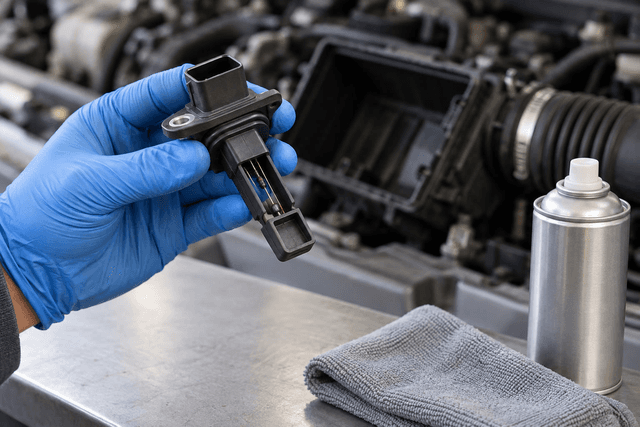
How to test MAF sensor readings correctly starts with ruling out simple causes such as a clogged air filter or air entering after the sensor, then a visual inspection, then reading codes and live data with an OBD-II scan tool and comparing them with what the service data states or the technician expects. If the sensor is dirty, clean it only with a spray made for MAF sensors and without touching the sensing element. Your owner’s manual and a qualified technician remain the reference for your car’s values and procedures.
What Does the MAF Sensor Measure and When Should You Suspect It?
The MAF (mass air flow) sensor usually sits between the air filter box and the throttle body and measures the amount of air entering the engine, so the engine computer can calculate the right amount of fuel. It differs from the manifold absolute pressure (MAP) sensor, which measures pressure inside the manifold, and from the intake air temperature sensor, which may be built into the MAF sensor housing. Some engines rely on a MAP sensor instead of a MAF sensor or alongside it, so first confirm which sensor your car has.
Symptoms may include the engine warning light, an unstable idle, misfiring, weak pulling and higher fuel consumption, and they are shared with many other faults; so see MAF sensor symptoms, causes and prevention for details, and causes of power loss under acceleration if weak pulling is the main symptom.
Which Simple Causes Should You Rule Out Before Testing the Sensor?
Many abnormal readings are caused by what surrounds the sensor rather than the sensor itself. Check the following with the engine off and cold:
- Air filter: a clogged or poorly seated filter may restrict airflow or let dust reach the sensor. Review the signs your car needs a new air filter.
- Air entering after the sensor: the sensor does not measure this air, so the air-fuel mixture may be upset and symptoms may resemble a sensor fault.
- Intake hose and clamps: look for a crack, a loose hose or a slack clamp between the sensor and the throttle body.
- Sensor connector: make sure it is firmly seated, its pins are free of corrosion and moisture, and its wires are intact.
How to Test MAF Sensor Readings Step by Step
Order the tests from the simplest to the most precise, and do not move on before finishing the previous step:
- Visual inspection: look for dirt, oil traces, damage or a foreign object in the air path, without touching the delicate sensing element with your fingers or any tool.
- Reading codes and live data with an OBD-II scan tool, usually the most important step.
- Unplug test: an indicative test that a technician performs with care, and it should not be relied on alone.
- Multimeter check: an electrical test that differs from car to car and is done according to the service manual.
How Do You Read Fault Codes and Live Data With a Scan Tool?
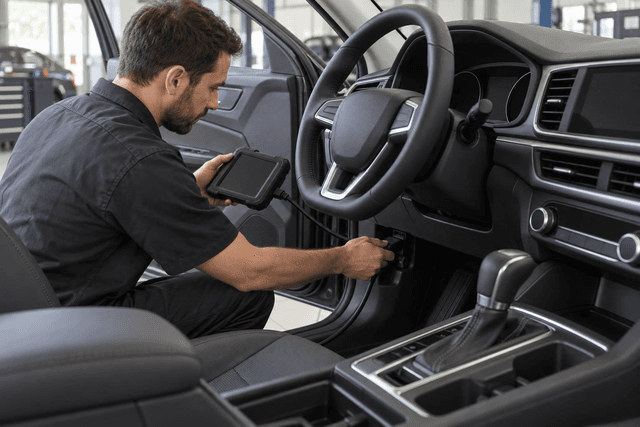
Connect the scan tool to the diagnostic port under the dashboard, and note the stored and pending codes and the freeze frame data before clearing anything. Codes may point to the sensor circuit, a reading out of range, or a lean or rich mixture; for other reasons, see the common causes of the engine warning light.
Then open the live data and watch the sensor reading:
- At idle: once the engine reaches operating temperature, compare the reading with what the service data states or the technician expects for your engine.
- When raising the revs gradually: the reading is expected to rise smoothly, while jumps, dropouts or a flat reading may point to a problem with the sensor or its wiring.
- Fuel trims: the technician reads them alongside the sensor reading, as their pattern may help distinguish unmetered air from an inaccurate reading.
Do not rely on figures published for other cars, because values vary with the engine and its design.
Is the Unplug Test Reliable, and When Is a Multimeter Used?
In this test the technician unplugs the sensor connector with the engine off and then starts it to see whether its behaviour changes, since the computer usually falls back on estimated values without the signal. If performance clearly improves, this may suggest an inaccurate reading, but the result is indicative, not a final verdict.
Some cars enter limp mode, run worse or show no change at all, and a fault code is stored because of the disconnection; so the test stays with the technician as part of a broader diagnosis, and the car should not be driven with the sensor unplugged.
A multimeter is used to check the supply, ground and signal, but connector pins and the measuring method differ between cars, and some sensors send a frequency signal that a standard measurement cannot read; so it follows the wiring diagram in the service manual or is done by a qualified technician.
How Do You Clean a MAF Sensor Correctly?
Cleaning helps when the sensor is dirty but sound; it does not fix an electrical fault. Follow the cleaner’s label; in general:
- Switch the engine off, let it cool, and work in a well-ventilated place away from flames, as cleaning sprays are usually flammable.
- Disconnect the sensor connector, then remove the sensor carefully with the right tool, as some sensors use special screws.
- Spray the sensing element with a cleaner made for MAF sensors only, from the distance recommended on the can, without touching it or wiping it with a cloth, brush or cotton bud.
- Let it air-dry completely, and never install it while wet.
- Refit the sensor and connector, tighten the intake hose and clamps, then start the engine and watch its behaviour and the engine warning light.
Which Mistakes Damage the MAF Sensor During Cleaning?
Avoid the following, because it may damage the sensor or hide the fault instead of fixing it:
- Using brake cleaner, carburettor cleaner or general solvents, which may leave residue or damage plastic and the sensing element.
- Blowing compressed air or spraying water, which may damage the delicate element or let moisture reach the circuit.
- Touching or wiping the sensing element, or cleaning while the engine is running or hot.
- Over-oiling washable air filters, because excess oil may travel with the air and contaminate the sensor; follow the filter instructions or use the filter specified in the manual.
- Clearing codes straight after cleaning before confirming the cause has been addressed.
Once the real cause has been addressed, the codes can be cleared and the repair verified with normal driving and another look at the live data; the computer may need some driving to relearn its fuel trims. If the code returns, the problem is not solved yet.
When Is Cleaning Enough and When Does the MAF Sensor Need Replacing?
Cleaning is often enough if the reading returns to a normal pattern and the symptoms disappear. Replacement is considered when:
- The sensing element is broken, the sensor body is cracked or its terminals are damaged.
- The reading stays abnormal after cleaning and after ruling out air leaks and wiring or connector problems.
- The technician confirms with a scan tool or electrical measurement that the fault is inside the sensor itself.
When replacing it, choose a part matching the part number or the vehicle identification number, as a non-matching sensor may give wrong readings. If high fuel consumption continues after the repair, review the causes of higher fuel consumption, as there are many other possible reasons.
What Do the Test Results Mean and What Is the Next Step?
The table summarises common findings; all of them are possibilities that need confirmation:
| Symptom or finding | What it may mean | Next step |
| Clogged or poorly seated air filter | Restricted airflow or dust reaching the sensor | Replace the filter as per the manual, then retest |
| Cracked hose or slack clamp after the sensor | Air entering that the sensor does not measure | Fix the leak before judging the sensor |
| Dirt or oil traces on the sensor | Inaccurate reading | Clean it with the dedicated spray and find the oil source |
| Reading does not rise smoothly with revs | Dirty or failed sensor or a wiring problem | Clean it, then have the wiring and reading checked by a technician |
| Code related to the sensor circuit | Fault in the connector, wiring or sensor | Inspect the connector and request electrical testing per the service manual |
| Code returns after cleaning and repairs | Fault inside the sensor or an undetected cause | Diagnosis by a qualified technician; replacement may be needed |
Frequently Asked Questions About Testing and Cleaning the MAF Sensor
How do I know if the MAF sensor is bad?
Symptoms alone are not enough because they resemble other faults. Confirmation comes from reading codes and live data after ruling out the air filter, air leaks and the connector, preferably with a qualified technician.
What is the best spray for cleaning a MAF sensor?
A product whose label clearly states that it is made for MAF sensors, leaves no residue once dry and is safe on plastic parts. Read the label and follow its instructions.
Can I clean the MAF sensor with brake or carburettor cleaner?
This is not recommended, because these cleaners are harsher than needed and may leave residue or damage the sensing element.
Should I clear the fault code after cleaning the MAF sensor?
Clear it only after the cause has been addressed, then verify by driving and checking the live data. Clearing the code does not fix the fault, and if it returns, have it diagnosed.
Can I drive the car with a faulty MAF sensor?
It may remain drivable, with performance and fuel consumption affected. But if the engine warning light flashes, the engine clearly loses power or a red warning appears, avoid driving and call for help.
Conclusion
The right way to test a MAF sensor starts with ruling out the air filter, air leaks and the connector, then a visual inspection, then reading codes and live data. Clean the sensor with a dedicated spray without touching the sensing element, do not clear codes before the cause is addressed, and leave electrical tests and the replacement decision to a qualified technician.
Transmission Limp Mode: Stuck in Gear, Causes and What to Do
Table of Contents:
|
An automatic transmission stuck in one gear and not shifting has usually entered what is known as emergency or protection mode, commonly called transmission limp mode: the transmission computer detects a fault and holds a fixed gear to protect itself and let you reach a safe place. The cause may be linked to the transmission fluid or its temperature, a sensor or electrical connection, a weak battery or internal wear. The right response is to stop safely, watch the dashboard warning lights, avoid driving long distances and then have the fault codes read with a scan tool by a qualified technician.
What Is Transmission Limp Mode?
A modern automatic transmission is controlled by an electronic unit called the transmission control unit (TCU), often referred to as the transmission computer. The unit relies on sensor readings to decide when to shift, and operates electric valves (solenoids) that direct fluid pressure to the internal clutches.
When it receives an implausible reading or detects a significant fault, it may enter limp mode: automatic shifting stops and the transmission holds one gear, throttle response may be reduced, and the check engine light or a transmission message often appears. The aim is to protect the transmission from further damage and let you reach a safe place or a nearby workshop at low speed, not to continue the journey.
The transmission may behave normally again after a restart, but that does not mean the fault has gone. For other general warning signs, such as leaks and slipping, see the warning signs of low transmission fluid and how to prevent damage.
Why Does the Transmission Stick in 3rd, 4th or 1st Gear?
The gear held in limp mode depends on the transmission design: some designs keep the gear they were in when the fault was detected, while others move to a fixed backup gear. That is why drivers describe the problem as the transmission being stuck in 3rd, 4th or 2nd gear.
Sticking in a high gear makes pulling away from a stop feel heavy, while sticking in 1st raises engine speed as you go faster without a shift. This may point to a problem with the speed signal the computer reads or with the shift solenoids, or to protection triggered by fluid temperature.
Before drawing any conclusion, make sure the selector is not in manual mode, L or any position that restricts the gears.
What Causes an Automatic Transmission Not to Shift?
The causes usually fall into five categories, and more than one can be present at the same time:
- Transmission fluid: a low level, degraded condition or high temperature may weaken the pressure that shifting depends on. Maintenance is covered in the guide on why ignoring transmission fluid changes can ruin your gearbox.
- Sensors: such as the input and output speed, selector position, fluid temperature and accelerator pedal sensors; a wrong reading from any of them may push the transmission into limp mode.
- Transmission electrics: wiring, connectors, solenoids and the control unit itself; corrosion, moisture or a damaged harness may cut the signal or make it intermittent.
- Battery and charging system: low voltage may confuse electronic control units and produce scattered faults, including transmission faults.
- Internal mechanical wear: such as worn clutch packs (friction plates), valve body problems or torque converter issues, which only a specialist inspection can confirm.
This is why the symptom alone is not enough to identify the faulty part; a simple electrical fault can feel similar to an internal one.
Which Symptoms Appear in Each Situation?
Pay attention to the situation in which the problem appears, because describing it accurately helps the technician:
- Stuck in a high gear: weak take-off and slow acceleration, and the gear number may stay fixed on the dashboard.
- No upshift: engine speed rises and the engine gets louder as you go faster without moving to the next gear.
- Delayed engagement or harsh shifts: a clear delay after moving the selector to D or R, or a strong jolt when shifting; harsh shifts can also be linked to the engine and transmission mounts.
- Transmission not responding: you move the selector to D or R and the car does not move or moves with difficulty; in this case do not try to drive.
- Warning light or message: such as the check engine light or a message about the transmission or its temperature, depending on the car. See dashboard warning light meanings and when to stop immediately.
Why Is the Shifter Stuck in P?
A selector that will not leave P is usually a different case from limp mode; most automatic transmissions lock the selector until you press the brake, using an electric lock that relies on the brake pedal switch signal. Possible causes include:
- A faulty brake pedal switch, which may also stop the rear brake lights from working.
- A fault in the electric selector lock or its connections.
- A weak battery, so the lock does not receive enough voltage.
- Parking on a slope so the car’s weight rests on the park lock, making the selector stiff; apply the handbrake before selecting P.
Press the brake firmly and do not force the selector. In many cars the owner’s manual describes a way to release the selector lock manually in an emergency; use it only as described in the manual with the handbrake applied, then have the cause checked. If the brake lights do not work, do not drive the car until they are repaired, because drivers behind you will not know you are braking.
What Should You Do Step by Step When the Transmission Sticks?
- Switch on the hazard lights, move calmly away from the fast lane and stop in a safe place.
- Watch the dashboard: if a red light or a temperature warning appears, switch the engine off and do not continue driving.
- Make sure the selector is in D and the car is not in manual mode or L.
- Let the engine and transmission cool down, and do not touch hot parts.
- Check the transmission fluid only if your car has a dipstick for it, and only with the method and temperature specified in the owner’s manual; many modern transmissions have no dipstick and need a workshop to check them.
- If the transmission returns to normal after a restart, treat it as a temporary improvement and drive calmly to the nearest workshop; otherwise call a flatbed tow truck after checking the owner’s manual on towing.
- Ask a qualified technician to read the fault codes with a scan tool that supports the transmission, and to check the sensors, connections and fluid.
Do not settle for clearing the codes; clearing them without fixing the cause hides the problem and deletes data the technician needs, and limp mode may return at a worse moment. Continuing to drive long distances in this mode may also turn a simple fault into greater internal damage.
Table: Symptom, Likely Cause and What to Do
The following table summarises common possibilities; it is guidance, not a final diagnosis:
| Symptom | Likely cause category | What to do |
| Stuck in a high gear with weak take-off | Limp mode due to a sensor, transmission electrics or fluid | Stop safely and have the codes read |
| No upshift with a loud engine | Speed signal, solenoids or fluid temperature | Avoid long distances and book an inspection |
| Delayed engagement or harsh shifts | Fluid level or condition, internal wear or engine mounts | Check fluid per the manual, then diagnose at a workshop |
| Selector will not leave P | Brake switch, selector lock or battery | Press the brake, check the manual, do not force it |
| Scattered faults with weak starting | Weak battery or charging system | Test the battery and charging before blaming the transmission |
| Red warning, overheating or the car will not move | High temperature, very low fluid or internal fault | Switch the engine off and call a technician or flatbed |
Is a Stuck Transmission Different in a CVT?
A CVT changes its ratio continuously and does not rely on fixed gears, so it does not usually stick in 3rd or 4th in the same sense. It may, however, enter a protection mode that limits acceleration, so engine speed rises without matching progress. It also needs the fluid type specified in the owner’s manual. Learn the difference in the comparison of CVT and conventional automatic transmissions.
Frequently Asked Questions About Transmission Limp Mode
Can I drive while the transmission is in limp mode?
Only for a short distance at low speed to a safe place or a nearby workshop, provided no red light, temperature warning or unusual noise appears. Otherwise, call a flatbed tow truck.
Does a weak battery affect an automatic transmission?
It may; low voltage can confuse control units and produce transmission faults, and it may prevent the selector from being released from P, so the battery and charging system should be tested as part of the diagnosis.
What are the symptoms of a faulty transmission sensor?
They may include sticking in one gear, erratic shifts or shifts at the wrong moment, or an incorrect gear number on the dashboard, together with the check engine light. Nothing can be confirmed before the codes are read and the sensor and its connections are checked.
Does clearing the codes with a scan tool fix the problem?
No; clearing switches the warning off temporarily without fixing the cause, and it may delete data that helps the technician with the diagnosis.
How can I reduce the chance of the transmission sticking again?
Follow the maintenance schedule in the owner’s manual, deal with leaks and warning lights early, and avoid straining the transmission with heat and excessive loads. For more, see the tips to maintain your car’s automatic transmission.
Conclusion
A transmission stuck in one gear and not shifting is often a sign that it has entered limp mode. Stop safely, watch the dashboard, check the selector position and only check the fluid using the manual’s method, then have the codes read by a qualified technician instead of clearing them or continuing to drive.
CVT vs Automatic: Differences and Pre-Purchase Checks
Table Of Contents:
|
CVT vs automatic: neither is the best choice for everyone. What matters is how the car responds in your daily use, the transmission’s condition and its service history, not its name alone. You may prefer the continuous acceleration of the former or the distinct shifts of the latter. Before buying, identify the actual transmission, drive the car in suitable conditions and separate normal behaviour from a symptom requiring professional inspection. This is a buying comparison, not a blanket reliability verdict.
CVT vs Automatic: What Exactly Are We Comparing?
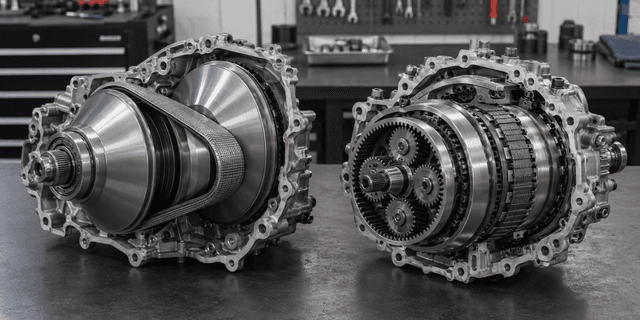
Here, CVT means a conventional design that continuously varies its transmission ratio using variable pulleys and a metal belt or chain, depending on its construction. Conventional automatic means a transmission with fixed gear ratios that shifts between them and uses a torque converter to transfer power between the engine and transmission. The comparison does not cover every technology described as automatic or erase differences within either family.
A torque converter alone does not identify the type: some CVTs also use one. Likewise, do not assume that an e-CVT in a hybrid is the same pulley-and-belt transmission. The term can describe a hybrid system that varies the relationship between engine speed and vehicle movement differently. Architectures vary between systems, so consult the description of the particular vehicle rather than relying on the letters.
For an introduction to other designs, read the guide to transmission types and how they work; here, the focus is what to observe and verify when choosing.
How Do Acceleration and Shifts Feel Different?
With a CVT, engine sound may rise and engine speed may stay relatively steady while the car continues gaining road speed. This can be part of ratio control, not sufficient evidence of transmission slip. Software may also simulate stepped shifts, so the tachometer alone cannot identify transmission type or establish its health. What matters is a predictable response appropriate to the driving situation.
In a stepped automatic, engine speed may fall on an upshift or rise when you request more acceleration. How noticeable each shift feels depends on calibration, the engine and cabin isolation. Not every perceptible shift is a fault, but repeated harsh jolts should not be accepted merely because the transmission is conventional. Compare with a healthy car of the same specification if possible and seek professional advice when unsure.
A Comparison Table for Setting Your Priorities
| Comparison point | Conventional CVT | Stepped automatic |
| Acceleration | Continuous ratio changes, sometimes with simulated shifts | Shifts between fixed ratios with varying smoothness |
| Sound and feel | May hold higher engine speed during acceleration | Engine sound may change noticeably during shifts |
| Suitability check | Observe pull-away smoothness and whether the acceleration sound suits you | Observe shift timing and response to acceleration requests |
| Maintenance | Fluid specification and schedule depend on the particular transmission | Fluid specification and schedule depend on the particular transmission |
| Buying decision | Vehicle condition and use matter more than the label | Vehicle condition and use matter more than the label |
Which Suits Traffic, Long Trips and Hills?
Describe your daily driving rather than ranking technologies from best to worst. In traffic, assess low-speed control and the transition between stopping and moving. On an open road, notice refinement at a steady speed and the response to moderate, legal acceleration. The engine, weight, accelerator calibration and insulation can influence your impression as much as transmission type, so do not attribute every difference to it.
If you regularly drive on hills or carry passengers and luggage, check load limits and driving instructions in the owner’s manual. Do not infer towing capability from the transmission name or test loads or gradients outside permitted limits. For fuel consumption, compare data for the exact trim and engine under comparable measurement conditions; a CVT does not guarantee lower fuel use on every trip.
What Should You Verify About Fluid and Service History?
Ask for invoices showing service dates, mileage and the fluid specification used, not merely a statement that the fluid was changed. Do not assume automatic transmission fluid suits a CVT or that all CVT fluids are interchangeable. The reference is the approved specification for that transmission and its correct service procedure. Transmission type alone cannot establish one fluid-change schedule for every car.
Discuss how your operating conditions affect the service schedule with a qualified provider, along with any documented repairs or leaks. Do not request an indiscriminate fluid change or flush as a cure for every vibration, and do not open hot components to inspect fluid yourself. Read about transmission fluid changes and care for general background, then give your vehicle’s manual priority over conflicting general advice.
A Pre-Purchase Checklist for Either Transmission
Treat the drive as a way to gather observations, not a certificate that the car is fault-free. Agree on a safe, permitted route and have a passenger take notes without distracting you. Do not deliberately overheat the transmission or use aggressive launches to expose faults.
- Confirm the transmission in the actual vehicle’s specifications and production year. Advertisement wording and selector appearance are insufficient, and specifications may differ between trims.
- Review the service history and any previous replacement or repair. Ask why the repair was needed and what was done; request documents rather than relying on verbal reassurance.
- Start with gentle driving and observe pull-away, low-speed movement and gradual acceleration. Stay within speed limits and never watch the instruments at the expense of the road.
- With the car fully stopped and the brakes applied, observe its response when selecting forward or reverse as instructed in the manual. Never switch direction while moving or repeat the manoeuvre aggressively.
- Note whether the observation occurred at the start or after driving, with or without air conditioning, and whether it repeated under the same conditions. Do not set a universal delay threshold separating healthy from faulty.
- Before a final agreement, arrange an independent professional inspection including an appropriate road test and electronic checks when needed, with an explanation rather than just a fault-code printout.
To compare comfort, visibility and the rest of the car as well, use the pre-purchase test drive checklist alongside these transmission-specific checks.
When Does an Observation Need Professional Diagnosis?
Repeated vibration, a noticeable response delay, a temperature warning or a sudden performance change deserves assessment, but none proves transmission failure by itself. The engine, its mounts or other systems may contribute. Describe when the symptom appeared rather than requesting transmission replacement based on a video or personal impression.
If a temperature warning or loss of drive affects safety, end the test in a safe place, follow the owner’s manual and seek appropriate help. Do not clear warnings or keep accelerating to test them. Read about transmission symptoms that warrant inspection to recognise possible observations, not to diagnose your car or assume one definite cause.
Frequently Asked Questions About CVT and Automatics
Does Steady Engine Speed Mean a CVT Is Slipping?
Not necessarily; acceleration can continue at nearly constant engine speed. A changed response with reduced drive or a warning needs professional assessment, not a verdict from the tachometer alone.
Does a Conventional Automatic Always Last Longer?
It is not sound to generalise lifespan or reliability across all designs. Condition, history, maintenance and use are essential when assessing an individual car.
Can Both Types Use the Same Transmission Fluid?
Do not assume compatibility from a fluid’s name or colour. Check the specification required for the exact transmission and have a professional follow its approved service procedure.
Is e-CVT the Same as a Belt CVT?
Not necessarily: similar names do not establish identical construction. Check the explanation of the hybrid’s system; systems described by this term do not necessarily share one design.
Is a Short Drive Enough to Establish Transmission Health?
No; some symptoms may not appear during a short drive. Combine it with service records and an independent inspection, especially when documents are missing or observations remain unexplained.
Conclusion: Choose the Right Car, Not Just a Label
Choose after defining your use, testing the response and verifying maintenance and inspection findings. Do not reject a CVT solely because it sounds different, or accept a conventional automatic with unexplained symptoms. A stronger decision combines driving suitability with documented condition and clear instructions for caring for the car.