
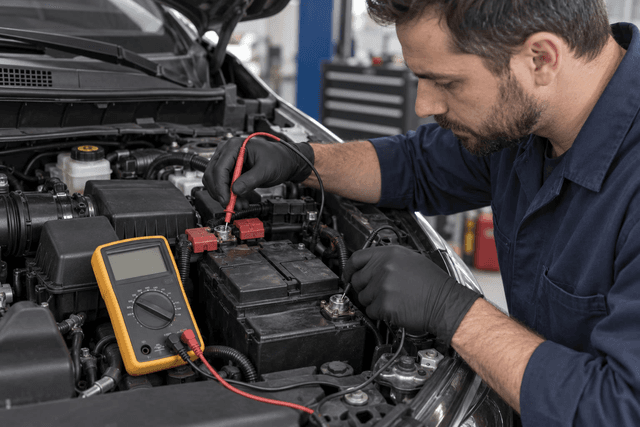
Hidden Electrical Drain in Your Car, Causes, Symptoms, and Solutions
Table Of Contents:
|
Have you noticed your car battery draining quickly or your lights dimming unexpectedly? The culprit might be a hidden electrical leak that threatens your vehicle’s overall performance. So how can you detect it—and fix it?
Understanding Electrical Issues in Cars
An electrical leak in a car refers to the unintended loss of electrical energy due to a fault in one of the components—such as wiring, the battery, or internal system damage. This malfunction leads to abnormal power consumption, negatively impacting the electrical system and other vital functions like engine ignition, lighting, and auxiliary systems.
Key Components of a Car’s Electrical System
The vehicle’s electrical system consists of several essential parts, including:
- Battery: The primary source of electrical energy required to start and operate the car. Batteries come in two types: dry-cell and wet-cell.
- Alternator: Responsible for recharging the battery while the car is running and generating the electricity needed for various systems.
- Engine: The core of vehicle operation, divided into:
- Internal combustion engine: Most common in modern vehicles.
- External combustion engine: Previously used in older models.
- Carburetor: Delivers fuel to the engine to enable ignition and operation.
Common Causes of Electrical Problems
Electrical leakage can significantly affect vehicle efficiency. Key causes include:
- Damaged Battery
One of the most frequent sources of electrical drain. Car batteries typically last 3 to 5 years, after which their ability to hold a charge diminishes. Excessive use or exposure to harsh environmental conditions may cause internal damage, increasing the risk of leakage.
- Wire Corrosion
Electrical wires degrade over time due to moisture, dirt, and high temperatures. Weather conditions or accidents may damage insulation, leading to energy loss.
- Excessive Electrical Devices
Using additional devices like chargers or entertainment systems can draw abnormal power from the battery—even when the car is off. Some devices may continue consuming electricity or remain in standby mode, draining energy.
- Faulty Alternator
If the alternator or its components (such as brushes) malfunction, the battery may not recharge properly, causing electrical leakage. This prevents the battery from receiving adequate charge and forces it to consume unnecessary power when idle.
Symptoms of Electrical Leakage
Signs that your car may be experiencing an electrical leak include:
1. Difficulty starting the engine or needing multiple attempts.
2. Dim or flickering headlights and interior lights.
3. Rapid battery depletion.
4. Burning smell or smoke, indicating a short circuit or leakage.
How to Fix Electrical Leakage
Resolving this issue requires accurate diagnosis. For minor cases like loose wires, manual repair using crimp connectors or wire soldering with heat-shrink tubing may suffice. For more complex issues—such as alternator failure, battery damage, or wire corrosion—it's best to consult a specialized workshop. Key steps include:
- Battery Inspection
Check the battery’s health, charge retention, and internal condition.
- Electrical System Check
Inspect wires and components for damage or corrosion that could cause leakage. Immediate repair is essential upon detection.
- Using a Leakage Tester
Technicians use specialized tools to pinpoint the exact location of the leak quickly and accurately, streamlining the repair process.
- Repair or Replacement
Once the source is identified, damaged parts—wires, battery, or alternator—are repaired or replaced. Simple issues can be fixed manually using precise techniques like soldering and crimping with heat-shrink insulation for safety and durability.
Tips to Prevent Electrical Leakage
To maintain your car’s electrical system and avoid future issues, follow these guidelines:
1. Conduct regular electrical system checks during maintenance to ensure wire and battery integrity.
2. Turn off unnecessary electrical devices when not in use to reduce power consumption.
3. Monitor battery condition and replace it when signs of weakness or end-of-life appear.
4. Use high-quality replacement parts to ensure long-term performance and prevent future breakdowns.
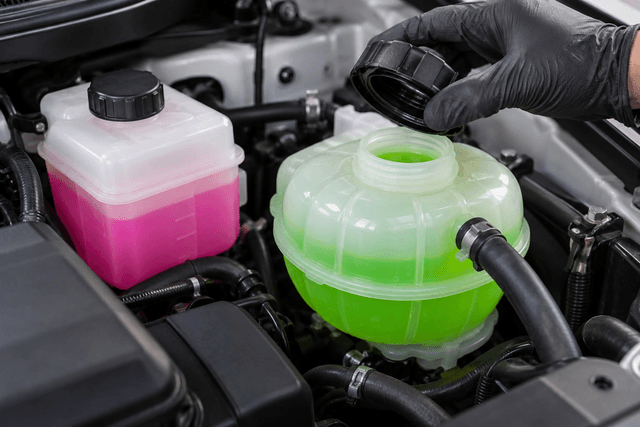
The Hidden Dangers of Using the Wrong Radiator Fluid
Table Of Contents:
|
Many drivers overlook the importance of radiator coolant color, assuming it's just cosmetic. But choosing the wrong type can lead to serious engine damage. So, what are the differences between coolant types—and which one is right for your car?
What Is Radiator Coolant?
Radiator coolant, also known as antifreeze, is a chemical compound used to regulate engine temperature. Its primary function is to prevent the engine from overheating in hot conditions or freezing in cold ones, protecting internal components from corrosion and damage.
Coolant is typically made from ethylene glycol or propylene glycol, with added corrosion inhibitors and thermal stabilizers.
Types of Radiator Coolant and Their Differences
Coolants used in radiator systems fall into three main categories, each with distinct properties that directly affect engine performance and efficiency:
1. Regular Water
Although easily accessible, using plain water in the cooling system is unsafe. It contains high levels of salts and impurities that accumulate inside the radiator and engine components, causing corrosion, rust, and long-term damage.
Water also boils quickly and freezes easily, making it unsuitable for temperature fluctuations.
2. Green Coolant
Green coolant is a balanced mixture of water and specially formulated chemicals designed to cool the engine efficiently without reacting with its metal components. Key features include:
- Free from salts and impurities, preventing corrosion and rust
- Boiling point raised to 120°C, making it effective in high-temperature conditions
- Commonly used in older vehicles or those with iron-based components
- Safe and effective, though its lifespan is shorter than other types
3. Red Coolant
Red coolant shares the impurity-free nature of green coolant but offers enhanced features:
- Contains agents that prevent freezing in extremely low temperatures
- Free from silicates, which can cause long-term corrosion in engine parts
- Used in modern vehicles requiring extra protection for sensitive metal components
- Longer lifespan than green coolant, ideal for cold climates
Causes of Coolant Boiling in the Radiator
Boiling coolant is a serious warning sign of a malfunctioning cooling system. Ignoring it can damage vital car components. Common causes include:
- Faulty Thermostat: Regulates coolant flow between the radiator and engine. If it fails, the engine doesn’t receive adequate cooling, leading to overheating and boiling.
- Cooling Fan Failure: The fan plays a crucial role in cooling the radiator. If it stops or underperforms, engine temperature rises, causing the coolant to boil.
- Damaged Radiator Cap: Should be replaced every two years. A worn or loose cap affects system pressure and reduces the radiator’s ability to maintain proper temperature, contributing to boiling.
Causes of Coolant Loss in the Radiator
All coolant types can decrease over time due to mechanical or operational issues affecting system efficiency. Key causes include:
- Faulty Thermostat: Disrupts temperature regulation, leading to coolant loss
- Cooling Fan Malfunction: Reduces radiator cooling, increasing coolant consumption
- Water Pump Failure: Responsible for circulating coolant to the engine; any damage causes noticeable fluid loss
- Leaks or Cracks: In radiator pipes or the reservoir tank, leading to gradual coolant reduction
- Heavy A/C Usage: Prolonged use increases pressure on the cooling system, accelerating coolant consumption
When Should You Change Your Coolant?
Coolant replacement depends on its type and chemical composition:
- Red Coolant: Recommended every 4 to 5 years due to its long-lasting organic formula
- Green Coolant: Should be replaced every 2 to 3 years, as its protective agents degrade over time
What’s the difference between green and red coolant?
Green contains silicates and has a shorter lifespan; red is silicate-free and lasts longer.
Can you mix coolant colors?
No. Chemical reactions between types can damage the cooling system.
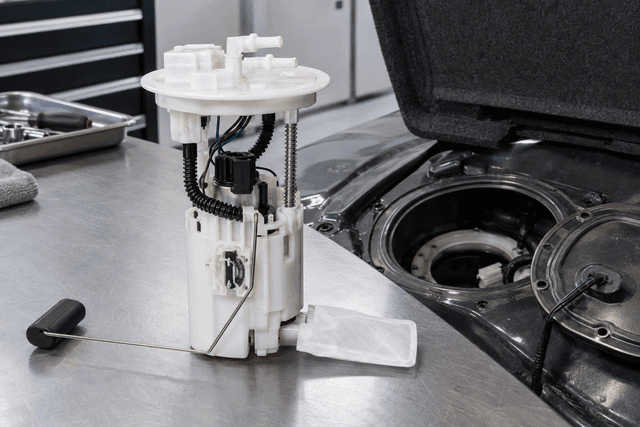
Gas pump problems and how to keep them from breaking down
Table Of Contents:
|
The Fuel Pump: The Heart of Your Car’s Fuel System, What Happens When It Fails? Discover the key symptoms of a failing fuel pump and maintenance tips before your car suddenly breaks down!
What is a Fuel Pump?
The fuel pump is a critical component in internal combustion engine vehicles. Its primary function is to deliver fuel from the tank to the engine. The pump ensures a steady and regulated flow of gasoline through the fuel system, maintaining engine efficiency.
How Does a Fuel Pump Work?
The fuel pump draws gasoline from the tank and pushes it through fuel lines to the fuel injectors (or carburetor, depending on the vehicle’s system). Some pumps are electrically powered, while others operate mechanically, but their goal is the same: to provide consistent fuel pressure that meets the engine’s demands during operation.
Symptoms of a Failing Fuel Pump
When the fuel pump malfunctions, several warning signs may appear, including:
- Engine Overheating: Poor fuel flow can disrupt combustion, causing the engine to overheat.
- Engine Jerking: Irregular fuel supply, especially at high speeds, leads to jerking or hesitation.
- Abnormal Acceleration: The engine may receive too much or too little fuel, causing sudden speed fluctuations.
- Strange Noises: Whining or buzzing sounds from the pump area indicate mechanical or electrical issues.
- Hard Starting: If the car requires multiple attempts to start, weak fuel delivery may be the cause.
- Reduced Performance: Insufficient fuel reaching the engine results in poor torque and sluggish acceleration.
- Sudden Engine Stalling: The engine may shut off while driving due to fuel cutoff.
- Increased Fuel Consumption: An inefficient pump can cause unexplained spikes in fuel usage.
If any of these symptoms appear, it’s advisable to have the vehicle inspected by a professional technician to prevent further damage.
Fuel Pump Pressure Issues
Engine performance depends on the fuel pressure supplied by the pump. If the pressure is too low or too high, it can lead to problems such as:
- Poor acceleration
- Engine choking or excessive fuel consumption
- Damage to fuel injectors or spark plugs
- Regular pressure checks are recommended, especially if you notice any performance issues.
Components of a Fuel Pump
The fuel pump’s components vary by vehicle but generally include:
Electric Motor: Powers the pump.
- Relay: Acts as an electrical switch controlling the pump’s operation.
- Centrifugal Unit: Pumps fuel from the tank to the engine.
- Fuel Filter: Cleans gasoline before it enters the pump.
- Valves: Prevent fuel from flowing back into the tank when the engine is off.
- Pipes & Connectors: Transport fuel from the pump to the injection system.
Tips to Maintain Your Fuel Pump
To extend the pump’s lifespan and avoid failures, follow these guidelines:
1. Avoid Driving on Low Fuel: Continuously low fuel levels can overheat and damage the pump.
2. Use High-Quality Gasoline: Contaminated fuel clogs filters and strains the pump.
3. Regular Inspections: Early detection prevents major breakdowns and costly repairs.
4. Replace the Fuel Filter Periodically: A clogged filter increases the pump’s workload.
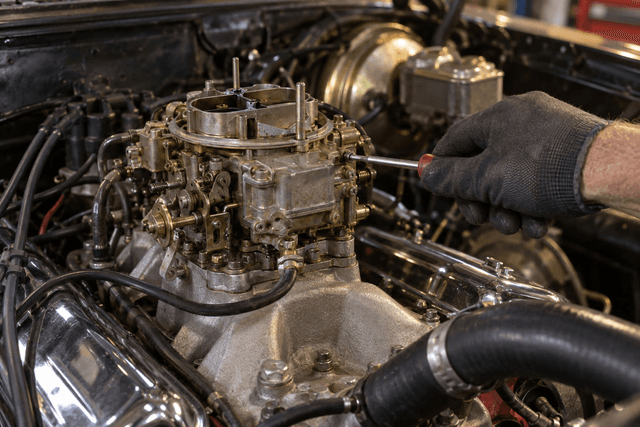
Car carburetor, symptoms of damage and how to fix it
Table Of Contents:
|
Introduction
An unexplained rise in fuel consumption, uneven engine speed, a sudden loss of torque—these symptoms may point to a fault in the air-fuel mixture system. Do you know where the problem comes from?
What Is a Car Carburetor?
The carburetor is one of the main components of the fuel system in gasoline-powered car engines. Its primary job is to mix air and fuel in precise proportions so that the engine runs at its best.
What Are the Types of Car Carburetors?
Car carburetors vary in design and operation from one manufacturer to another. Some are electrically controlled, while others rely on air suction (vacuum) or heat. However, the most notable difference between them is the number of barrels (throats): some carburetors have two barrels, while others have four barrels that draw fuel from the float chamber.
Two-Barrel Carburetor
This type has two barrels (throats), each with its own throttle valve. Both valves are mounted on a single shaft and sit side by side in the carburetor body.
Four-Barrel Carburetor
This type has four barrels (throats) with four throttle valves mounted on two parallel shafts: a primary shaft carrying the two primary barrels and a secondary shaft carrying the two secondary barrels. The two shafts are linked mechanically through the throttle pulley, which controls how far they open according to engine speed.
How a Car Carburetor Works
The carburetor prepares the air-fuel mixture in the optimal ratio to ensure efficient combustion and produce the power needed to move the car.
Gasoline has only a tiny fraction of a second to burn inside the engine cylinders. For combustion to be complete and effective, the fuel must be converted from a liquid into a vapor. This happens in two main stages:
1. Atomizing the Fuel (Turning It Into a Fine Spray)
This stage takes place inside the carburetor, where gasoline is sprayed and broken up into fine droplets to increase its contact area with the air.
2. Turning the Spray Into Vapor
This process is completed in the intake manifold and the engine cylinder, where the higher temperature turns the atomized fuel droplets into a combustible vapor.
Main Functions of the Carburetor
The carburetor’s core tasks can be summarized as follows:
Converting fuel from a liquid into a vapor through atomization and evaporation.
Preparing the air-fuel mixture in precise ratios that match the engine’s operating conditions (such as speed, load and so on).
Signs of a Failing Car Carburetor
The carburetor is one of the most sensitive parts of the fuel system, and when it fails, a number of clear symptoms appear that signal a problem. The most common signs include:
A noticeable increase in fuel (gasoline) consumption
- This happens when the air-fuel mixture ratio is out of adjustment, leading to inefficient combustion and abnormally high gasoline consumption.
Loud engine noise accompanied by vibration
- This indicates a problem with the combustion process, often caused by a poorly adjusted carburetor or damage to one of its internal components.
The engine stalling suddenly while driving at high speed
- This means the carburetor is not supplying the engine with the right air-fuel mixture, which chokes the engine and makes it stall.
Abnormally high engine speed (RPM)
- This happens when there is a fault in the throttle (air/fuel) control, which keeps the throttle valve open wider than necessary even when the accelerator pedal is not pressed.
The engine stalling over bumps or around corners
- This points to a problem with the float chamber or the fuel pump, as fuel is not delivered to the engine consistently when the car’s position changes suddenly.
Hard starting in cold weather (especially in the morning)
- The engine does not get a rich enough starting mixture (the cold-start mixture), so it is hard to start and takes several attempts.
Weaker braking performance (brake system)
- Although the brakes are a separate system, a faulty carburetor can upset the engine’s intake vacuum, which reduces the effectiveness of the power-assisted brakes (in some older cars).
Weak battery charging (in some cases)
- In older cars, a carburetor fault can affect the output of the alternator (generator) because of unstable engine speed, resulting in weak battery charging.
What Should You Do When These Symptoms Appear?
- Inspect the carburetor and clean out any dirt and deposits.
- Adjust the air-fuel mixture ratio according to the manufacturer’s specifications.
- Replace damaged parts such as the needle valve or the accelerator pump diaphragm.
- Check the fuel lines and intake (vacuum) hoses for leaks.
- Check the air filter and replace it if it is clogged.
If the problem persists after these steps, it is best to consult a specialist mechanic to diagnose the fault accurately.
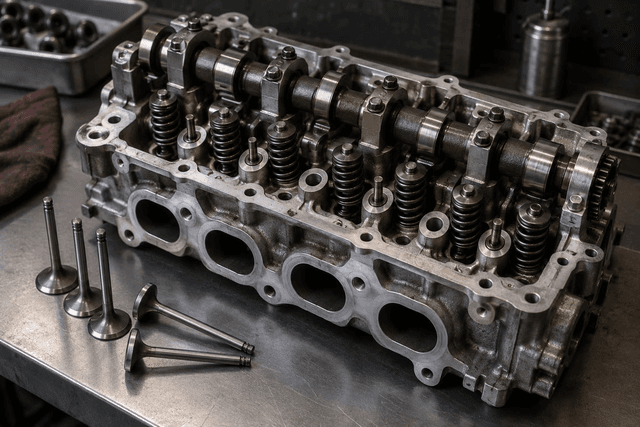
Engine Valves Explained Function and Common Issues
Table Of Contents:
|
Valves are among the most critical components of the internal combustion engine. But what exactly are they? And how can you maintain them properly?
What Are Engine Valves in a Car?
- Valves are metal components with a conical shape, installed in the engine head. They move in a reciprocating (up and down) motion to open and close the pathways for fuel intake and exhaust release.
- Their proper function is essential for sealing and unsealing these passages during engine operation.
How Do Engine Valves Work?
- Intake Phase: The intake valves open to allow the air-fuel mixture to enter the combustion chamber.
- Compression Phase: All valves close to compress the mixture before ignition.
- Power Phase: The spark plug ignites the mixture, pushing the piston downward.
- Exhaust Phase: Exhaust valves open to expel burnt gases from the combustion chamber.
How Many Valves Does an Engine Have?
- Older Engines: Typically have two valves per cylinder (e.g., a 4-cylinder engine = 8 valves).
- Modern Engines: Commonly feature four valves per cylinder (two intake and two exhaust). Some sports cars may even have five valves per cylinder.
What Is Variable Valve Timing (VVT)?
This technology enhances engine performance by intelligently controlling the timing of valve opening and closing. It helps to:
- Improve fuel efficiency
- Increase torque and reduce emissions
- Minimize engine noise
Symptoms of Faulty Valves in a Car
- Knocking or ticking sounds from the engine, especially at higher RPMs
- Loss of engine power due to poor compression
- Blue smoke from the exhaust (a sign of oil leaking into the combustion chamber)
- Excessive oil consumption without a clear cause
- Engine shaking during idle or startup
- Popping sounds from the exhaust due to incomplete combustion
Tips to Maintain Your Engine Valves
To avoid valve damage and ensure their longevity, follow these tips:
- Change engine oil regularly to maintain lubrication and prevent valve seal wear.
- Use high-quality oil recommended by the vehicle manufacturer.
- Avoid prolonged high-speed driving which can stress the valves.
- Inspect spark plugs regularly, as faulty plugs affect combustion and valve performance.
- Watch for unusual exhaust colors (like blue smoke) and consult a mechanic promptly.
- Perform regular cooling system maintenance, as overheating can lead to valve damage.
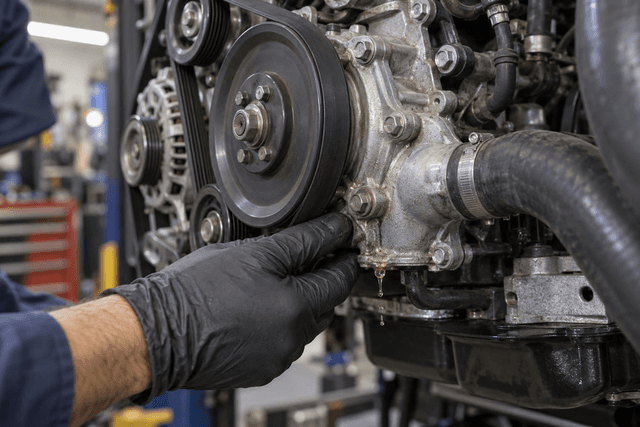
Understanding Your Car’s Water Pump, Importance, Components, and Signs of Failure
Table Of Contents:
|
Did you know that the water pump could be the cause of your car’s engine overheating suddenly? This small component functions as the heart of the cooling system. So, how can you tell if it's malfunctioning?
What is the Water Pump in a Car?
- The water pump is a vital part of a vehicle's engine cooling system. It plays a key role in circulating coolant (a mixture of water and antifreeze) through the engine and radiator to ensure that the engine stays cool and prevents overheating.
- The efficiency of the engine relies heavily on the performance of the water pump, making it essential for every car owner to understand its components, functions, and the symptoms of failure.
Functions of the Water Pump in a Car
1. Circulating Coolant
The water pump circulates coolant through the engine and radiator to absorb heat and carry it away from the engine's internal parts, keeping the temperature within a safe range.
2. Engine Temperature Control
The continuous flow of coolant ensures that the engine stays at an optimal temperature, improving its efficiency and reducing the likelihood of damage caused by excessive heat.
3. Even Heat Distribution
The pump prevents the formation of hot spots within the engine, which could deform or damage metal parts over time.
4. Supporting the Cooling System Components
The water pump helps the coolant reach the radiator, where it is cooled before being recirculated, and ensures that any coolant loss is replenished through the reserve tank.
Components of the Water Pump in a Car
The water pump consists of several parts that work together to ensure the system operates efficiently:
1. Pump Housing
The outer casing, usually made from aluminum or cast iron, contains channels through which the coolant flows.
2.Rotating Shaft
The shaft connects the pump to the engine belt or gears, transferring the motion to the internal fan.
3. Fan
A wheel with blades that spins to push the coolant through the cooling system.
4. Bearings
These reduce friction during the rotation of the shaft, extending the pump's lifespan.
5.Mechanical Seal
This prevents coolant leakage, and damage to this seal is one of the most common causes of pump failure.
6. Pulley
The pulley connects the pump to the engine belt to transfer motion.
7. Outer Casing
This ensures that the pump is sealed tightly and prevents coolant from leaking at the connection points with the engine.
How Does the Water Pump Work in a Car?
The water pump operates according to the following steps:
- When the car starts, the engine belt moves, causing the pump pulley to rotate.
- The rotation is transferred to the internal fan, which spins rapidly, generating centrifugal force.
- The fan draws coolant from the reservoir or radiator and pushes it through the engine’s channels.
- The heated coolant flows into the radiator, where it is cooled by air or the radiator fan.
- The cooled coolant returns to the pump, and the cycle starts again, maintaining a stable engine temperature.
Symptoms of a Malfunctioning Water Pump
Warning signs that the water pump may be failing include:
1. Coolant Leaks
If you notice coolant puddles or colored spots under the car, it indicates a malfunction of the mechanical seal or casing.
2. Squealing or Grinding Sounds
These noises suggest that the bearings are damaged or that the internal parts are rubbing against each other.
3. Overheating Engine
If the pump is unable to circulate the coolant properly, the engine temperature could rise dangerously.
4. Corrosion and Rust
Wear and tear from corrosion can reduce the efficiency of the pump, possibly clogging the channels.
5. Frozen Pump in Winter
Using unsuitable coolant in winter could lead to the pump freezing, rendering it inoperable.
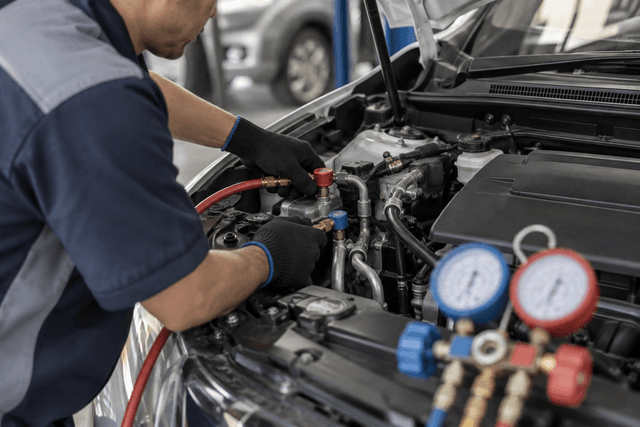
Freon Gas in Your Car: Types and Symptoms of Low Freon
Table Of Contents:
|
Warm Air From Your A/C While Driving? Here’s What It Could Mean. You may suddenly notice warm air blowing from your car’s A/C vents while driving—a worrying sign that usually points to a technical issue. A common cause is a low Freon (refrigerant) level in your vehicle’s air conditioning system, often because of a leak. So what exactly is Freon, what types are used in cars, and what are the symptoms of low Freon?
What Is Freon?
- Freon is the commercial name for refrigerants used in cooling and air conditioning systems, such as refrigerators and car A/C units.
- It is a type of halocarbon compound known for its ability to absorb heat and convert it into liquid form, which facilitates the cooling process for air and surfaces.
Freon’s Role in Your Car’s A/C System
Freon plays a crucial role in cooling your vehicle’s interior by operating as a thermal transfer medium in a continuous cycle:
1. Compression Stage
The compressor compresses Freon gas, increasing its temperature and pressure.
2. Condensation Stage
The high-pressure gas moves to the condenser, where it loses heat and becomes a high-pressure liquid.
3. Expansion Stage
The liquid passes through an expansion valve, where its pressure drops suddenly, causing it to evaporate and become a very cold gas.
4. Cooling Stage
This cold gas enters the evaporator, where it absorbs heat from the warm cabin air. The now-cooled air is circulated into the car interior.
5. Cycle Repeat
The Freon gas returns to the compressor, and the cycle continues.
This process is:
Dynamic and continuous while the A/C is running
Sealed with no expected Freon loss
Dependent on physical changes in the Freon between gas and liquid states
Powered by the engine, which drives the compressor
What Determines the Efficiency of a Car’s A/C System?
The system’s performance depends on:
- Correct Freon level
- Proper functioning of all system components
- The type of Freon used (e.g., R134a or R1234yf)
- Maintaining optimal system pressure, as recommended by the manufacturer
Types of Automotive Freon
1. R-12 Freon
Once common, R-12 was phased out after 1994 due to its harmful environmental impact when leaked.
2. R-134a Freon
A replacement for R-12, it is less harmful to the environment but slightly less efficient in cooling.
3. R-1234yf Freon:
Introduced around 2014 and widely adopted after 2021, this is the most eco-friendly option. It decomposes into non-toxic compounds within 10 minutes when released into the air and offers cooling efficiency similar to R-134a.
Symptoms of Low Freon in Your Car
1. Warm Air from A/C Vents, The most noticeable sign—reduced cooling efficiency or warm air blowing even with the A/C set to max.
2. Compressor Malfunction
With low Freon, the compressor may shut down to avoid damage. Signs include:
- Compressor not engaging
- Repetitive clicking or tapping sounds
- inactive magnetic clutch
- Pulley not rotating when A/C is on
3. Visible Freon Leak:
Freon is mixed with lubricant oil, so leaks often leave oily, dark, sticky stains near:
- Pipe connections
- Compressor joints
- Charging ports
- Condenser and evaporator fittings
4. Frozen A/C Lines, a drop in system pressure due to Freon loss can cause the evaporator or suction lines to freeze.
5. Increased Fuel Consumption, The compressor may run for longer or more frequently to compensate for poor cooling, placing extra load on the engine and raising fuel use.
6. Chemical Smell Inside Cabin, Large leaks can release a chemical, ether-like odor noticeable when the A/C is turned on.
7. Low-Pressure Warning on Dashboard, in modern cars with electronic monitoring, a dashboard warning may indicate low refrigerant pressure.
What to Do if You Suspect a Freon Leak
1. Turn off the A/C immediately to prevent compressor damage.
2. Visit a certified technician as soon as possible.
3. Don’t add Freon yourself without a thorough system check.
4. Repair any leaks before recharging the system.
5. Use only the manufacturer-recommended Freon type.
Does Freon Need Regular Replacement?
- Freon is designed to maintain its properties over time as it circulates in a closed system. Therefore, under normal conditions, there is no need to replace or recharge Freon periodically.
- However, if a leak occurs due to component failure, a recharge is necessary after repairs to restore system functionality.
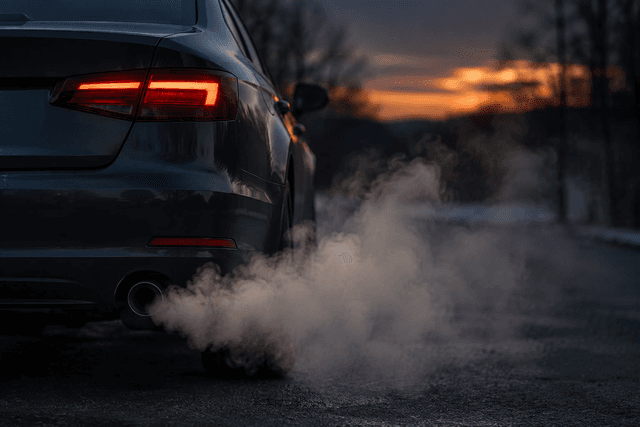
Decoding Car Exhaust Smoke, Causes, Diagnosis, and Solutions for Engine Health.
table of contents:
|
You might suddenly notice thick smoke billowing from your car while driving, sparking concern and indicating a potential mechanical issue. What are the common causes behind this smoke?
How to Verify Engine Health Before Buying a Used Car?
To assess an engine’s condition before purchasing a used car, follow these steps to ensure it runs efficiently and lacks internal problems:
1. Start the Engine and Observe the Exhaust: If thick smoke appears upon ignition, it may signal combustion issues or fluid leaks.
2. Warm Up the Engine: Let it run for 5 minutes to reach operating temperature, then press the accelerator repeatedly. Persistent smoke post-warm-up is abnormal.
3. Test Drive: Monitor the exhaust during acceleration, using the rearview mirror for clarity.
4. Rev the Engine: Shift to "Park," release the brakes, and rev the engine for 30+ seconds. Smoke afterward could indicate internal wear or damage.
5. Turbocharged Engines: Smoke may stem from turbo system leaks rather than the engine itself—professional inspection is advised.
Common Causes of Thick Exhaust Smoke at Startup
Thick smoke at startup often points to underlying issues requiring attention:
1. Coolant Leak:
- Caused by a blown head gasket or cracked cylinder head, allowing coolant into combustion chambers.
- White smoke and coolant loss may lead to overheating and severe engine damage.
2. Worn Piston Rings or Valve Seals:
- Oil leaking into combustion chambers burns with fuel, producing blue smoke.
- Untreated, this accelerates engine wear.
3. Faulty Fuel Injectors:
- Over-fueling due to injector leaks results in unburned fuel exiting as black smoke.
4. Cracked Cylinder Head:
- Coolant mixes with fuel, creating sweet-smelling white smoke and risking engine failure.
5. Cracked Engine Block:
- Rare but severe, causing oil/coolant mixing and white smoke.
6. Overfilled Engine Oil:
- Excess oil burns in combustion, emitting bluish-gray smoke. Always follow manufacturer specs.
What Do Different Exhaust Smoke Colors Mean?
Exhaust smoke colors reveal specific issues:
White Smoke:
- Normal in cold weather (condensation), but persistent smoke suggests coolant burning (e.g., head gasket failure).
Blue Smoke:
- Indicates oil burning due to worn piston rings or valve seals.
Black Smoke:
- Excess fuel burning from clogged air filters, faulty injectors, or sensor issues.
Gray Smoke:
- Complex causes: turbocharger oil leaks or transmission fluid entering combustion (check oil levels).
How to Fix White Exhaust Smoke Issues?
If white smoke persists, act promptly:
1. Professional Diagnosis: Visit a mechanic for engine and exhaust system checks.
2. Coolant System Inspection: Test for head gasket/cylinder head leaks; replace damaged parts.
3. Check Oil Levels: Top up if low, and inspect for leaks.
4. Exhaust System Repair: Replace faulty components to ensure proper airflow.
5. Fuel System Maintenance: Clean/replace injectors and filters to optimize combustion.
6. Routine Maintenance: Regular engine, cooling, and exhaust checks prevent long-term damage.
Can White Smoke Damage the Engine?
Yes! Ignoring white smoke can cause progressive engine damage. For example, coolant leaks via a failed head gasket may corrode internal parts. Address the issue early to avoid costly repairs.

Rear-Wheel Drive (RWD) Systems, Performance and Advantages
table of contents:
|
Rear-Wheel Drive (RWD) Systems, Performance and Advantages
Do you ever Wondered What Makes Rear-Wheel Drive So Fun in Sports Cars? Discover how a rear-wheel drive system influences a car’s performance — and whether it's the right choice for you in different driving conditions.
What Is Rear-Wheel Drive (RWD) in Cars?
- Rear-wheel drive refers to a drivetrain system where engine power is delivered to the rear wheels of the vehicle.
- This power is transmitted through several main components — starting from the transmission, moving through the driveshaft, and finally to the differential, which distributes power between the rear wheels.
- RWD systems are known for their relatively simple design and more compact engine layout compared to front-wheel drive (FWD) or all-wheel drive (AWD) setups. This makes RWD particularly well-suited for performance vehicles.
Advantages of Rear-Wheel Drive (RWD)
- Better Power Delivery: With power going to the rear wheels, RWD cars often provide more balanced acceleration, especially under heavy throttle, improving traction and handling dynamics.
- Superior Steering Feel: Because the front wheels are dedicated solely to steering (not driving), the system offers enhanced feedback and control, especially in variable conditions like rain or snow.
- Towing Capabilities: RWD places the weight closer to the driven wheels when towing trailers or caravans, resulting in better stability and steering control.
- Reduced Torque Steer: RWD separates engine power from steering forces, resulting in smoother and more responsive handling.
- Near 50/50 Weight Distribution: RWD allows for better balance between the front and rear axles, improving vehicle stability and cornering performance.
- Improved Durability: Fewer components are subject to wear compared to AWD systems,
- making RWD generally more robust and mechanically simpler.
- Lower Maintenance Costs: Due to the simpler mechanical structure and reduced parts, RWD vehicles often cost less to service compared to AWD vehicles.
Drawbacks of Rear-Wheel Drive (RWD)
- Challenging in Poor Weather: RWD vehicles can be harder to control in rain, snow, or icy conditions, although modern systems often include traction control and stability control to mitigate this.
- Reduced Cabin Space: The presence of a driveshaft and rear differential can take up space inside the vehicle, limiting footroom and cargo space.
- Increased Weight and Fuel Consumption: The added weight of the driveshaft and its tunnel contributes to higher fuel usage compared to FWD cars, even though some AWD systems are heavier overall.
- Less Common in Economy Vehicles: RWD is more prevalent in performance and luxury cars; budget-friendly or compact models often favor FWD for efficiency and space.
- More Difficult in Slippery Conditions: Since the rear wheels push rather than pull the vehicle, maintaining traction on snowy or icy roads can be more difficult.
Popular Rear-Wheel Drive Cars
Some of the most iconic and performance-focused cars feature rear-wheel drive systems, including:
* Chevrolet Corvette
* Toyota GR86
* Ford Mustang
* Nissan Z
* BMW M3
* Audi R8
* Toyota Supra
* Porsche 911
* Dodge Challenger
RWD is also popular in many pickup trucks such as:
* Toyota Hilux
* Ford F-150
Additionally, some SUVs and crossovers come standard with rear-wheel drive, with options to upgrade to all-wheel drive depending on the model.