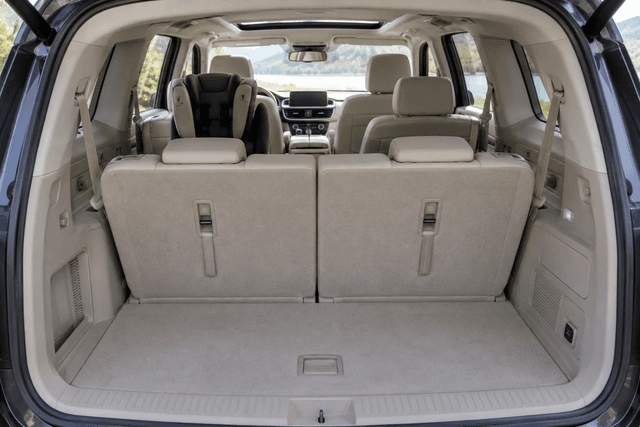
Choosing a Family Car: 5 or 7 Seats? A Practical Guide
Table Of Contents:
|
A five-seat family car is usually enough if no more than five people ride with you regularly and the child seats you need install correctly in the rear seat, while a seven-seat car becomes the practical choice when your regular passengers exceed five or you often travel with relatives. Seat count alone does not settle the decision, though: boot (trunk) space, access to the back row and child-seat fitting all need to be tried in the actual car. This guide walks you through the choice, from counting passengers to a final checklist.
How do you work out how many seats your family needs?
Start with the number of passengers, not just the size of your family, and write down two clear scenarios to compare each car against:
- A normal day: the school run, commute and shopping, and who rides with you on most days.
- A longer trip: intercity travel or family visits, with suitcases, a pushchair and trip essentials.
- Regular passengers from outside your immediate family, such as relatives or a household helper, each of whom needs a seat and belt.
- How many child seats you need now, and what you may need over the next few years.
If the third row would be used only a few times a year, a five-seat car with a large boot may suit your daily life better, and bigger trips can be handled in other ways. If you would need it almost every week, put it at the top of your priorities.
What is the practical difference between five-seat and seven-seat cars?
The table below is a general comparison; details can differ greatly between models, so verify them in the car you are considering.
| Aspect | Five seats | Seven seats |
| Passengers | Enough if regular passengers do not exceed five | Suits households with more than five regular passengers |
| Boot space | Fairly constant because the rear row does not change | Shrinks considerably with the third row up and grows when it is folded |
| Getting in and out | Simpler, with no extra row | Reaching the third row means folding or sliding a seat |
| Rear-row comfort | Usually seats three, though middle-seat comfort varies between cars | In many cars the third row suits children and short trips best |
| Size and parking | Usually smaller and easier in tight spaces | Usually longer and needs a wider parking space |
| Daily running | Usually lighter | Greater weight and size may raise fuel consumption |
How do you test the third row before choosing seven seats?
- Set the second row to a comfortable position for its occupants first, then sit in the third row; judging it with the second row pushed forward does not reflect real use.
- Check knee room, foot room and headroom yourself, and notice whether a low floor pushes your knees up.
- Try getting in and out and folding the second-row seat, and ask the child or person who will actually use the third row to try it.
- Make sure every seat has an easily reachable seat belt and a suitable head restraint.
- Look for rear air-conditioning vents for the third row and how they are controlled, and confirm they are fitted to the trim you will buy, not only the higher trim.
- Ask how passengers reach the back when a child seat is installed in the second row, and do not assume the folding mechanism works with it fitted; check the vehicle manual and the child-seat instructions.
The second row may be a single bench for three passengers or two separate captain's chairs with a walkway between them; separate chairs make it easier to reach the back, but they reduce total seating by one compared with a bench.
Does the boot hold your belongings with every seat in use?
Luggage space with the third row folded answers a completely different question from the space available with the whole family on board, so compare both configurations:
- Raise every seat you will need on a family trip, then load your actual belongings, or their measurements, into the boot.
- Try fitting a folded pushchair, a large suitcase and the weekly shopping.
- Notice the height of the loading lip, how easily items can be lifted in and how much room the tailgate needs to open in your parking space at home.
- Check the maximum payload in the owner's manual or on the label fixed to the vehicle, and secure luggage as instructed, because a car full of passengers and belongings may approach this limit.
- If you are considering a roof rack, ask specifically about the permitted roof load.
How do you make sure your child seats fit the car?
The US National Highway Traffic Safety Administration (NHTSA) recommends choosing a seat that suits the child's age and size, then making sure it fits the vehicle itself, and referring to the car-seat manufacturer's instructions and the vehicle owner's manual on installing it with the seat belt or the lower anchors and a top tether, if available. In practice this means:
- Use the vehicle manual to identify the seating positions intended for child seats, and do not assume every rear seat has identical anchor points.
- If you need two or three child seats, try installing them together in their actual arrangement, and make sure each one can be secured and used correctly.
- Make sure the other passengers can still reach their belts and buckles once the seats are fitted.
- Do not rely on an anchoring-system logo in an advert; it does not mean your particular seat will fit that position.
Which comfort details do many buyers overlook?
- Sit in the back for a few minutes with the air conditioning on, and check that air reaches every row in hot summer weather.
- Assess the step height for older passengers and children, and how wide the rear doors open in tight parking spaces.
- Check the view from the rear windows and whether there are sunshades for the rear windows if you need them.
- Look for charging ports, cup holders and small-item storage for each row.
- During the test drive, ask passengers to judge the seating, noise level and stability on the road from their own seats, not just from the driver's seat.
We cover the general steps of a test drive and comparing trims in our new car buying guide; here, what matters is testing the car from your own family's seats.
How does a family car's size affect daily use and running costs?
- Measure your home parking space and driveway, and make sure the car's length and tailgate opening suit them.
- Try parking in a busy or tight car park, and check that the chosen trim has a rear camera and parking sensors.
- A bigger, heavier car may use more fuel; if economy matters to you, review our list of the best fuel-efficient cars when comparing.
- Ask about the tyre size and the manufacturer's maintenance schedule, as both are recurring ownership costs.
What is the short checklist before you decide?
- Every regular passenger has a suitable, easily reachable seat and belt.
- The child seats you need install in the correct positions according to the instructions.
- Your essential belongings fit in the boot with the necessary seats still upright.
- The rear air conditioning and comfort features you need are included in the chosen trim.
- The car's dimensions suit your home parking space and the places you drive to every day.
- The periodic maintenance schedule, tyre size and warranty terms are written down and clear before purchase.
After you buy, keeping up with routine car maintenance helps keep your family comfortable and safe on long trips.
Frequently asked questions about choosing a family car
Is every seven-seat car suitable for seven adults on a trip?
Not necessarily; in many cars the third row suits children or short journeys best. Have an adult sit in it, and check boot space and payload limits with all seven passengers and their belongings.
Can three child seats fit in a five-seat car?
It depends on the width of the rear seat, the number of anchor points and the size of the seats themselves. Check the vehicle manual and try installing all three seats together before buying.
Are two separate second-row seats better than a bench?
Separate seats make it easier to reach the third row and give their occupants more comfort, but they reduce total seating by one compared with a bench, so choose according to your passenger count.
Can a car's exterior size tell you how spacious it is inside?
Not on its own; the seating layout, floor height and boot opening shape all affect the usable space, so try sitting in the car and loading your belongings yourself.
When is a five-seat car enough for a large family?
When regular passengers on most journeys do not exceed five, and trips needing more seats are rare and can be handled in another way.
The right family car is the one that serves both your normal day and your longer trips, not the one with the most seats. Count your passengers, try the third row, child seats and your own belongings, then compare the results calmly. You can also browse the cars available at Saleh Cars Group to compare options that suit your passenger count.

Comprehensive vs Third-Party Car Insurance: How to Choose
Table Of Contents:
|
The difference between the two types of car insurance in Saudi Arabia is that third-party insurance, which is the compulsory insurance, compensates the third party for the physical and material damage your vehicle causes and does not cover your own car, while comprehensive insurance compensates you for damage or loss to your car, including fire, theft, floods and hail, and also includes liability towards third parties. Here we explain what each type covers and excludes as stated in the official documents, what the deductible means, and how to choose the right policy.
What is the difference between comprehensive and third-party insurance in brief?
These are the main differences as stated in the Saudi Central Bank documents; the details follow in the next sections:
| Item | Third-party | Comprehensive |
| Status | Compulsory | Not compulsory; includes third-party liability cover |
| Physical and material damage to third parties | Covered within the policy limits | Covered as per the unified policy |
| Damage to your car in an accident you cause | Excluded | Covered after deducting the deductible |
| Fire, theft, floods and hail | Not covered for your car | Included |
| Towing your damaged car and storing it | Not provided for | Included up to the amount stated in the schedule |
| Death or injury of the driver | Excluded | An optional cover offered before the policy is issued |
What does third-party (compulsory) insurance cover?
The Unified Compulsory Motor Insurance Policy sets the minimum limit of civil liability cover towards third parties. If an accident occurs within the borders of the Kingdom and causes damage that is not excluded, the insurer compensates the third party for what the insured, the driver or the person responsible for the accident is liable to pay for:
- Physical damage to the third party inside or outside the vehicle: death or physical injuries, including total or partial disability, whether permanent or temporary.
- Material damage to property belonging to the third party.
- Expenses borne by the third party due to damage not excluded in the policy.
A third party is anyone who suffers damage that is not excluded, other than the insured or the driver responsible for the accident; so this insurance protects others from your mistakes and does not repair your car. Subject to the exceptions, the insurer may not refuse to compensate the injured party because of a violation committed by the driver, but it keeps the right to recover from them in cases set out in the policy, such as driving against traffic, running a red light, and driving without a licence suitable for the type of vehicle.
What does third-party insurance not cover?
Cases the unified policy excludes from compensation include:
- Loss of or damage to the insured vehicle, property of the insured or the driver, and goods carried in it.
- Death or physical injury of the insured or the driver.
- Using the vehicle in races or to test its speed or power, and car drifting.
- A deliberate accident, or giving inaccurate information or concealing material facts in the insurance proposal form.
- Fines and financial penalties, and the driver fleeing the accident scene without an acceptable reason.
- Driving under the influence of drugs or alcohol, and natural disasters such as hurricanes, earthquakes and floods.
What does comprehensive motor insurance cover?
According to the Comprehensive Motor Insurance Rules, the company compensates the insured for any risk causing damage or loss to the vehicle, including fire, theft, lightning and natural disasters such as floods and hail, in addition to third-party civil liability as per the unified policy. Compensation works as follows:
- Partial loss: the company bears the cost of repair at the repairing party stated in the schedule (the agency or an approved repair shop), and the cost is determined by the competent entity in charge of motor accident damage appraisal.
- Technical total loss (a car that cannot be repaired to a state legally fit for driving) or economic total loss (repair is costly according to the percentage agreed in the schedule): compensation is the sum insured without deducting the company's expenses.
- The company does not deduct any amount from the compensation for the use or wear of the vehicle before the accident.
- Towing the damaged vehicle and storing it after a covered accident, up to the amount stated in the schedule.
- If another party caused the damage, your insurer compensates you first and then claims against that party or its insurer.
Before issuing the policy, the company must offer you optional covers: renting a replacement vehicle, roadside assistance, death, injuries and medical expenses of the driver or named driver, and accidents outside the Kingdom; any you decline become excluded.
What does comprehensive insurance not cover?
The main exclusions in the rules include:
- Driving without a licence suitable for the type of vehicle, or with a licence that was withdrawn or has expired unless it is renewed within the set period.
- Compensation that is less than or equal to the deductible stated in the schedule.
- An accident while the vehicle is driven by someone other than the driver or the named driver.
- Manufacturing defects, and damage resulting from use or from mechanical or electrical malfunctions.
- Damage to or theft of tyres, rims, wheel covers or exterior mirrors, unless it happened at the time of a covered accident.
- Theft caused by leaving the vehicle running, leaving the keys in it, or not closing the windows and locking the doors.
- Accessories not fitted by the manufacturer, unless their type and value are explicitly stated in the policy.
- Car drifting, running a red light or driving against traffic, if the competent body's report proves it caused the accident.
- Driving in desert areas and on unpaved roads unless inside the city.
The company and the insured may agree to waive any exclusion unless that conflicts with the law, so ask about the ones that matter to you before signing.
What is the deductible in comprehensive insurance?
The rules define the deductible as the amount borne by the insured for any claim as stated in the policy schedule, and they control how it is applied:
- It is set by the insured in agreement with the company.
- It applies only to damage to the vehicle, not to third-party civil liability claims.
- It is calculated in proportion to the driver's share of liability if they are partly liable, and it is not charged if they are not liable according to the report of the competent body attending the accident.
- It applies once per accident, even if several claims result from it.
- It stays fixed throughout the policy period, whatever the type of accident or the value of the compensation.
In practice, it is what you will pay out of your own pocket in every accident you are liable for, so compare offers by it as well, not by the policy cost alone.
How do you choose car insurance that suits your car and your use?
The decision depends on whether you could bear the cost of repairing or losing your car yourself, so review these factors:
- The car's age and value: losing a new or high-value car is harder, and comprehensive cover compensates at the sum insured in a total loss; so make insurance part of your budget as in the new car buying guide.
- A used car: insurance does not cover manufacturing defects or malfunctions, so inspect it before buying and read our vehicle inspection tips before buying a used car, and make sure the sum insured reflects its fair value.
- Financing: if the car is financed, ask the finance provider which type of insurance the contract requires before signing; to compare the two ways of paying, read buying a car with financing or cash.
- Who drives the car: comprehensive cover applies to the insured and relatives such as parents, spouse, children and siblings, the domestic worker or someone working for the insured under an employment contract, and the named driver in the schedule; so add any other driver.
- How you use it: if you go on desert trips, ask about the exclusion of desert roads, and remember that accidents outside the Kingdom are an optional cover.
What should you check in the policy schedule before you pay?
The policy schedule is an integral part of the policy, so check:
- Insured and vehicle details, and match the chassis number and plate with the vehicle registration card.
- The type of cover, not the marketing name; the rules forbid describing third-party products with additional benefits as comprehensive insurance.
- The coverage period, with its start and end dates and times.
- The sum insured, the deductible, and the percentage at which the vehicle is considered an economic total loss.
- The repairing party (agency or approved repair shop) and the towing and storage cover limit.
- Named drivers, and the use restrictions and purpose of use.
- The optional covers you accepted or declined.
- Additional vehicle details, such as modifications and where it is parked at night, and make sure they are correct; and notify the company of any change in material facts within the set period.
These provisions may be updated, so confirm the latest version on the official website of the Insurance Authority, and the terms of your policy with a licensed insurance company.
Frequently asked questions about comprehensive and third-party car insurance
- If someone else hits me and I only have third-party insurance, who repairs my car? You are the third party under the at-fault driver's policy, so their insurer compensates you for the material damage as per the unified policy. If you are at fault, your policy does not cover your car.
- Do I need two policies with comprehensive insurance? The rules state that comprehensive insurance also covers civil liability towards third parties as per the unified policy, so it combines both protections in one policy.
- Is a third-party policy with additional benefits considered comprehensive? No. The rules forbid naming or describing such products in any way as comprehensive insurance, so read the written covers, not the product name.
- Does third-party insurance cover flood or fire damage to my car? No, it does not cover your car at all, and natural disasters are among its exceptions. Najm requires comprehensive insurance on the vehicle to report an accident caused by natural disasters or fire.
- Can the policy be cancelled when I sell the car? Yes. Transfer of the vehicle's ownership is one of the cancellation cases under both policies, along with cancellation of its registration and the existence of an alternative policy, and the insured is refunded the amount due for the remaining period according to the calculation method set in the policy.
In short: third-party insurance is the compulsory minimum that protects others from damage caused by your vehicle, and comprehensive insurance adds protection for your own car in return for a deductible you agree on. Choose according to your car's value, its financing and how you use it, and read the policy schedule before you pay. If you are looking for your next car, you can browse the cars available at Saleh Cars Group.
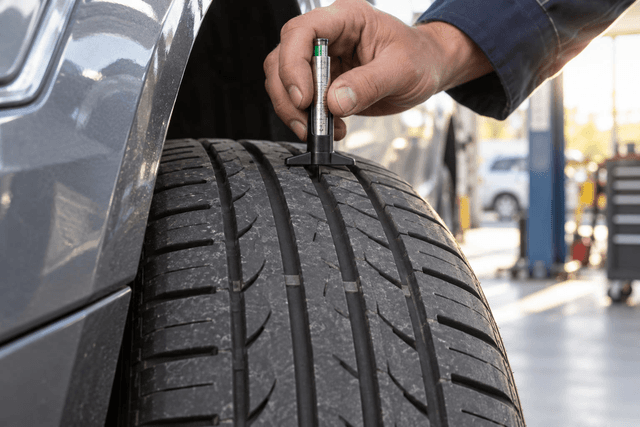
When to Replace Car Tyres: Tread, Cracks and Warning Signs
Table Of Contents:
|
If you are asking when to replace car tyres, the short answer is: replace a tyre when the surface of the tread reaches the level of the raised wear indicators inside the grooves, when a bulge, a deep cut or clear cracks appear in its sidewall, or when the rubber has aged to the point at which the tyre or car manufacturer recommends replacement, even if the tread looks good. In this guide we explain how to check your tyres, what the wear pattern reveals, and how to choose the right replacement.
When should you replace car tyres? The key signs in brief
Replacement is not tied to a single distance for every car, but to the tyre's condition and its maker's recommendations. The main signs are:
- The tread surface has reached the level of the wear indicators in any part of the tyre, not just on average.
- A bulge or bubble in the sidewall, a deep cut, or exposed cords or internal fabric.
- Clear cracks in the sidewall or between the tread blocks, showing that the rubber has aged and hardened.
- Uneven wear that has left part of the tyre smooth even though the rest of its surface is sound.
- A persistent vibration that does not go away after balancing, or repeated pressure loss in the same tyre with no visible cause.
How do you check tread depth using the TWI wear indicators?
Inside the grooves are small raised bars called wear indicators, whose location is marked by the letters TWI or a small triangle on the tyre's shoulder, and when the tread surface is level with them, the tyre has reached the end of its usable life. To check:
- Park the car on level ground and turn the steering wheel to one side so you can see the front tyres clearly.
- Look for the TWI mark or triangle on the tyre's shoulder, then look into the groove next to it to find the raised bar.
- Compare the level of the tread surface with the bar; the closer they are to level, the closer the replacement date.
- Repeat the check on the inner edge, the centre and the outer edge, and at several points around the tyre's circumference.
- For a more precise reading, use a tread depth gauge, available at tyre shops, and record the reading for each tyre.
- Some drivers use a coin as a rough gauge, but it is no substitute for a proper gauge or a look by a qualified technician.
Do not wait until they are exactly level if you travel often or drive in the rain, as water clearance and grip weaken gradually as the tread gets shallower.
What do tyre cracks and sidewall bulges mean?
The sidewall flexes with every turn of the wheel and carries the car's weight, so any damage to it is more dangerous than tread wear:
- Fine surface cracks: an early sign of rubber ageing caused by heat and sun, which calls for the tyre to be inspected by a specialist and monitored.
- Deep cracks: if they widen or reach the tyre's inner layers, it is time to replace it.
- A bulge or bubble: damage to the tyre's internal structure, usually after hitting a pothole or kerb, which requires immediate replacement and no travelling on it.
- Cuts and gashes: a deep cut in the sidewall weakens the tyre even if no air is leaking from it yet.
What does the tyre wear pattern reveal?
The wear pattern reveals the cause of the problem, and if you do not fix it, new tyres will wear the same way:
| Wear pattern | Likely cause | What to do |
| Both edges more than the centre | Pressure lower than recommended | Set the pressure according to the driver's door sticker and check it regularly |
| Centre more than the edges | Pressure higher than recommended | Set the recommended pressure, not the maximum pressure printed on the tyre |
| One inner or outer edge | Wheel alignment or suspension fault | Check the alignment and suspension parts |
| Diagonal, feather-like wear | Incorrect toe between the two wheels | Have the alignment set at an equipped workshop |
| Repeated patches or scallops | Unbalanced wheels or worn shock absorbers | Balance the wheels and check the shock absorbers |
| A single flat spot | Hard braking with a locked wheel, or standing a long time without moving | Have a specialist assess the tyre |
If you see wear on both edges, start by reviewing the causes, signs and solutions for low tyre pressure, and if the wear is on one edge or comes with the car pulling to one side, read about the difference between wheel balancing and alignment.
How do Saudi heat and sand affect tyre life?
Rubber ages over time even if the car is used little, and you will find how to tell a tyre's age from the DOT code in our article on how to read tyre size and manufacture date. There is no single lifespan for all tyres, so refer to the tyre and car makers' recommendations. In the Kingdom's climate, some factors speed up deterioration:
- Direct sun and high heat speed up the hardening and cracking of rubber, especially for cars standing for long periods in open car parks, so park in the shade whenever possible.
- Hot asphalt raises tyre temperature, and the effect grows with low pressure or overloading on long trips.
- Sandy, gravel and desert tracks expose the tread and sidewall to cuts from sharp stones, so inspect the tyres after every desert trip.
- If you lower tyre pressure (deflating) to drive on sand, restore it to the recommended value before returning to asphalt, because highway driving at low pressure raises tyre temperature.
Should you replace tyres in pairs or all four together?
Ideally all four tyres match, but replacing them all together is not always necessary:
- Replace both tyres on the same axle together at least, so grip does not differ between the two sides when braking or cornering.
- When replacing only one pair, many tyre makers recommend fitting the newer pair on the rear axle for better stability, unless the owner's manual says otherwise.
- In four-wheel-drive or all-wheel-drive cars, the owner's manual may require the four tyres to be close in size and degree of wear to protect the drive system, so check it before replacing only two.
What about the spare tyre?
The spare forgotten in the boot ages just like the other tyres, even if it is never used:
- Check its pressure regularly and before every trip, because a flat spare will not help you when you get a puncture.
- Read its manufacture date and inspect its sidewall, as it may be older than the tyres on the car.
- A small temporary spare is designed for a limited distance and speed stated in the owner's manual or on the tyre's side, so use it only to reach the nearest tyre shop.
- If your car comes with a repair kit instead of a spare, check its expiry and how to use it.
How do you choose the right replacement tyre: size, load and speed?
Choose what your car was designed for, not just what the shop has in stock, and check the following:
- Size: copy it from the sticker on the driver's door frame or from the owner's manual, not from the tyre currently fitted, which may be different.
- Load index and speed symbol: choose values equal to or higher than the car manufacturer's recommendation, never lower.
- Manufacture date: ask for recently made tyres with close dates, especially on the same axle.
- Type of use: a driver who often travels on highways has different needs from one who drives in the desert or carries heavy loads, so ask about the tyre designed for your use.
- Changing the size: do not change the size of your tyres or rims without consulting a specialist; to learn the effect, read our article on whether the wrong rims make your car use more fuel.
- After fitting: balance the wheels, set the pressure according to the driver's door sticker, and check the alignment if the old tyres were worn unevenly.
What is the tyre energy efficiency label in Saudi Arabia?
The Saudi Standards, Metrology and Quality Organization offers the Energy Efficiency Label for Tires service, and explains that the label serves as a guide for consumers before purchasing the product to increase their awareness of its energy efficiency before buying it.
The organization lists tyres among the products subject to the efficiency label regulations, and the aims of these labels include reducing energy consumption for the consumer, enabling the consumer to know a product's efficiency before buying, and protecting consumer safety and health and the environment. In practice:
- When comparing tyres of the same size, ask to see the energy efficiency label for each one and read its details.
- Do not make the label your only criterion; size, load index, speed symbol, manufacture date and the tyre's suitability for your use come first.
- Requirements and procedures may be updated from time to time, so check the latest information on the organization's website.
Frequently asked questions about replacing car tyres
- Should I replace a tyre that is old even if its tread is good? Tread depth alone is not enough, as rubber hardens over time; have it checked by a specialist and follow the tyre maker's recommendation.
- Can a puncture in the side of the tyre be repaired? Repairing holes in the sidewall or shoulder is not usually recommended, while for a hole in the tread area the technician decides whether it can be repaired based on its size and position.
- Can I fit two tyres of different types? This is not recommended on the same axle, and it is best for all four tyres to match in type and tread pattern, especially in four-wheel-drive cars.
- Are small cracks between the tread blocks dangerous? They are a sign of ageing that may not require immediate replacement, but have a specialist monitor them, and if they deepen, replace the tyre.
- How often should I check my tyres? Check their pressure and appearance regularly, for example when refuelling, before every trip, and after hitting a pothole or kerb or after a desert trip.
Checking your tyres takes only minutes: look at the wear indicators, inspect the sidewall, notice the wear pattern and read the manufacture date. If a danger sign appears, do not postpone the change; choose a replacement with the recommended size, load and speed ratings, then fix the cause of any uneven wear.

ADAS Driver Assistance Systems: What to Check Before Buying
Table Of Contents:
|
Advanced driver assistance systems (ADAS) are a set of sensors, cameras and software that monitor the area around the car, warning you of a potential hazard or intervening in specific conditions by braking, steering or adjusting speed. Before buying, it is not enough to see a system's name in the specification sheet; ask exactly what it does, when it stops working and how to try it safely.
What are ADAS driver assistance systems and how do they work?
These systems usually rely on a camera behind the windscreen near the rear-view mirror, a radar behind the grille or front bumper, radars in the corners of the rear bumper, plus parking sensors and cameras around the body. The car's computer combines their signals to estimate distances, speeds and the car's position between the lane markings.
They differ from the anti-lock braking system (ABS) and the traction control system (TCS); those two monitor the wheels themselves, while ADAS monitors the road, vehicles and pedestrians around you, and many of these systems use the same brake system when they intervene.
What is the difference between warning and intervention systems?
The US National Highway Traffic Safety Administration (NHTSA) explains in its guide to driver assistance technologies that some systems are designed only to warn you, while others take action to avoid a crash, and that manufacturers use different trade names for the same function; so rely on the function described in the owner's manual rather than the name.
| System | What it does |
|---|---|
| Forward Collision Warning (FCW) | Warning only when you close in quickly on a vehicle ahead. |
| Automatic Emergency Braking (AEB) | Intervention: supports your braking or brakes automatically if a collision appears imminent. |
| Lane Departure Warning (LDW) | Warning only when the car leaves its lane without a signal. |
| Lane Keeping Assist (LKA) | Intervention: gently corrects the steering to bring the car back into its lane. |
| Blind Spot Warning (BSW) | Warning by a signal in the mirror when there is a vehicle you cannot see. |
| Adaptive Cruise Control (ACC) | Intervention: adjusts speed to keep a distance from the vehicle ahead. |
| Rear Cross Traffic Warning (RCTW) | Warning while reversing of a vehicle approaching from the side. |
| Surround-view camera | Visibility aid: a combined image of the car's surroundings while parking. |
| Driver attention monitoring | Warning when signs of drowsiness or distraction appear. |
Having a warning system does not mean a matching intervention is fitted; a trim may include blind spot warning without any steering or braking intervention, so ask for the system list for the exact trim and model year you will buy.
How does automatic emergency braking work and what are its limits?
The NHTSA page on active braking technologies explains that these systems use radar, cameras and other sensors to detect vehicles, pedestrians or objects in front of the car, increasing braking force if your braking is insufficient, or braking automatically if you do not respond to the warning, with the aim of avoiding a collision or reducing its severity. This does not mean they prevent every collision in all conditions.
Ask when buying: does the system detect pedestrians and cyclists, or only vehicles? Does it work when reversing? And what speed range does it operate in according to the owner's manual? Never test it by deliberately approaching a car, a person or an obstacle.
What is the difference between lane departure warning and lane keeping assist?
The warning system only gives a sound or a vibration in the steering wheel when the car drifts across the lane markings, while the assist system gently corrects the steering, and in some cars may brake one of the wheels. Lane centring, by contrast, steers the car continuously while it is active, and usually works together with adaptive cruise control.
These systems depend on the camera seeing the road markings, so their performance weakens when the lines are faded or missing, as on some desert roads and in diversion zones, and many cars alert you if you take your hands off the wheel while they are active.
How does adaptive cruise control differ from standard cruise control?
Standard cruise control keeps a fixed speed that you set, whereas the adaptive version slows down if you approach a slower vehicle, then returns to the set speed when the road clears, and in some cars it can stop and move off again in traffic.
Before using it, learn how to choose the following distance and how to cancel it with the brake pedal or the cancel button. Its braking ability is limited, and it may not respond as you expect to a stationary vehicle or a car that cuts in suddenly; so stay ready to brake yourself.
What are the benefits of blind spot monitoring, rear cross traffic warning and the surround-view camera?
Blind spot monitoring alerts you with a light in the side mirror, some systems add a sound if you signal towards a lane with a vehicle in it. Rear cross traffic warning is useful when reversing out of a parking space between large vehicles that block your view.
The surround-view camera shows a combined image as if you were seeing the car from above, but it can distort distances at its edges and does not replace the mirrors and turning to look yourself.
How do you check ADAS features during a test drive?
Alongside the general steps in our new car buying guide, set aside part of the test drive for the assistance systems:
- Before moving off, get to know the settings menu and each system's symbols on the instrument cluster: ready, active and unavailable.
- On a highway with clear markings, switch on adaptive cruise control and set the distance, then cancel it with the brakes and with the button.
- Notice the lane departure alert, whether it stays quiet when you use the turn signal, and whether the correction is smooth or intrusive.
- Watch the blind spot signal when a car passes alongside you, without relying on it to change lanes.
- In a car park, reverse slowly and check how clear the camera is and how the rear cross traffic alert works.
- Make sure no persistent fault message appears, and that the windscreen and bumpers around the sensors are undamaged.
What conditions limit how sensors and cameras work?
- Dust, sand, mud and insects covering the camera, the radar or the bumper sensors.
- Sandstorms, fog and heavy rain.
- Low sun at sunrise and sunset, and glare from oncoming headlights.
- Extreme heat after long parking in the sun; some owner's manuals state that the function may stop temporarily until the camera cools down.
- Stickers, tint films and non-original accessories in front of the camera or radar.
If a message says the system is unavailable, continue driving carefully without relying on it, clean the sensors with water and a soft cloth while keeping high-pressure water away from them, and if the message persists, have the car inspected.
When do ADAS sensors need calibration?
The camera and radar are mounted at a precise angle, and even a small change can make the system misjudge distance or lane position. That is why the manufacturer may require the sensors to be checked or calibrated in cases such as:
- Replacing the windscreen that the camera is mounted on.
- Repairing the bumper or the grille, or removing and refitting the radar.
- A minor collision, even if the damage looks superficial.
- A wheel alignment, a change in suspension height, or a change of tyre size.
Before any repair, ask the service centre about the calibration requirements for your car, and ask for proof that it was carried out. With a used car, ask whether the windscreen has been replaced or the bumper repaired, and whether the sensors were calibrated afterwards.
Do driver assistance systems replace the driver's attention?
No. NHTSA's classification in the guide mentioned above makes clear that the driver remains responsible for driving and attentive at all times, even with systems that combine speed control and steering. Even driver attention monitoring is a reminder to stop and rest, not a substitute for rest; if you feel drowsy on a long journey between cities, stop in a safe place.
Frequently asked questions about driver assistance systems
- Can ADAS be added to a car that does not have it? Add-on warning devices and cameras are available, but they are not equivalent to factory systems linked to the brakes and steering.
- Can these systems be switched off? Many cars let you turn off some alerts or change their sensitivity, and some switch back on every time you start the car. It is best to keep them on.
- Does windscreen tint affect the camera? Any film or sticker covering the camera area may affect its view, so leave that area clear.
- Do assistance systems differ between trims of the same model? Usually yes; a higher trim may include systems that the base trim lacks.
- Do these systems work just as well at night? Camera performance may suffer on dark roads, while radar does not depend on light.
Driver assistance systems add a useful layer of protection when you understand what each system does and its limits, and keep the sensors clean and calibrated after any repair. When browsing the cars listed by Saleh Cars Group, compare the assistance systems in each trim and ask how they work before you decide, because the final decision on the road always remains yours.
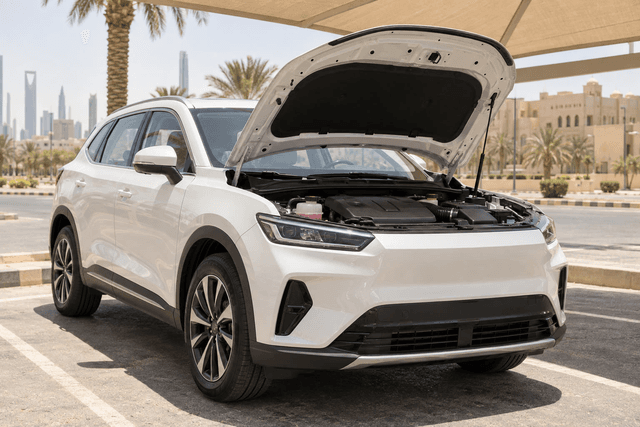
Summer Car Care: Protecting Your Car in Saudi Heat
Table Of Contents:
|
Summer car care means focusing on the systems that heat strains the most: check the cooling system and radiator coolant, the battery, tire pressure, AC performance, and engine oil before the peak of the heat, and protect the paint and cabin from direct sun. The Kingdom's long summer, with its high temperatures, dust, and desert trips, doubles the strain on the car, and most summer breakdowns can be avoided with a simple, regular review. In this guide, we show you what to check and how to act if a problem appears on the road.
Why does your car need special care in the Saudi summer?
Air and asphalt temperatures rise sharply in the summer months, so the car's systems work in harsher conditions than usual, and the strain on them increases with traffic, hours of AC use, and long trips.
- The engine and cooling system work harder to get rid of heat, especially in traffic and during long stops with the AC running.
- Heat speeds up the evaporation of battery fluid and the corrosion of its terminals, shortening its life even if it seems fine.
- Hot asphalt raises tire temperature and internal pressure, and magnifies the effect of any weakness or crack in them.
- Direct sun and dust affect the paint, dashboard, seats, and glass.
- Any small fault becomes more serious in summer, because breaking down on a highway at midday is unpleasant and can be dangerous.
How do you protect the engine and cooling system from the heat?
The cooling system is the first line of defence in summer, and neglecting it is one of the most common causes of costly breakdowns in this season.
- Check the coolant level in the reservoir with the engine cold, and never open the radiator cap while the engine is hot.
- Use the type of coolant recommended in the owner's manual rather than plain water, and learn about the difference between red and green radiator coolant before topping up or mixing.
- Look at the radiator hoses: cracking, swelling, or excessive softness are signs that they need replacing.
- Make sure the radiator fan runs when the temperature rises or the AC is on, and clean insects and dust off the front of the radiator.
- Keep an eye on the temperature gauge on the dashboard; if it rises repeatedly, read about the main causes of car engine overheating and deal with the cause early.
- Stick to the engine oil change schedule in the owner's manual, as oil endures higher temperatures in summer and needs to be in good condition.
How is the heat linked to a weak battery, and how do you look after it?
Many people believe that batteries only struggle in winter, but summer heat speeds up their internal wear, and the weakness then appears suddenly at the first hard start.
- Have the battery tested by a technician or parts shop before summer, especially if it has been installed for a long time.
- Clean white or green corrosion off the terminals, and make sure the cables are tightened properly.
- Watch for a slow-cranking starter or dim lights, as these are early signs of weakness.
- Try to park the car in the shade whenever possible, as this reduces the heat in the engine bay.
- To learn the signs in detail and ways to extend its life, see our article on car battery failure symptoms and how to extend its life.
How do you keep the AC working efficiently in summer?
In summer, the AC is not a luxury, and any weakness in it shows quickly as temperatures rise; servicing it early before the season is easier than repairing it at the peak.
- When getting into a car that has been parked in the sun, open the windows slightly for the first minute to let the hot air out, then close them and switch on the AC.
- Replace the cabin air filter on time, as a filter clogged with dust weakens airflow and causes an unpleasant smell.
- If the air becomes less cold than usual, the cause may be low refrigerant, a leak, or a weak condenser fan, and it needs a technical check.
- Pay attention to any strange noise when the compressor engages, or the engine stalling at idle with the AC on.
- To understand AC faults and how to fix them in detail, read our article on the car air conditioning system and its faults.
How do you protect the tires from hot asphalt?
The tire is the only part that touches the hot asphalt directly, so it needs closer monitoring in summer, especially before a trip.
- Check the air pressure in the morning when the tires are cold, and set it to the value on the driver's door sticker.
- Do not let air out of a tire because it is hot after driving; the rise in pressure with heat is normal and accounted for.
- Check the sidewalls for cracks or bulges, as old rubber is affected more by sun and heat.
- Check the manufacturing date printed on the tire's sidewall, and consult a technician if the tire is old even if the tread looks good.
- Do not exceed the car's permitted load on summer trips, as overloading raises tire temperature.
- Do not forget to check the spare tire and the tools for changing it before any long trip.
How do you protect the paint and cabin from the sun?
Strong sunlight affects the car's appearance and value over time, and simple daily protection is better than repairs later.
- Park the car in the shade or under a canopy whenever possible, and use a suitable cover when parking for long periods.
- Place a sunshade on the windscreen to reduce cabin heat and protect the dashboard from cracking.
- Suitable window tint reduces the heat inside the cabin and protects the seats; learn about how the right window tint protects your car.
- Wash the car early in the morning or in the evening, and do not wash it while the surface is hot in the sun, so water spots do not remain.
- Rinse the dust off with water first after sandstorms, and do not wipe it off dry so it does not scratch the paint.
- Do not leave lighters, aerosol cans, plastic water bottles, or electronic devices inside the car, as extreme heat may damage them or make them dangerous.
What should you do if your car overheats while driving?
If you notice the temperature gauge rising or steam coming from the front of the car, acting calmly and quickly reduces the damage to the engine.
- Switch off the AC immediately; you can temporarily run the heater at its highest setting to draw some heat away from the engine.
- Stop in a safe place away from the traffic lanes, and switch on the hazard lights.
- Turn off the engine if the gauge keeps rising or steam appears, and do not keep driving with the gauge in the red zone.
- Do not open the radiator cap or the coolant reservoir while the engine is hot, and wait until it has cooled down completely.
- Once the engine has cooled, check the coolant level and look for an obvious leak, then head to the nearest workshop or call for help.
Frequently asked questions about summer car care
- Does running the AC all the time harm the engine? No, if the cooling system is in good condition, but it adds load on the engine and battery, which is why maintenance matters more in summer.
- Should I change the engine oil earlier in summer? Follow the schedule in the owner's manual, and use the severe-conditions schedule, if there is one, if you drive a lot in traffic and extreme heat.
- Can I put plain water in the radiator when necessary? Only in an emergency and to reach the nearest workshop, then refill the system with the recommended coolant.
- Can tires burst because of the heat? Heat alone does not usually cause this, but it multiplies the risk of underinflated, old, or cracked tires.
- When should I check the car before a summer trip? A few days before the trip, so there is enough time to fix any issue with the cooling system, tires, or battery.
Summer in Saudi Arabia is a real test for every car, but most of its breakdowns start with small signs that can be noticed early. Review the cooling system, battery, tires, and AC before the peak of the heat, protect the paint and cabin from the sun, and never ignore the temperature gauge or any strange noise; with these simple habits, the summer months pass without surprises on the road.

Vehicle Ownership Transfer on Absher: Steps and Conditions
Table Of Contents:
|
Vehicle ownership transfer in Saudi Arabia is done electronically through the vehicle sale service on the Absher platform, without visiting traffic offices: the seller enters the buyer's ID number and date of birth, the agreed sale price and the seller's bank account; the buyer then receives a notification of the request within one hour and accepts or declines it, transfers the price through Absher's secure payment system, insures the vehicle and pays the fees, and once the car is received, checked and the delivery is confirmed on Absher, ownership is officially transferred. Both parties must be registered on Absher, the vehicle registration (istimara), periodic inspection and insurance must be valid, and there must be no violations on the buyer or the vehicle.
What is the vehicle ownership transfer service on Absher?
The Ministry of Interior offers the vehicle sale service through the Absher platform, and the National Platform describes it as a service that enables individuals to sell their private vehicles and transfer ownership electronically after its dues are cleared, after reaching an agreement with the buyer and completing all required procedures, including vehicle inspection to ensure compliance with conditions, registering the vehicle under the buyer's identity, and issuing the vehicle registration license.
- Target audience: individuals, both citizens and residents.
- Service channels: the Absher website and its mobile app.
- Service duration according to the National Platform: immediate.
- Payment method: the car's price is transferred through Absher's secure payment system, and the service page on Absher explains that payment goes to an intermediary account dedicated to the service, which ensures the amounts are documented and the vehicle is received.
Procedures and conditions may be updated from time to time, so confirm the latest steps on the Absher platform or the National Platform before you start.
What are the conditions for selling a vehicle on Absher?
Before the seller starts the request, both parties should review the conditions listed on the service page on Absher, as failing to meet any of them may stop the sale:
- Both the seller and the buyer must be registered on the Absher platform.
- The vehicle must be in sound condition and not suspended, lost, wanted or impounded.
- The vehicle registration license (istimara) must be valid.
- The vehicle must have a valid periodic inspection.
- The vehicle must have valid insurance.
- There must be no violations on the buyer or on the vehicle.
- The agreed price must fall within the limits set by the service, and the vehicle must be of a type the service allows to be sold.
- Government fees are paid through the government payment system (SADAD).
The page also mentions limits on the number of vehicles of certain types that a resident may own, so review them on Absher if the buyer is a resident. If the periodic inspection is close to expiring, prepare the car early using the checklist on how to prepare your car for the periodic inspection.
What are the seller's steps to transfer car ownership on Absher?
After agreeing with the buyer on the price and other terms, the seller starts the request with these steps, as set out by the National Platform:
- Log in to the Absher platform.
- Go to vehicle services, then choose the vehicle sale service.
- Select the vehicle you want to transfer from the list displayed.
- Enter the buyer's information: ID number and date of birth.
- Enter the agreed-upon sale price.
- Add the seller's bank account details where the proceeds of the sale will be deposited.
- Carefully review the entered information, then confirm the request.
- Wait for the buyer's response: the buyer receives a notification of the transfer request within one hour and can accept or decline it.
- Once the buyer accepts the sale, both parties complete the delivery of the vehicle and the payment through Absher's secure payment system before the transfer is confirmed.
What does the buyer do to complete the sale?
Ownership does not pass to the buyer until they complete their steps on the platform, which according to the National Platform are:
- Review the Absher notification about the vehicle transfer request, and accept it within one hour if you agree.
- Carefully review the vehicle information and sale price before confirming your acceptance.
- Transfer the agreed amount to the seller's account through Absher's secure payment system.
- Insure the vehicle before the ownership transfer is completed.
- Pay the government fees and the Absher fees.
- Receive the vehicle and check it, then confirm delivery through Absher.
- Upon confirmation, the vehicle ownership is officially transferred from the seller to the buyer.
How do the seller's and buyer's tasks differ?
The table below summarises the role of each party at every stage of the sale:
| Stage | Seller | Buyer |
| Before starting | Agree on the price and terms, and check the istimara, periodic inspection and insurance are valid | Register on Absher and make sure there are no violations on them |
| Creating the request | Enter the buyer's ID, date of birth, price and bank account, then confirm | Wait for the Absher notification |
| Responding | Wait for acceptance or refusal | Review the details and accept or decline the request within one hour |
| Payment | Receive the price in the bank account entered in the request | Transfer the price through Absher's secure payment system |
| Insurance and fees | The platform lists no step for the seller at this stage | Insure the vehicle and pay the government fees and Absher fees |
| Delivery | Hand the vehicle over to the buyer after they accept the sale | Receive and check the vehicle, then confirm delivery on Absher |
How do you transfer car ownership between family members?
If you are handing your car over to a family member, Absher has a separate service called vehicle ownership transfer between family members, which allows vehicle ownership to be waived between family members electronically once the current owner and the new owner agree. The National Platform lists its steps as follows:
- Log in to the Absher platform, then select the required vehicle and the service dedicated to this.
- Select a first-degree family member: father, mother, brother, sister, husband, wife, son or daughter.
- Enter the confirmation code sent to the new owner's phone.
- Pay the service fees.
- The vehicle ownership is transferred to the new owner in the traffic systems after all requirements are met.
What practical checks protect the seller and buyer before the sale?
The platform organises the procedure, but it does not replace inspecting the car yourself; the service page on Absher states that the sale takes place after the vehicle has been viewed and inspected and the seller and buyer have agreed. Here are practical tips before accepting the request:
- Match the chassis number (VIN) on the car with the istimara and the vehicle details shown in the request; the article on what the VIN characters mean explains where to find it.
- Inspect the car in daylight and try the engine, transmission, air conditioning and tyres, or ask for a pre-purchase inspection at an independent inspection centre; you will find a wider list in vehicle inspection tips before buying a used car.
- Look for signs of accidents and differences in paint shade between panels, and read what it means when a car has been repaired before you decide.
- Check for violations through official channels such as Absher before starting the request, because the service requires no violations on the buyer or the vehicle.
- Agree in advance on what the sale includes, such as the spare key, accessories and the service record if there is one.
- Keep a private record of the agreement for yourself: the agreed price, the request date and screenshots of the request, and do not share these details publicly.
What are the common mistakes in car ownership transfer?
- Starting the request before clearly agreeing on the price and other terms.
- Entering the buyer's ID number, date of birth or the sale price without careful review before confirming.
- Creating the request at a time when the buyer is not available, although the steps ask the buyer to review and accept it within one hour.
- Overlooking the expiry date of the istimara, periodic inspection or insurance until the request stalls after the deal is agreed.
- Transferring the price outside Absher's secure payment system, although the service steps state that payment is made through it.
- Confirming delivery on Absher before actually receiving and checking the car.
Frequently asked questions about car ownership transfer
- Do I need to visit the traffic department to transfer car ownership? According to the National Platform, the vehicle sale service is completed electronically through Absher without the need to visit General Traffic Department offices.
- How long does the ownership transfer take? The National Platform describes the service duration as immediate; the buyer receives the request notification within one hour, and the sale is complete once both parties finish their steps and the buyer confirms delivery.
- Who pays the ownership transfer fees? The National Platform lists paying the government fees and Absher fees among the buyer's steps; check their current amount on the platform before you start.
- Can the sale be cancelled after the request is created? The buyer can decline the request when the notification arrives, and the service page on Absher states that in case of disagreement or unwillingness to continue, the sale can be cancelled before it is completed, according to the stage set by the platform.
- Does the buyer need insurance for the car? Yes. One of the buyer's steps is to insure the vehicle before the ownership transfer is completed.
Transferring car ownership through Absher is a clear process if you prepare for it: check the conditions, agree on the price, inspect the car before accepting, pay through the platform's secure payment system, and do not confirm delivery before checking the car. If you are looking for your next car, you can browse the cars available at Saleh Cars Group.