
Buying a Chinese Car in Saudi Arabia: What to Check First
Table of Contents:
|
Before buying a Chinese car in Saudi Arabia, check things that do not show in the showroom: the brand’s parent company and who officially represents it in the Kingdom, whether there are service centres and spare parts in your city, the written warranty terms, and whether the car meets the GCC specification suited to heat and dust; then take a test drive and try the technology and the screen interface in Arabic. This guide is a neutral checklist that does not favour one brand over another; it helps you ask the seller the right questions before you sign.
Why Does the Parent Company of a Chinese Brand Matter?
The Saudi market includes many Chinese brands, and some of them belong to a larger group. Knowing the parent company helps you understand who stands behind the car and direct your questions about the dealer and the service network. Examples of these relationships include:
- Jetour, Omoda and Jaecoo: brands that belong to Chery.
- Haval: a brand owned by Great Wall Motor that specialises in SUVs and crossovers.
- Deepal: a company owned by Changan.
- Lynk & Co: a brand within the Geely group.
- Hongqi: a brand owned and operated by FAW Group.
However, two brands belonging to one group do not necessarily share the same dealer or service centres in the Kingdom, so ask about each brand separately. The brands and models available on the market also change over time. If you want to recognise these brands’ badges and names, see the guide to car brand logos and names.
How Do You Verify the Authorised Dealer and After-Sales Service in Your City?
Buy from the brand’s official agent in the Kingdom or from a dealer it has authorised, and ask the seller directly about their status. Ways to verify include checking the list of dealers and service centres on the brand’s official Saudi website if one exists, and making sure the warranty is activated with the agent in your name at delivery.
After-sales service is part of the buying decision, so ask before you sign:
- Where is the nearest authorised service centre to your city? Can it service this model with its powertrain, especially if it is hybrid or electric?
- Are routine maintenance parts such as filters and brake pads available locally? How are parts that are not in stock ordered?
- How are body panels, glass and lights handled after an accident, and does the agent supply them?
- Is there a roadside assistance service, and what are its written terms?
What Should You Read in the Written Warranty Terms?
Do not rely on a verbal promise from the seller; read the warranty booklet and the sales contract, and ask for any extra commitment to be written into the contract or invoice. Pay attention to the following:
- The covered parts, such as the engine, transmission and electrical systems, and whether the high-voltage battery in electric and hybrid cars has a separate warranty with its own terms.
- The warranty period and mileage limit as written in the booklet, and when they start to count.
- The conditions for keeping the warranty valid, such as servicing at authorised centres and following the maintenance schedule in the owner’s manual.
- The exclusions, such as wear parts and unapproved modifications, and whether the warranty transfers to the next owner when you sell.
Is the Car GCC Specification and Suited to Saudi Heat?
Ask which market version the car was built for, and make sure it is the version intended for the Saudi or GCC market. A car built for other markets may differ in cooling, air conditioning and infotainment settings, and may not be covered by the local agent’s warranty.
For extreme heat and dust, many owner’s manuals include a maintenance schedule for severe operating conditions, so ask the service centre whether it applies to your use, particularly for the engine air filter and the cabin filter. Also check the fuel octane rating required in the owner’s manual or on the fuel filler flap, because some engines may require higher-octane fuel than others, and this belongs in your running-cost calculation.
What Should You Test on the Drive, the Technology and the Screen?
Drive the car on roads similar to your daily use, test the air conditioning in the heat of the day, and follow the test drive checklist before buying to assess comfort, noise and visibility. Then focus on the technology and screens, because they vary widely between models and trims:
- Driver assistance systems: confirm that the advertised features are fitted to the trim you are buying, and try how they are activated and how they warn you.
- Screen and instrument cluster: does the interface support Arabic with a clear translation? Do the navigation, voice commands and phone connection work as you expect?
- Software updates: are they delivered over the air or at the service centre? Who provides them in the Kingdom? Does the car’s app need an account or a subscription?
- Ease of use: can you adjust the air conditioning, mirrors and basic settings easily while driving without distraction?
Petrol, Hybrid or Electric: What Should You Consider?
The type of powertrain changes the questions you ask the seller:
- Petrol: check the required octane rating and the maintenance schedule in the owner’s manual.
- Hybrid: ask whether it is a conventional hybrid or a plug-in hybrid charged from an external source, and whether the service centre can maintain the hybrid system.
- Electric: make sure a home charger can be installed where you live and that charging is available on your usual routes, and ask how air conditioning and heat affect the driving range.
For both hybrid and electric cars, read the battery warranty terms in writing, and ask about technicians qualified to work on high-voltage systems in your city.
What Should You Ask About Insurance and Resale Value?
Request insurance quotes for the same model and trim before you sign, because the premium varies with the car and other factors, and compare the cover and exclusions rather than the premium alone.
There is no fixed rule for resale value; follow used-car listings for the same model to form a general idea, and remember that the car’s condition and its service history at an authorised centre affect it. It is also useful to check before buying whether the model is subject to any recall campaign.
Checklist Before Buying a Chinese Car
The table below summarises what to check, why it matters and how to verify it:
| What to check | Why it matters | How to verify |
| Seller status | The agent’s warranty and authorised servicing depend on it | Ask the seller and check the dealer list on the brand’s official website |
| Service centres and spare parts | Less waiting for maintenance or repairs | Ask about the nearest authorised centre and routine parts availability |
| Written warranty | Knowing what it covers and how it stays valid | Read the warranty booklet and ask for any extra promise in writing |
| GCC specification | Cooling and air conditioning suited to heat and dust | Ask about the market version and review the car’s documents |
| Fuel grade | Using the fuel the engine was designed for | Owner’s manual or the fuel filler flap label |
| Technology and screen | Confirming the features and Arabic language support | Try them during the test drive |
| Insurance and resale | Estimating the cost of ownership | Insurance quotes for the same trim and used-car listings |
Frequently Asked Questions About Buying a Chinese Car
Are Chinese cars suitable for Saudi heat?
It depends on the model, its specification and how it is maintained, not on the country of origin alone. Make sure the car is GCC specification, test the air conditioning in the heat of the day, and follow the maintenance schedule in the owner’s manual.
How can I confirm the seller is an official agent or authorised dealer?
Ask the seller about their status, check the dealer list on the brand’s official Saudi website if one exists, and make sure the warranty is activated with the agent in your name at delivery.
Does the warranty include routine servicing?
Not necessarily; a warranty usually covers manufacturing defects, while free routine servicing depends on the seller’s offer. Rely on what is written in the warranty booklet and the sales contract.
How do I know spare parts are available in my city?
Ask the nearest authorised service centre about routine maintenance parts for the model you want and how parts that are not in stock are ordered, and use the vehicle identification number (VIN) when ordering so the part matches.
Do the Chinese brands available in Saudi Arabia change?
Yes, new brands and models may arrive and the trims on offer may change over time, so check the current situation with the agent instead of relying on old information.
Conclusion
Buying a Chinese car is like buying any new car, but it deserves extra questions: who the parent company and the agent are, where the service centres and spare parts are, what the written warranty says, whether the specification is GCC, and how the technology and screen work in Arabic. You can browse the new cars currently listed at Saleh Cars Group and then apply this checklist to any model you are considering.
Car Recalls in Saudi Arabia: VIN Checks and Next Steps
Table of Contents:
|
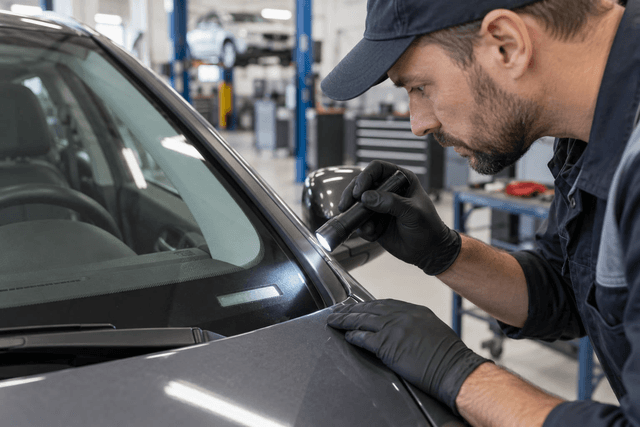
To check car recalls in Saudi Arabia, enter the VIN on the official recall platform, then read the campaign details and follow the instructions for your vehicle. A matching model name or model year alone does not establish inclusion, and no result does not mean the car is defect-free. If a campaign applies, contact the responsible party named in it, ask about driving instructions and an appointment, and retain confirmation of the completed repair.
What are car recalls in Saudi Arabia?
A recall is an action to address an announced defect, not a general description of every problem a car develops. The Ministry of Commerce explains that its enquiry service checks whether products or vehicles are included in campaigns announced in cooperation with manufacturers and local agents. Start with the official source rather than a shared image or a message of unknown origin.
Refer to the Ministry of Commerce defective products enquiry service (in Arabic) for the service sequence: access the platform, enter the VIN or search for the product, then follow the campaign details and required actions. Do not assume a recall means replacing the car; the relevant action is the one specified for the campaign once its applicability to your vehicle is confirmed.
What should you prepare before a VIN recall check?
Have the vehicle identification number, or VIN, ready. Read it from a reliable document for the car or from the location identified in the owner’s manual. Do not substitute the registration plate number or another identifier simply because its name sounds similar. For help identifying it, see the guide to your vehicle identification number, then match the details to the actual car.
- Copy the complete number exactly and check the letters and digits before searching, especially when copying from an image or message.
- Keep the basic vehicle details and any recall notice you received so you can explain your enquiry clearly when making contact.
- If the number on a document differs from the one on the car, have a qualified party clarify the discrepancy before relying on the search result.
Do not send full images of your documents to untrusted accounts to make an enquiry. Start through the official channel and provide what the responsible party requests through its authorised contact method, without posting your details in public comments.
How do you search the recall platform?
- Open the official defective products recall platform and find the vehicle or product checking field rather than only browsing the latest announcements.
- Enter the VIN you checked and run the search. If the field rejects the entry, review the number and field instructions rather than guessing a replacement character.
- Read the full result and open the details of any associated campaign. Note its reference if shown, the defect description and the required action.
- Review the instructions, then contact the specified party to confirm VIN inclusion and arrange the next step, rather than choosing a contact from an unofficial advertisement.
Searching by product or brand name helps you find announcements, but it does not replace matching the individual car. Keep the date of your enquiry and a copy of the details for reference. Do not treat an old screenshot as a permanent answer about recalls, particularly when a new notice arrives.
How should you interpret the search result?
Distinguish finding an announcement from confirming that your vehicle is included, and distinguish inclusion from actual completion of the required action. This table helps you choose the next step; it does not represent fixed status labels used by the platform:
| What did you find? | What should you do? |
| An announcement naming your car model | Match the VIN and check the campaign scope before assuming it applies to your car. |
| A result indicating that the vehicle is included | Read the campaign instructions and contact the party responsible for carrying out the action. |
| No result, or a search that could not be completed | Check the entry; if you have a notice or a specific concern, seek confirmation from the relevant party. |
| The seller says the repair was completed | Request the completion document and match it to the VIN and the relevant campaign. |
The absence of a recall result does not guarantee safety or replace an inspection when there are unusual symptoms. Likewise, do not attribute a noise or vibration to a campaign simply because its description seems similar. Diagnosing a fault requires a professional, while the enquiry answers a different question: whether the car is included in the campaign.
What should you do if your car is included?
Read the full defect description, risk and instructions before planning a trip to a service centre. There is no single driving recommendation for every campaign. If the announcement specifies instructions about use or stopping, follow them. If anything remains unclear, ask the responsible party how to handle and transport the car before moving it.
- Provide the VIN and campaign reference, and ask for confirmation that the discussion concerns this specific car and action.
- Ask where the work takes place, how to book and what to bring, and confirm the instructions to follow until the appointment.
- Keep the contact and appointment details, and ask how to obtain written confirmation when the work is finished.
Do not deliberately try to reproduce the defect, dismantle a suspected component or cancel a warning to continue driving. If the action requires a part or technical work, do not assume that buying a replacement yourself closes the campaign. To understand parts choices outside this process, read the guide to genuine, aftermarket and used car parts; follow up recall work with the party responsible for it.
How do you follow up and keep proof of repair?
When collecting the car, request a document showing the work performed and its date, linked to the VIN and campaign. Check that the details concern your car, and ask whether the action is complete or another step remains. An appointment confirmation or service-centre visit alone does not necessarily show that the recall work is finished.
Keep the document with the vehicle records, a copy of the announcement and important correspondence. If a later search seems inconsistent with the completion document, show both to the responsible party and request clarification instead of assuming one overrides the other. If symptoms remain or a concern appears after the work, report it and request a technical assessment. Proof of campaign repair is not a certificate that the car has no other faults.
What should you check before buying a used car?
Add a check for open recalls, meaning those whose required action is not yet complete, to your pre-purchase checklist. Request the VIN, match it to the car and search for yourself rather than relying on a verbal assurance or an image for a similar vehicle. If the seller mentions a completed earlier campaign, request its document and review the VIN and work details.
If a campaign applies and completion is unclear, ask the responsible party what remains before deciding to buy or use the vehicle. Do not make a recall result a substitute for a technical inspection or a review of the car’s condition; combine it with these used car inspection tips before purchase. The aim is to establish what has been verified and what needs follow-up, not to obtain a comprehensive guarantee from one search result.
Frequently asked questions about car recalls
- Is the car name enough to establish inclusion? Do not rely on it alone. Identify the vehicle using its VIN, then confirm campaign applicability with the responsible party if the result remains unclear.
- Does no result mean the car is completely safe? No. The enquiry is not a comprehensive technical inspection and does not justify ignoring symptoms or warnings that need professional assessment.
- Should I wait for a fault before making contact? Once inclusion is confirmed, follow the campaign instructions and contact the responsible party about the action without waiting for a noticeable symptom or trying to produce one.
- Can I book any workshop to close the recall? Start with the party identified in the announcement and ask it to direct you to the place of service and explain completion confirmation, rather than assuming any independent repair is enough.
- What should I keep after the action is completed? Retain confirmation linked to the VIN and campaign, the work date and important correspondence to make follow-up or explaining the car’s history when selling it easier.
Start with the correct VIN, read the full announcement and follow up with the responsible party until completion and documentation are clear. Make the enquiry part of caring for a car and checking it before purchase, not a replacement for a technical inspection or its specific safety instructions.
CVT vs Automatic: Differences and Pre-Purchase Checks
Table Of Contents:
|
CVT vs automatic: neither is the best choice for everyone. What matters is how the car responds in your daily use, the transmission’s condition and its service history, not its name alone. You may prefer the continuous acceleration of the former or the distinct shifts of the latter. Before buying, identify the actual transmission, drive the car in suitable conditions and separate normal behaviour from a symptom requiring professional inspection. This is a buying comparison, not a blanket reliability verdict.
CVT vs Automatic: What Exactly Are We Comparing?
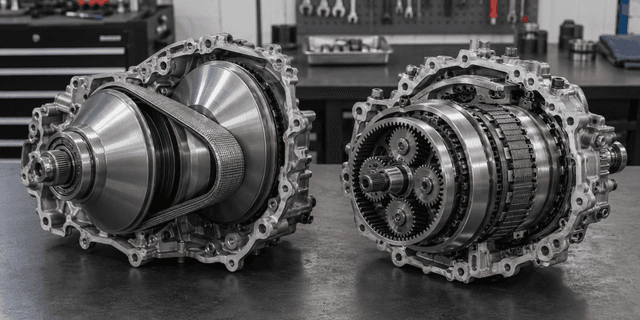
Here, CVT means a conventional design that continuously varies its transmission ratio using variable pulleys and a metal belt or chain, depending on its construction. Conventional automatic means a transmission with fixed gear ratios that shifts between them and uses a torque converter to transfer power between the engine and transmission. The comparison does not cover every technology described as automatic or erase differences within either family.
A torque converter alone does not identify the type: some CVTs also use one. Likewise, do not assume that an e-CVT in a hybrid is the same pulley-and-belt transmission. The term can describe a hybrid system that varies the relationship between engine speed and vehicle movement differently. Architectures vary between systems, so consult the description of the particular vehicle rather than relying on the letters.
For an introduction to other designs, read the guide to transmission types and how they work; here, the focus is what to observe and verify when choosing.
How Do Acceleration and Shifts Feel Different?
With a CVT, engine sound may rise and engine speed may stay relatively steady while the car continues gaining road speed. This can be part of ratio control, not sufficient evidence of transmission slip. Software may also simulate stepped shifts, so the tachometer alone cannot identify transmission type or establish its health. What matters is a predictable response appropriate to the driving situation.
In a stepped automatic, engine speed may fall on an upshift or rise when you request more acceleration. How noticeable each shift feels depends on calibration, the engine and cabin isolation. Not every perceptible shift is a fault, but repeated harsh jolts should not be accepted merely because the transmission is conventional. Compare with a healthy car of the same specification if possible and seek professional advice when unsure.
A Comparison Table for Setting Your Priorities
| Comparison point | Conventional CVT | Stepped automatic |
| Acceleration | Continuous ratio changes, sometimes with simulated shifts | Shifts between fixed ratios with varying smoothness |
| Sound and feel | May hold higher engine speed during acceleration | Engine sound may change noticeably during shifts |
| Suitability check | Observe pull-away smoothness and whether the acceleration sound suits you | Observe shift timing and response to acceleration requests |
| Maintenance | Fluid specification and schedule depend on the particular transmission | Fluid specification and schedule depend on the particular transmission |
| Buying decision | Vehicle condition and use matter more than the label | Vehicle condition and use matter more than the label |
Which Suits Traffic, Long Trips and Hills?
Describe your daily driving rather than ranking technologies from best to worst. In traffic, assess low-speed control and the transition between stopping and moving. On an open road, notice refinement at a steady speed and the response to moderate, legal acceleration. The engine, weight, accelerator calibration and insulation can influence your impression as much as transmission type, so do not attribute every difference to it.
If you regularly drive on hills or carry passengers and luggage, check load limits and driving instructions in the owner’s manual. Do not infer towing capability from the transmission name or test loads or gradients outside permitted limits. For fuel consumption, compare data for the exact trim and engine under comparable measurement conditions; a CVT does not guarantee lower fuel use on every trip.
What Should You Verify About Fluid and Service History?
Ask for invoices showing service dates, mileage and the fluid specification used, not merely a statement that the fluid was changed. Do not assume automatic transmission fluid suits a CVT or that all CVT fluids are interchangeable. The reference is the approved specification for that transmission and its correct service procedure. Transmission type alone cannot establish one fluid-change schedule for every car.
Discuss how your operating conditions affect the service schedule with a qualified provider, along with any documented repairs or leaks. Do not request an indiscriminate fluid change or flush as a cure for every vibration, and do not open hot components to inspect fluid yourself. Read about transmission fluid changes and care for general background, then give your vehicle’s manual priority over conflicting general advice.
A Pre-Purchase Checklist for Either Transmission
Treat the drive as a way to gather observations, not a certificate that the car is fault-free. Agree on a safe, permitted route and have a passenger take notes without distracting you. Do not deliberately overheat the transmission or use aggressive launches to expose faults.
- Confirm the transmission in the actual vehicle’s specifications and production year. Advertisement wording and selector appearance are insufficient, and specifications may differ between trims.
- Review the service history and any previous replacement or repair. Ask why the repair was needed and what was done; request documents rather than relying on verbal reassurance.
- Start with gentle driving and observe pull-away, low-speed movement and gradual acceleration. Stay within speed limits and never watch the instruments at the expense of the road.
- With the car fully stopped and the brakes applied, observe its response when selecting forward or reverse as instructed in the manual. Never switch direction while moving or repeat the manoeuvre aggressively.
- Note whether the observation occurred at the start or after driving, with or without air conditioning, and whether it repeated under the same conditions. Do not set a universal delay threshold separating healthy from faulty.
- Before a final agreement, arrange an independent professional inspection including an appropriate road test and electronic checks when needed, with an explanation rather than just a fault-code printout.
To compare comfort, visibility and the rest of the car as well, use the pre-purchase test drive checklist alongside these transmission-specific checks.
When Does an Observation Need Professional Diagnosis?
Repeated vibration, a noticeable response delay, a temperature warning or a sudden performance change deserves assessment, but none proves transmission failure by itself. The engine, its mounts or other systems may contribute. Describe when the symptom appeared rather than requesting transmission replacement based on a video or personal impression.
If a temperature warning or loss of drive affects safety, end the test in a safe place, follow the owner’s manual and seek appropriate help. Do not clear warnings or keep accelerating to test them. Read about transmission symptoms that warrant inspection to recognise possible observations, not to diagnose your car or assume one definite cause.
Frequently Asked Questions About CVT and Automatics
Does Steady Engine Speed Mean a CVT Is Slipping?
Not necessarily; acceleration can continue at nearly constant engine speed. A changed response with reduced drive or a warning needs professional assessment, not a verdict from the tachometer alone.
Does a Conventional Automatic Always Last Longer?
It is not sound to generalise lifespan or reliability across all designs. Condition, history, maintenance and use are essential when assessing an individual car.
Can Both Types Use the Same Transmission Fluid?
Do not assume compatibility from a fluid’s name or colour. Check the specification required for the exact transmission and have a professional follow its approved service procedure.
Is e-CVT the Same as a Belt CVT?
Not necessarily: similar names do not establish identical construction. Check the explanation of the hybrid’s system; systems described by this term do not necessarily share one design.
Is a Short Drive Enough to Establish Transmission Health?
No; some symptoms may not appear during a short drive. Combine it with service records and an independent inspection, especially when documents are missing or observations remain unexplained.
Conclusion: Choose the Right Car, Not Just a Label
Choose after defining your use, testing the response and verifying maintenance and inspection findings. Do not reject a CVT solely because it sounds different, or accept a conventional automatic with unexplained symptoms. A stronger decision combines driving suitability with documented condition and clear instructions for caring for the car.
How to Test MAF Sensor Readings and Clean the Sensor
Table of Contents:
|
How to test MAF sensor readings correctly starts with ruling out simple causes such as a clogged air filter or air entering after the sensor, then a visual inspection, then reading codes and live data with an OBD-II scan tool and comparing them with what the service data states or the technician expects. If the sensor is dirty, clean it only with a spray made for MAF sensors and without touching the sensing element. Your owner’s manual and a qualified technician remain the reference for your car’s values and procedures.
What Does the MAF Sensor Measure and When Should You Suspect It?
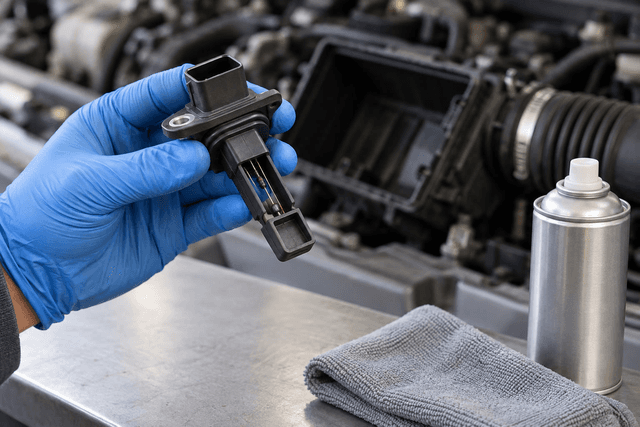
The MAF (mass air flow) sensor usually sits between the air filter box and the throttle body and measures the amount of air entering the engine, so the engine computer can calculate the right amount of fuel. It differs from the manifold absolute pressure (MAP) sensor, which measures pressure inside the manifold, and from the intake air temperature sensor, which may be built into the MAF sensor housing. Some engines rely on a MAP sensor instead of a MAF sensor or alongside it, so first confirm which sensor your car has.
Symptoms may include the engine warning light, an unstable idle, misfiring, weak pulling and higher fuel consumption, and they are shared with many other faults; so see MAF sensor symptoms, causes and prevention for details, and causes of power loss under acceleration if weak pulling is the main symptom.
Which Simple Causes Should You Rule Out Before Testing the Sensor?
Many abnormal readings are caused by what surrounds the sensor rather than the sensor itself. Check the following with the engine off and cold:
- Air filter: a clogged or poorly seated filter may restrict airflow or let dust reach the sensor. Review the signs your car needs a new air filter.
- Air entering after the sensor: the sensor does not measure this air, so the air-fuel mixture may be upset and symptoms may resemble a sensor fault.
- Intake hose and clamps: look for a crack, a loose hose or a slack clamp between the sensor and the throttle body.
- Sensor connector: make sure it is firmly seated, its pins are free of corrosion and moisture, and its wires are intact.
How to Test MAF Sensor Readings Step by Step
Order the tests from the simplest to the most precise, and do not move on before finishing the previous step:
- Visual inspection: look for dirt, oil traces, damage or a foreign object in the air path, without touching the delicate sensing element with your fingers or any tool.
- Reading codes and live data with an OBD-II scan tool, usually the most important step.
- Unplug test: an indicative test that a technician performs with care, and it should not be relied on alone.
- Multimeter check: an electrical test that differs from car to car and is done according to the service manual.
How Do You Read Fault Codes and Live Data With a Scan Tool?
Connect the scan tool to the diagnostic port under the dashboard, and note the stored and pending codes and the freeze frame data before clearing anything. Codes may point to the sensor circuit, a reading out of range, or a lean or rich mixture; for other reasons, see the common causes of the engine warning light.
Then open the live data and watch the sensor reading:
- At idle: once the engine reaches operating temperature, compare the reading with what the service data states or the technician expects for your engine.
- When raising the revs gradually: the reading is expected to rise smoothly, while jumps, dropouts or a flat reading may point to a problem with the sensor or its wiring.
- Fuel trims: the technician reads them alongside the sensor reading, as their pattern may help distinguish unmetered air from an inaccurate reading.
Do not rely on figures published for other cars, because values vary with the engine and its design.
Is the Unplug Test Reliable, and When Is a Multimeter Used?
In this test the technician unplugs the sensor connector with the engine off and then starts it to see whether its behaviour changes, since the computer usually falls back on estimated values without the signal. If performance clearly improves, this may suggest an inaccurate reading, but the result is indicative, not a final verdict.
Some cars enter limp mode, run worse or show no change at all, and a fault code is stored because of the disconnection; so the test stays with the technician as part of a broader diagnosis, and the car should not be driven with the sensor unplugged.
A multimeter is used to check the supply, ground and signal, but connector pins and the measuring method differ between cars, and some sensors send a frequency signal that a standard measurement cannot read; so it follows the wiring diagram in the service manual or is done by a qualified technician.
How Do You Clean a MAF Sensor Correctly?
Cleaning helps when the sensor is dirty but sound; it does not fix an electrical fault. Follow the cleaner’s label; in general:
- Switch the engine off, let it cool, and work in a well-ventilated place away from flames, as cleaning sprays are usually flammable.
- Disconnect the sensor connector, then remove the sensor carefully with the right tool, as some sensors use special screws.
- Spray the sensing element with a cleaner made for MAF sensors only, from the distance recommended on the can, without touching it or wiping it with a cloth, brush or cotton bud.
- Let it air-dry completely, and never install it while wet.
- Refit the sensor and connector, tighten the intake hose and clamps, then start the engine and watch its behaviour and the engine warning light.
Which Mistakes Damage the MAF Sensor During Cleaning?
Avoid the following, because it may damage the sensor or hide the fault instead of fixing it:
- Using brake cleaner, carburettor cleaner or general solvents, which may leave residue or damage plastic and the sensing element.
- Blowing compressed air or spraying water, which may damage the delicate element or let moisture reach the circuit.
- Touching or wiping the sensing element, or cleaning while the engine is running or hot.
- Over-oiling washable air filters, because excess oil may travel with the air and contaminate the sensor; follow the filter instructions or use the filter specified in the manual.
- Clearing codes straight after cleaning before confirming the cause has been addressed.
Once the real cause has been addressed, the codes can be cleared and the repair verified with normal driving and another look at the live data; the computer may need some driving to relearn its fuel trims. If the code returns, the problem is not solved yet.
When Is Cleaning Enough and When Does the MAF Sensor Need Replacing?
Cleaning is often enough if the reading returns to a normal pattern and the symptoms disappear. Replacement is considered when:
- The sensing element is broken, the sensor body is cracked or its terminals are damaged.
- The reading stays abnormal after cleaning and after ruling out air leaks and wiring or connector problems.
- The technician confirms with a scan tool or electrical measurement that the fault is inside the sensor itself.
When replacing it, choose a part matching the part number or the vehicle identification number, as a non-matching sensor may give wrong readings. If high fuel consumption continues after the repair, review the causes of higher fuel consumption, as there are many other possible reasons.
What Do the Test Results Mean and What Is the Next Step?
The table summarises common findings; all of them are possibilities that need confirmation:
| Symptom or finding | What it may mean | Next step |
| Clogged or poorly seated air filter | Restricted airflow or dust reaching the sensor | Replace the filter as per the manual, then retest |
| Cracked hose or slack clamp after the sensor | Air entering that the sensor does not measure | Fix the leak before judging the sensor |
| Dirt or oil traces on the sensor | Inaccurate reading | Clean it with the dedicated spray and find the oil source |
| Reading does not rise smoothly with revs | Dirty or failed sensor or a wiring problem | Clean it, then have the wiring and reading checked by a technician |
| Code related to the sensor circuit | Fault in the connector, wiring or sensor | Inspect the connector and request electrical testing per the service manual |
| Code returns after cleaning and repairs | Fault inside the sensor or an undetected cause | Diagnosis by a qualified technician; replacement may be needed |
Frequently Asked Questions About Testing and Cleaning the MAF Sensor
How do I know if the MAF sensor is bad?
Symptoms alone are not enough because they resemble other faults. Confirmation comes from reading codes and live data after ruling out the air filter, air leaks and the connector, preferably with a qualified technician.
What is the best spray for cleaning a MAF sensor?
A product whose label clearly states that it is made for MAF sensors, leaves no residue once dry and is safe on plastic parts. Read the label and follow its instructions.
Can I clean the MAF sensor with brake or carburettor cleaner?
This is not recommended, because these cleaners are harsher than needed and may leave residue or damage the sensing element.
Should I clear the fault code after cleaning the MAF sensor?
Clear it only after the cause has been addressed, then verify by driving and checking the live data. Clearing the code does not fix the fault, and if it returns, have it diagnosed.
Can I drive the car with a faulty MAF sensor?
It may remain drivable, with performance and fuel consumption affected. But if the engine warning light flashes, the engine clearly loses power or a red warning appears, avoid driving and call for help.
Conclusion
The right way to test a MAF sensor starts with ruling out the air filter, air leaks and the connector, then a visual inspection, then reading codes and live data. Clean the sensor with a dedicated spray without touching the sensing element, do not clear codes before the cause is addressed, and leave electrical tests and the replacement decision to a qualified technician.
Accident Damage Assessment in Saudi Arabia: Taqdeer Guide
Table of Contents:
|
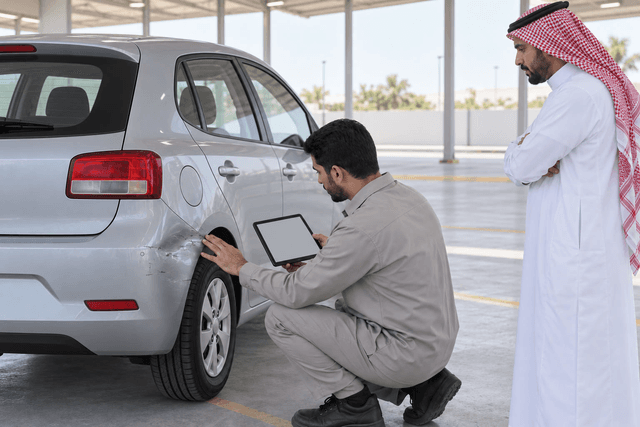
Accident damage assessment is a step you may need after a Najm or traffic police report. According to the Saudi Authority for Accredited Valuers (TAQEEM), it means determining the cost of repairing the vehicle, including parts, or estimating its market value before or after the damage. These assessments are managed electronically through the Taqdeer system, which operates under the Authority’s supervision and lets you book an appointment and check the status of your assessment. This guide covers the stage after the report: when to seek an assessment, what to prepare, how to read the report and review it with your workshop and insurer, and what to do if you disagree with the result.
What Is Accident Damage Assessment and Who Oversees It?
On its official English website, TAQEEM describes vehicle damage assessment valuation as “the act or process of determining the value of repairing the vehicle including the spare parts, or estimating the market value of the vehicle before and after the accident”; the Arabic version also mentions labour explicitly. The outcome may therefore be a repair cost, or a market value before or after the damage, depending on the case.
TAQEEM describes Taqdeer as “an online integrated system for managing, operating, and organizing vehicle damage assessment processes” and lists “Book an appointment at Taqdeer centers” among its services. The Taqdeer system website (in Arabic) states that it operates under the supervision of the Saudi Authority for Accredited Valuers. An assessment is a technical valuation of the damage; it is neither the accident report nor your insurer’s decision.
When Do You Need an Assessment After a Najm or Police Report?
The sequence starts with attending to and documenting the accident. If you have not completed that stage, begin with the guide to Najm reporting steps and when to call the traffic police, then return to this guide.
The official pages we relied on do not state that an assessment is required for every accident, nor do they describe the content of report messages. Follow what the accident report and your insurer require in your case, and ask before any repair starts, because repairing damage before it is assessed may cost you the chance to document it as it was. Useful questions for your insurer:
- Does my case need a damage assessment, and from which body?
- Is the electronic report enough, or must it be sent in a particular way?
- Should I wait for the assessment before taking the car to a workshop?
- Which documents do you need with the report to progress the claim?
How Do You Book a Taqdeer Appointment and Track It?
The Taqdeer website presents the service in three consecutive stages, which can be summarised as follows:
- Book an appointment and go to the assessment center, using the booking service, which the site describes as booking a new appointment to assess your vehicle’s damage.
- Have the vehicle damage assessed at the assessment center.
- Receive the report electronically, with the option to follow it through the report status service, which lets you check the status of your assessment.
If your plans change before the appointment, the manage bookings service allows you, according to the site, to modify or cancel the booking, and the assessment centers page helps you find the nearest centers in your city. We do not mention numbers of centers, timings or fees here; follow what the service shows for your case when you book.
What Should You Prepare Before Visiting an Assessment Center?
The pages we reviewed do not publish a document list, so the list below is practical rather than an official requirement; what the booking screen and center ask for takes precedence:
- Your booking details as shown once the booking is complete.
- The accident report reference from Najm or the traffic police.
- Your ID and the vehicle registration; ask what is needed if you are not the vehicle owner.
- Unedited photos of the damage taken at the time of the accident.
- Your insurance policy details and the party handling the claim.
Do not repair the damage being assessed before the appointment unless the relevant authority tells you to, and do not drive an unsafe car; arrange transport if you notice a leak, a red warning light or a steering fault.
How Do You Read a Damage Assessment Report?
The report format may vary from case to case, but the Authority’s definition shows what it centres on: labour, spare parts, or market value before or after the damage. Use the table to review it item by item:
| Item | What to Check | What to Ask |
| Vehicle and accident details | The car and the accident reference match | Do these details relate to my car and this accident? |
| Spare parts | The listed parts compared with the documented damage | What type of part does the assessment assume? |
| Labour | Listed work such as bodywork and paint | Does the work cover all the damage I documented? |
| Market value | Whether a value before or after the damage is stated | On what basis was this value reached? |
To understand how the type of part affects a repair, see genuine vs aftermarket vs used car parts. Do not assume the report specifies the type of part unless it says so explicitly; ask about it.
How Do You Review the Assessment With Your Workshop and Insurer?
The assessment sets a value, while the compensation and repair path is governed by your policy and your insurer. Check your policy type and what it covers in the guide to comprehensive versus third-party car insurance, and do not assume that the assessed amount is what you will receive in every case.
- Show the report to the workshop before work starts and ask them to compare its items with what they will actually do.
- If hidden damage appears after disassembly, ask your insurer how it will be handled before the repair continues.
- Ask the workshop for an itemised invoice and photos before and after the repair.
- Record every contact with your insurer: the date, the person and what you were asked for.
If the car needs sensor or camera calibration after the repair, ask whether it is included in the assessment or in the workshop’s quote.
What Should You Do If You Disagree With the Assessment?
We did not find a published objection mechanism for assessment results on the official pages we reviewed, so we do not describe a specific procedure. The right step is to ask the source about the official procedure:
- Identify exactly which item you disagree with: a part, a piece of work or a market value.
- Gather supporting evidence: accident photos, the workshop’s notes after disassembly and any invoice.
- Contact Taqdeer through the support and help channels shown on its website and ask what procedure is available for your case.
- Also ask your insurer about its review procedure and what it needs from you in writing.
Do not accept a settlement you disagree with before you understand its consequences, and ask for written replies where possible.
Why Should You Keep the Assessment Report After the Repair?
The report and invoice help you later when you sell the car or when a buyer asks about the accident. The guide to reading a Mojaz report and its limits explains how accident records in a vehicle history should be understood and what cannot be concluded from them.
If you are a buyer looking at a car with signs of repair, ask for the assessment report and invoice if they exist, and use the guide on how to tell whether a car has been repaired alongside an independent technical inspection.
Frequently Asked Questions About Accident Damage Assessment
Is an accident damage assessment the same as a Najm report?
No. The report documents the accident, while the assessment estimates the repair cost or the market value of the vehicle before or after the damage.
Do I need an assessment for every accident?
Do not rely on a general rule; follow what the accident report and your insurer require in your case, and ask them before repairing the car.
How can I check the status of my assessment report?
The Taqdeer website offers an assessment status inquiry service and lists receiving the report electronically as one of the service stages.
Can I change or cancel my assessment appointment?
The website offers a manage bookings service for changes and cancellations; follow what the service shows for your booking.
Is the assessed amount the final compensation?
Not necessarily. Compensation depends on your policy and your insurer’s procedures, so ask your insurer how it is calculated in your case.
Conclusion
After the report, ask your insurer what your case needs, book the assessment through the official system and read the report item by item before any repair. If you disagree, ask Taqdeer and your insurer about the official procedure, and keep your documents for the future.

Driving License Renewal on Absher: Requirements and Steps
Table of Contents:
|
Driving license renewal in Saudi Arabia is done electronically through the Absher platform under traffic services, without visiting traffic offices, provided you complete the regulatory requirements such as paying the fees and completing a medical examination. This electronic service covers private driving licenses and motorcycle licenses only, and the remaining validity of the license must be less than 365 days. This guide explains the requirements as shown on the official service page at the time of writing, the renewal and delivery steps, why a request may not proceed, and how it differs from renewing the vehicle registration (Istimara).
What Is the Driving License Renewal Service on Absher and Who Can Use It?
The driving license renewal page on the National Portal describes a service that lets individuals renew their driving license electronically, easily and efficiently, without visiting traffic offices. It lists the service duration as immediate and the delivery channels as the website portal and smartphone apps. The Absher service guide defines the beneficiary as a citizen or resident who is registered and activated on the Absher platform.
So first make sure your Absher account is active and that you can log in, then check your license type. According to the prerequisites tab, the service covers renewing private driving licenses and motorcycle licenses only. If your license is of another type, do not assume this service will accept it; ask the official traffic channels about the right procedure for your case.
What Are the Published Driving License Renewal Requirements?
The official service page lists the following requirements. Use the table as a checklist before logging in to Absher, while following what the service displays for your case when you apply. Requirements may be updated, and the service page at the time you apply is the reference.
| Requirement as Shown on the Service Page | What to Check Before Starting |
| A private or motorcycle driving license | The license type recorded in your details |
| Payment of license renewal fees through government payments via banks | That payment was actually made for the correct service, not just that a payment screen was opened |
| Payment of traffic violations, if any | The status of any violations recorded against you before applying |
| Remaining license validity of less than 365 days | Your expiry date, using the driving license information service |
| A medical examination through a certified medical center | That the examination was done at a certified center |
The required documents tab repeats payment of any violations, payment of the renewal fees and the medical examination, and does not mention uploading photos or extra papers. Do not rely on circulated lists that add unpublished documents. If you have violations, review how to check and pay traffic violations before starting the renewal.
What Are the Steps for Driving License Renewal on Absher?
The following steps are taken from the service page on the National Portal. If the menus look different in your interface, look for the driving license renewal service under traffic services, and do not choose a similarly named service such as vehicle registration renewal.
- Log in to the Absher platform.
- Select “My Services”.
- Choose “Traffic” from the services list.
- Select the “Renew Driving License” service.
- Read the service description, terms and conditions, then select “Next”.
- Review your personal information, specify the renewal period (2 years, 5 years or 10 years), then select “Confirm Renewal”.
- Fill in your National Address details for license delivery.
- Review the entered data.
- Pay the delivery fees using a card (Visa, Mada, Mastercard).
- A message confirms that the driving license renewal is completed.
Note that the payment inside these steps is for delivery. For the renewal fees themselves, the prerequisites tab says they are paid through government payments via banks. This guide does not state amounts for any period; follow what the service shows for your case. Before filling in the address, make sure your National Address is correct, because it is used for the license delivery request.
Closing the screen or completing a payment alone does not prove the renewal is complete. Check for the success message, then review your license details before repeating any step if your session was interrupted.
Why Can License Renewal Fail to Proceed, and What Should You Check?
The service page does not publish a list of error messages, but the published requirements help you identify which item to review. Always start with the text of the message shown in your account, then compare it with the following possibilities:
- The remaining validity of the license is not less than 365 days; check the expiry date through the driving license information service.
- The renewal fees have not been paid or the payment has not appeared yet; review the transaction status and receipt before paying again.
- There are unpaid traffic violations; do not assume that filing a dispute replaces this requirement before its outcome is clear.
- There is no medical examination from a certified medical center.
- The license type is not covered, because the service is limited to private and motorcycle licenses.
- The account is not registered or activated on Absher, since the service guide defines the beneficiary as a registered and activated user.
If the message is unclear, note its text, the time of the attempt and the stage where you stopped, then contact the official support channels shown on the service page. Never share your password or verification code with anyone, and do not treat a failed attempt as a final rejection without confirmation from the competent authority.
How Does Driving License Renewal Differ From Istimara Renewal?
The two documents are often confused because both are called a license. The driving license belongs to the driver, while the Istimara is the vehicle registration and relates to the car itself. Each therefore has its own Absher service and its own requirements, so do not apply the conditions of one to the other.
The medical examination and the remaining license validity are published requirements for driving license renewal and have nothing to do with the condition of your car. If what you need to renew is the vehicle document, follow the guide to vehicle registration renewal on Absher and why it may fail, which explains that service’s requirements and steps.
Likewise, vehicle insurance does not appear among the driving license renewal requirements on the service page. If you are reviewing your car insurance at the same time for other reasons, read about comprehensive versus third-party car insurance to choose a suitable policy.
Frequently Asked Questions About Driving License Renewal
Can I renew my driving license without visiting a traffic office?
Yes, according to the official service page: the service is electronic through Absher without the need to visit traffic offices, provided the regulatory requirements are completed. If your case cannot proceed, follow the service message and the competent authority’s guidance.
How early can I renew my license before it expires?
The prerequisites tab requires the remaining validity of the license to be less than 365 days. You can check your license validity electronically through the driving license information service listed among the related services.
Is a medical examination required for driving license renewal?
Yes. The official page lists a medical examination through a certified medical center among both the prerequisites and the required documents. Complete the examination at a certified center before starting the service.
What renewal periods are available?
The service steps mention choosing the renewal period of 2 years, 5 years or 10 years while reviewing your details. Choose from the options shown to you and review what applies to each option as displayed in the service.
How do I receive my license after renewal?
The steps include filling in your National Address details for license delivery and then paying the delivery fees by card. The National Portal also lists a digital driving license display service among the related services, which is separate from renewal.
Conclusion
Prepare the driving license renewal requirements first: pay the fees and any violations, complete the medical examination at a certified center, and confirm that the remaining validity meets the published condition. Then follow the steps on Absher and check for the success message. If the request cannot proceed, address the item identified in the message or request clarification through the official channels.