
Car Trim Levels Explained: How to Choose the Right Trim
Table Of Contents:
|
The difference between car trim levels is the difference in the equipment a manufacturer fits to the same model: the engine, transmission and drivetrain, safety and driver assistance systems, comfort and air conditioning, wheel and tyre size, and the screen and infotainment. Labels such as “standard” and “fully loaded” are not consistent between manufacturers, so a fair comparison depends on the official trim name, the model year and the written specification sheet. Here we explain where trims differ and how to compare them with a table, without paying for features you will not use.
What are car trim levels and why do their names vary?
A trim is a version of the same model with an equipment package set by the manufacturer; a model usually starts with a base trim, each higher trim adds a group of features, and trims may also differ in the engine or exterior styling.
- Standard, mid-spec and fully loaded are rough sales descriptions, and each manufacturer has official names for its trims.
- A fully loaded version of one model may lack a feature found on the mid-range trim of another, so never compare by the label alone.
- A trim's contents can change from one model year to the next and may differ by market, so a brochure from another country does not prove the car offered to you has the feature.
If you are at the start of the buying process, begin with our new car buying guide to set your budget and choose the type of car, then return to this article to compare trims in detail.
Do trims differ in engine, transmission and drivetrain?
On many models every trim shares the same engine, but some offer a larger, turbocharged or hybrid engine on higher trims. When the mechanical components differ, they matter more than any cosmetic extra, because they affect performance, fuel consumption and maintenance for as long as you own the car.
- Engine: record its size and type, and do not assume the larger engine suits you best if most of your trips are in the city.
- Transmission: the type may differ between trims, so read how a car transmission works and its main types before you compare.
- Drivetrain: two-wheel drive is usually enough in the city, while four-wheel drive helps if you head into the desert and sandy roads, but it adds weight and parts that need maintenance.
- Fuel consumption: it may differ between trims of the same model, so ask to see the fuel economy label for the version you are considering; the Saudi Standards, Metrology and Quality Organization explains that this label is a guide for consumers before purchase, to raise their awareness of energy efficiency.
How do safety and driver assistance systems differ between trims?
A phrase such as “comprehensive safety features” is not enough; ask for the names of the systems fitted to each trim and understand what each one does: does it only warn the driver, or does it intervene with braking or steering?
- Airbags: how many there are and where, plus child-seat anchor points if you travel with children.
- Forward collision warning only alerts you, while automatic emergency braking may apply the brakes if you do not react.
- Lane departure warning only warns, while lane keeping assist makes a limited steering correction.
- Blind spot monitoring and rear cross-traffic alert are useful on highways and when reversing out of busy parking spaces.
- Adaptive cruise control keeps a set distance from the car ahead and is comfortable on long trips between cities.
- A reversing camera and parking sensors, or a surround-view camera on some higher trims.
These systems assist the driver and do not replace attention, and dust on the sensors can affect how they work.
Which comfort and air conditioning features change from trim to trim?
Some comfort features help you every day in the Saudi climate, while others you may rarely use even though they raise the trim's price.
- Air conditioning: manual or automatic, single-zone or dual-zone, with or without vents for rear passengers.
- Seats: fabric or leather, manual or power adjustment, and ventilated seats that ease the summer heat.
- Keyless entry and push-button start, and a powered tailgate.
- A sunroof is appealing, but many drivers do not use it in summer, so weigh its value to you.
How do wheels and tyres affect comfort and running costs?
Higher trims often come with larger wheels and tyres with a lower sidewall, which gives a sportier look but does not necessarily mean more comfort.
- A lower sidewall usually absorbs bumps less, so the ride feels firmer on uneven roads.
- Check the spare: full-size, temporary, or a repair kit instead of a spare.
- Large or less common sizes may cost more to replace, so ask about the availability of the size on the trim you will buy.
Is the screen and infotainment worth paying for a higher trim?
A large screen is one of the most visible differences between trims, but its real value lies in how easy it is to use while driving.
- Test how quickly the screen responds and how clear it is in sunlight, and how easily you can reach the air conditioning settings without taking your eyes off the road.
- A digital instrument cluster, an upgraded sound system and wireless charging are pleasant extras, but not essential for every driver.
- Physical buttons for air conditioning and audio can be easier than touch control alone, so try both.
Does a higher trim hold its value at resale?
There is no fixed rule; resale value depends on market demand for the model and trim, and on the car's condition and service history.
- Expensive extras rarely recover their full cost, so do not buy a higher trim hoping to recoup the difference when you sell.
- Equipment that many buyers look for, such as a camera, sensors and safety systems, may make the car easier to sell.
- Browse used listings for the same model in different trims to gauge demand.
How do you compare car trims using a table?
Put the trims you are considering in one table and write against each item what is confirmed on the specification sheet, not what you heard or saw in an advert. Here is a template you can copy:
| Item | What to record for each trim | Question to check |
|---|---|---|
| Identification | Official trim name and model year | Does the car on offer match the written quotation? |
| Mechanical | Engine, transmission and drivetrain | Does fuel consumption differ? |
| Safety | System names and what each one does | Is the feature standard or part of an optional package? |
| Comfort | Air conditioning, seats and keyless entry | Will you use it every day? |
| Wheels and tyres | Tyre size and spare | Is the size easy to find? |
| Infotainment | Screen and phone connection | Have you tried it yourself? |
| Offer | Price difference between trims | Which confirmed features do you get for that difference? |
- Classify each feature: essential and non-negotiable, desirable, or unimportant to you.
- Rule out any trim that lacks even one essential feature.
- Start with the lowest trim that covers all your essential needs.
- Compare the price difference to the next trim only with the desirable features it adds.
How do you avoid paying for features you will not use?
The money you save on luxuries may be more useful for maintenance, insurance or a smaller finance amount.
- Do not be swayed by the display car: the car on show or the advertising photos may be of a higher trim, so ask to see and drive the trim that fits your budget.
- Watch out for packages: a feature you want may be bundled with features you do not need, so ask whether it is available on a lower trim or in a smaller package.
- Distinguish factory equipment from accessories fitted later, such as window tint, and ask who provides their warranty and what it covers.
- When buying with financing, the price difference between two trims becomes part of the finance amount and you carry its cost for the whole contract; read our comparison of buying a car with financing or cash before you decide.
- Ask about each feature: how often will I actually use it? If the answer is rarely, it is not reason enough to upgrade.
Frequently asked questions about car trim levels
Does fully loaded mean the same equipment on every car?
No. It is a sales description that varies from model to model and from year to year; ask for the official trim name and its detailed equipment list, and check every feature that matters to you.
Is the top trim of a smaller model better than the base trim of a larger model?
If space and seating are the priority, the larger model suits you better; if equipment matters more and the space is enough, the top trim of the smaller model may suit you.
Can higher-trim features be added after purchase?
Some accessories can be fitted later, but many driver assistance systems depend on factory sensors and software and are not easy to add, so ask how any modification affects the warranty.
Are videos and brochures enough for a comparison?
They help you understand the general idea and prepare your questions, but verify the specifications of the car offered to you, because the model year, market or trim may differ.
The right trim is neither the cheapest nor the most expensive; it is the lowest trim that covers your essential needs with written, confirmed specifications. Put the mechanical components and safety first, then the comfort you will use every day, and leave luxuries at the bottom of the list. When your table is ready, you can browse the cars available at Saleh Cars Group and compare their trims in the same way.

ADAS Driver Assistance Systems: What to Check Before Buying
Table Of Contents:
|
Advanced driver assistance systems (ADAS) are a set of sensors, cameras and software that monitor the area around the car, warning you of a potential hazard or intervening in specific conditions by braking, steering or adjusting speed. Before buying, it is not enough to see a system's name in the specification sheet; ask exactly what it does, when it stops working and how to try it safely.
What are ADAS driver assistance systems and how do they work?
These systems usually rely on a camera behind the windscreen near the rear-view mirror, a radar behind the grille or front bumper, radars in the corners of the rear bumper, plus parking sensors and cameras around the body. The car's computer combines their signals to estimate distances, speeds and the car's position between the lane markings.
They differ from the anti-lock braking system (ABS) and the traction control system (TCS); those two monitor the wheels themselves, while ADAS monitors the road, vehicles and pedestrians around you, and many of these systems use the same brake system when they intervene.
What is the difference between warning and intervention systems?
The US National Highway Traffic Safety Administration (NHTSA) explains in its guide to driver assistance technologies that some systems are designed only to warn you, while others take action to avoid a crash, and that manufacturers use different trade names for the same function; so rely on the function described in the owner's manual rather than the name.
| System | What it does |
|---|---|
| Forward Collision Warning (FCW) | Warning only when you close in quickly on a vehicle ahead. |
| Automatic Emergency Braking (AEB) | Intervention: supports your braking or brakes automatically if a collision appears imminent. |
| Lane Departure Warning (LDW) | Warning only when the car leaves its lane without a signal. |
| Lane Keeping Assist (LKA) | Intervention: gently corrects the steering to bring the car back into its lane. |
| Blind Spot Warning (BSW) | Warning by a signal in the mirror when there is a vehicle you cannot see. |
| Adaptive Cruise Control (ACC) | Intervention: adjusts speed to keep a distance from the vehicle ahead. |
| Rear Cross Traffic Warning (RCTW) | Warning while reversing of a vehicle approaching from the side. |
| Surround-view camera | Visibility aid: a combined image of the car's surroundings while parking. |
| Driver attention monitoring | Warning when signs of drowsiness or distraction appear. |
Having a warning system does not mean a matching intervention is fitted; a trim may include blind spot warning without any steering or braking intervention, so ask for the system list for the exact trim and model year you will buy.
How does automatic emergency braking work and what are its limits?
The NHTSA page on active braking technologies explains that these systems use radar, cameras and other sensors to detect vehicles, pedestrians or objects in front of the car, increasing braking force if your braking is insufficient, or braking automatically if you do not respond to the warning, with the aim of avoiding a collision or reducing its severity. This does not mean they prevent every collision in all conditions.
Ask when buying: does the system detect pedestrians and cyclists, or only vehicles? Does it work when reversing? And what speed range does it operate in according to the owner's manual? Never test it by deliberately approaching a car, a person or an obstacle.
What is the difference between lane departure warning and lane keeping assist?
The warning system only gives a sound or a vibration in the steering wheel when the car drifts across the lane markings, while the assist system gently corrects the steering, and in some cars may brake one of the wheels. Lane centring, by contrast, steers the car continuously while it is active, and usually works together with adaptive cruise control.
These systems depend on the camera seeing the road markings, so their performance weakens when the lines are faded or missing, as on some desert roads and in diversion zones, and many cars alert you if you take your hands off the wheel while they are active.
How does adaptive cruise control differ from standard cruise control?
Standard cruise control keeps a fixed speed that you set, whereas the adaptive version slows down if you approach a slower vehicle, then returns to the set speed when the road clears, and in some cars it can stop and move off again in traffic.
Before using it, learn how to choose the following distance and how to cancel it with the brake pedal or the cancel button. Its braking ability is limited, and it may not respond as you expect to a stationary vehicle or a car that cuts in suddenly; so stay ready to brake yourself.
What are the benefits of blind spot monitoring, rear cross traffic warning and the surround-view camera?
Blind spot monitoring alerts you with a light in the side mirror, some systems add a sound if you signal towards a lane with a vehicle in it. Rear cross traffic warning is useful when reversing out of a parking space between large vehicles that block your view.
The surround-view camera shows a combined image as if you were seeing the car from above, but it can distort distances at its edges and does not replace the mirrors and turning to look yourself.
How do you check ADAS features during a test drive?
Alongside the general steps in our new car buying guide, set aside part of the test drive for the assistance systems:
- Before moving off, get to know the settings menu and each system's symbols on the instrument cluster: ready, active and unavailable.
- On a highway with clear markings, switch on adaptive cruise control and set the distance, then cancel it with the brakes and with the button.
- Notice the lane departure alert, whether it stays quiet when you use the turn signal, and whether the correction is smooth or intrusive.
- Watch the blind spot signal when a car passes alongside you, without relying on it to change lanes.
- In a car park, reverse slowly and check how clear the camera is and how the rear cross traffic alert works.
- Make sure no persistent fault message appears, and that the windscreen and bumpers around the sensors are undamaged.
What conditions limit how sensors and cameras work?
- Dust, sand, mud and insects covering the camera, the radar or the bumper sensors.
- Sandstorms, fog and heavy rain.
- Low sun at sunrise and sunset, and glare from oncoming headlights.
- Extreme heat after long parking in the sun; some owner's manuals state that the function may stop temporarily until the camera cools down.
- Stickers, tint films and non-original accessories in front of the camera or radar.
If a message says the system is unavailable, continue driving carefully without relying on it, clean the sensors with water and a soft cloth while keeping high-pressure water away from them, and if the message persists, have the car inspected.
When do ADAS sensors need calibration?
The camera and radar are mounted at a precise angle, and even a small change can make the system misjudge distance or lane position. That is why the manufacturer may require the sensors to be checked or calibrated in cases such as:
- Replacing the windscreen that the camera is mounted on.
- Repairing the bumper or the grille, or removing and refitting the radar.
- A minor collision, even if the damage looks superficial.
- A wheel alignment, a change in suspension height, or a change of tyre size.
Before any repair, ask the service centre about the calibration requirements for your car, and ask for proof that it was carried out. With a used car, ask whether the windscreen has been replaced or the bumper repaired, and whether the sensors were calibrated afterwards.
Do driver assistance systems replace the driver's attention?
No. NHTSA's classification in the guide mentioned above makes clear that the driver remains responsible for driving and attentive at all times, even with systems that combine speed control and steering. Even driver attention monitoring is a reminder to stop and rest, not a substitute for rest; if you feel drowsy on a long journey between cities, stop in a safe place.
Frequently asked questions about driver assistance systems
- Can ADAS be added to a car that does not have it? Add-on warning devices and cameras are available, but they are not equivalent to factory systems linked to the brakes and steering.
- Can these systems be switched off? Many cars let you turn off some alerts or change their sensitivity, and some switch back on every time you start the car. It is best to keep them on.
- Does windscreen tint affect the camera? Any film or sticker covering the camera area may affect its view, so leave that area clear.
- Do assistance systems differ between trims of the same model? Usually yes; a higher trim may include systems that the base trim lacks.
- Do these systems work just as well at night? Camera performance may suffer on dark roads, while radar does not depend on light.
Driver assistance systems add a useful layer of protection when you understand what each system does and its limits, and keep the sensors clean and calibrated after any repair. When browsing the cars listed by Saleh Cars Group, compare the assistance systems in each trim and ask how they work before you decide, because the final decision on the road always remains yours.
Genuine vs Aftermarket vs Used Car Parts: How to Choose
Table Of Contents:
|
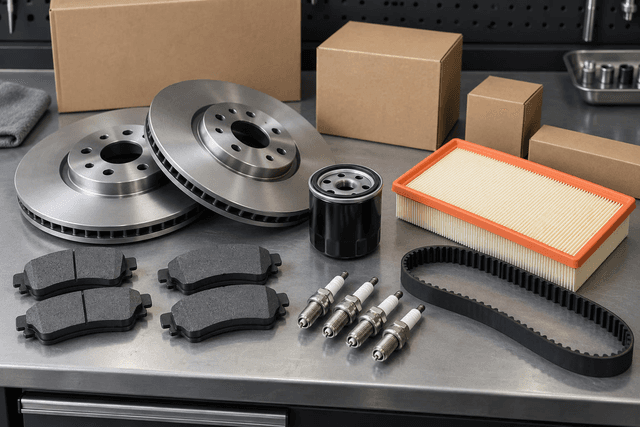
Car spare parts fall into three main types: genuine parts (dealer parts) that carry the carmaker's brand or are made by its supplier to the same specification, aftermarket parts made by other companies with varying quality, and used parts from salvage yards (tashleeh) removed from other cars, while counterfeit parts that imitate the look and brand of genuine parts should be avoided completely. The practical rule: choose genuine or trusted high-quality aftermarket parts for safety items such as brakes, steering, suspension, airbags and tyres, accept good aftermarket parts for consumables like filters, wipers and bulbs, and always confirm the part number, keep the invoice and have the part fitted at a qualified workshop.
What are the types of car spare parts and how do they differ?
Parts may look alike, but they differ in their maker, specification and source; the table below summarises the types found in shops and workshops:
| Type | What it means | What sets it apart | What to watch for |
| Genuine (dealer) | A part carrying the carmaker's brand, sold through the dealer or its distributors | Matches factory specifications and has a clear source | Usually costs more and may need to be ordered |
| Original supplier (OES) | A part made by the supplier that supplies the carmaker, sold in its own box and brand | May match the genuine part's specifications | Do not assume a match; ask and compare the part number |
| Aftermarket | A part made by other companies to fit several models | More choice and often lower cost | Quality varies widely by manufacturer |
| Used (salvage) | A part removed from another car, possibly genuine originally | A solution for rare or discontinued parts | Unknown age and history, and it may carry no warranty |
| Counterfeit | A part that imitates the look, box and brand of the genuine part | No real advantage; the tempting price is the bait | A safety risk and commercial fraud |
The Technical Regulation for Auto Spare Parts issued by the Saudi Standards, Metrology and Quality Organization defines original parts as parts designed and manufactured to the vehicle manufacturer's specifications, made either by the vehicle manufacturer itself or by a manufacturer working to the same specification and quality control system, while commercial parts are replacement parts made to international standards, country-of-origin standards or the parts manufacturer's own standards, so that they meet the vehicle manufacturer's performance requirements.
Because market terms are not standardised, and some sellers use the word genuine or the abbreviation OEM for parts that do not come from the dealer, ask clearly: who made the part? What is its number? What warranty does it carry?
Which parts should be genuine or high quality?
Some parts are what stops the car, steers it or protects you in a crash, and they can fail suddenly. For these parts, do not make price the first criterion; choose genuine or an aftermarket part from a known manufacturer that meets the carmaker's specifications:
- Brakes: pads, discs and hoses; use brake fluid of the specification stated in the owner's manual, and you can review the types of brake fluid and the uses of each type.
- Steering: the steering rack, tie rods and their ends, since any play or breakage directly affects control of the car.
- Suspension: shock absorbers, control arms and ball joints, which affect the car's stability and grip; poor ones may wear quickly or break.
- Airbags and seat belts: do not buy them from an unknown source, and leave their inspection and replacement to a specialist technician.
- Tyres: buy them new from a trusted source in the size, load index and speed rating recommended for your car, and check their manufacture date.
The same applies to parts whose failure can cause major damage to the engine or gearbox, such as the timing belt, where fitted, and the water pump.
When are aftermarket parts a reasonable choice?
An aftermarket part is not necessarily poor, as quality varies from one manufacturer to another, and it is often a reasonable choice for consumables that are replaced periodically and are easy to check, such as:
- Oil, air and cabin filters: choose a filter that matches the size and specification, and learn the signs that your car needs a new air filter.
- Wipers and bulbs: check the wiper length and the bulb base type and wattage suitable for your car.
- Spark plugs: their type and specifications must match what the carmaker specifies, so read about spark plug types and when to replace them.
- Interior trim and plastic covers that do not affect safety.
In every case, insist on three things: a known manufacturer with clear data on the box, a part number that matches yours or is an approved replacement for it, and a seller who gives you an invoice. Because these parts follow fixed intervals, tie their purchase to your periodic car maintenance schedule instead of waiting until they fail.
Are used salvage parts a safe choice?
Salvage parts may be genuine originally, but they carry the age and usage of the car they came from, so they suit some cases and not others:
- Often suitable: exterior body parts such as fenders, mirrors and covers, cabin parts, and rare or discontinued parts, after confirming their condition and fit.
- Not suitable: wearing brake, steering and suspension parts, airbags and seat belts, tyres of unknown age, and filters and rubber parts.
- Engine or gearbox: do not buy either without a technical inspection; ask about its source and about a trial or return period, and record its number on the invoice.
Before buying, inspect the part yourself: signs of impact, welding or rust, signs of flooding or fire, or cracks in rubber and plastic, and match its number with your part's number.
How do you spot counterfeit spare parts?
A counterfeit copies the look, box and brand of the genuine part but not its specification, and may seem convincing at first glance. Warning signs include:
- The box: faded printing or unusual colours, spelling mistakes, a poorly made logo, a broken seal, or missing manufacturer name, country of manufacture and part number.
- The part itself: a rough finish, noticeably lighter weight than the old part, a missing engraved number and logo, or a different shape and mounting points.
- The price: a price far below the market for a part offered as genuine.
- The seller: a shop that gives no invoice, does not name the manufacturer and country of manufacture, or refuses returns if the part does not fit.
- Verification codes: if the box carries a verification code or security label from the manufacturer, check it through the manufacturer's official channels.
The same regulation requires each package to show the manufacturer's name or trademark, the country of origin, and the part's designation or number as classified in the manufacturer's catalogue; missing data is a warning sign in itself.
How do you confirm the part number before buying?
The part number is the most precise way to make sure a part fits your car, because parts for the same model can differ by model year, trim and engine type.
- Photograph the part number engraved or labelled on the old part if it is visible.
- Have the vehicle identification number (VIN) from your registration card ready, as it helps the dealer and shops identify the correct part.
- Ask the dealer for the original part number, then compare any aftermarket alternative with it, as many aftermarket manufacturers list the original numbers their parts correspond to.
- If you are told the part has a newer replacement number, ask for proof that it is an approved replacement for the old number.
- Compare the new part with the old one before fitting: dimensions, mounting points and connections.
What should you ask of the seller and the workshop?
Proper paperwork and correct fitting matter as much as the part itself:
- A detailed invoice stating the part name, number and type (genuine, aftermarket or used), the country of manufacture, and any warranty and return terms.
- Old parts: ask the workshop to return them to you or show them to you, so you can confirm the replacement was actually made.
- Warranty: the seller's warranty on the part is different from the carmaker's warranty on the car; if your car is under warranty, read its terms or ask the dealer before fitting non-genuine parts or servicing elsewhere, and keep all invoices.
- A qualified workshop: brake, steering and suspension parts need the right tools and tightening torque, some require bleeding the brakes or a wheel alignment after fitting, and airbags need a specialist technician.
- After fitting: test the car with the technician, and make sure no warning lights appear on the dashboard and there are no strange noises.
Frequently asked questions about car spare parts
- Are aftermarket parts always lower quality? No, their quality varies by manufacturer; some come close to genuine and some are poor. What matters is the manufacturer's reputation, matching the specification and the part number, not the word aftermarket alone.
- Does fitting a non-genuine part void the car's warranty? It depends on your car's warranty terms, so do not assume the answer; check the warranty booklet or ask the dealer before fitting, and keep the part and workshop invoices.
- Should I buy spare parts online? You can, from known stores that clearly state the manufacturer, the part number and the return policy, while being wary of very low prices for parts offered as genuine.
- Can I fit an airbag from a salvage yard? We do not recommend it, because you know neither its history nor its condition, and it is one of the most important means of protection in a crash; ask for a new part suitable for your car, and leave fitting to a specialist technician.
- What should I do if I discover a part is counterfeit? Stop using it if it is a safety part, keep it and the invoice, and go back to the seller. If you suspect commercial fraud, you can report it through the official channels of the Ministry of Commerce; procedures may be updated, so confirm the latest steps on its official platforms.
The difference between genuine, aftermarket and used parts lies in the specification, the source and the paperwork, not the name: choose the best for safety parts, use good aftermarket parts for consumables, treat salvage parts with caution, and avoid counterfeits completely. To plan your car's maintenance, read how to choose the right maintenance to cut car costs and faults.

Vehicle Ownership Transfer on Absher: Steps and Conditions
Table Of Contents:
|
Vehicle ownership transfer in Saudi Arabia is done electronically through the vehicle sale service on the Absher platform, without visiting traffic offices: the seller enters the buyer's ID number and date of birth, the agreed sale price and the seller's bank account; the buyer then receives a notification of the request within one hour and accepts or declines it, transfers the price through Absher's secure payment system, insures the vehicle and pays the fees, and once the car is received, checked and the delivery is confirmed on Absher, ownership is officially transferred. Both parties must be registered on Absher, the vehicle registration (istimara), periodic inspection and insurance must be valid, and there must be no violations on the buyer or the vehicle.
What is the vehicle ownership transfer service on Absher?
The Ministry of Interior offers the vehicle sale service through the Absher platform, and the National Platform describes it as a service that enables individuals to sell their private vehicles and transfer ownership electronically after its dues are cleared, after reaching an agreement with the buyer and completing all required procedures, including vehicle inspection to ensure compliance with conditions, registering the vehicle under the buyer's identity, and issuing the vehicle registration license.
- Target audience: individuals, both citizens and residents.
- Service channels: the Absher website and its mobile app.
- Service duration according to the National Platform: immediate.
- Payment method: the car's price is transferred through Absher's secure payment system, and the service page on Absher explains that payment goes to an intermediary account dedicated to the service, which ensures the amounts are documented and the vehicle is received.
Procedures and conditions may be updated from time to time, so confirm the latest steps on the Absher platform or the National Platform before you start.
What are the conditions for selling a vehicle on Absher?
Before the seller starts the request, both parties should review the conditions listed on the service page on Absher, as failing to meet any of them may stop the sale:
- Both the seller and the buyer must be registered on the Absher platform.
- The vehicle must be in sound condition and not suspended, lost, wanted or impounded.
- The vehicle registration license (istimara) must be valid.
- The vehicle must have a valid periodic inspection.
- The vehicle must have valid insurance.
- There must be no violations on the buyer or on the vehicle.
- The agreed price must fall within the limits set by the service, and the vehicle must be of a type the service allows to be sold.
- Government fees are paid through the government payment system (SADAD).
The page also mentions limits on the number of vehicles of certain types that a resident may own, so review them on Absher if the buyer is a resident. If the periodic inspection is close to expiring, prepare the car early using the checklist on how to prepare your car for the periodic inspection.
What are the seller's steps to transfer car ownership on Absher?
After agreeing with the buyer on the price and other terms, the seller starts the request with these steps, as set out by the National Platform:
- Log in to the Absher platform.
- Go to vehicle services, then choose the vehicle sale service.
- Select the vehicle you want to transfer from the list displayed.
- Enter the buyer's information: ID number and date of birth.
- Enter the agreed-upon sale price.
- Add the seller's bank account details where the proceeds of the sale will be deposited.
- Carefully review the entered information, then confirm the request.
- Wait for the buyer's response: the buyer receives a notification of the transfer request within one hour and can accept or decline it.
- Once the buyer accepts the sale, both parties complete the delivery of the vehicle and the payment through Absher's secure payment system before the transfer is confirmed.
What does the buyer do to complete the sale?
Ownership does not pass to the buyer until they complete their steps on the platform, which according to the National Platform are:
- Review the Absher notification about the vehicle transfer request, and accept it within one hour if you agree.
- Carefully review the vehicle information and sale price before confirming your acceptance.
- Transfer the agreed amount to the seller's account through Absher's secure payment system.
- Insure the vehicle before the ownership transfer is completed.
- Pay the government fees and the Absher fees.
- Receive the vehicle and check it, then confirm delivery through Absher.
- Upon confirmation, the vehicle ownership is officially transferred from the seller to the buyer.
How do the seller's and buyer's tasks differ?
The table below summarises the role of each party at every stage of the sale:
| Stage | Seller | Buyer |
| Before starting | Agree on the price and terms, and check the istimara, periodic inspection and insurance are valid | Register on Absher and make sure there are no violations on them |
| Creating the request | Enter the buyer's ID, date of birth, price and bank account, then confirm | Wait for the Absher notification |
| Responding | Wait for acceptance or refusal | Review the details and accept or decline the request within one hour |
| Payment | Receive the price in the bank account entered in the request | Transfer the price through Absher's secure payment system |
| Insurance and fees | The platform lists no step for the seller at this stage | Insure the vehicle and pay the government fees and Absher fees |
| Delivery | Hand the vehicle over to the buyer after they accept the sale | Receive and check the vehicle, then confirm delivery on Absher |
How do you transfer car ownership between family members?
If you are handing your car over to a family member, Absher has a separate service called vehicle ownership transfer between family members, which allows vehicle ownership to be waived between family members electronically once the current owner and the new owner agree. The National Platform lists its steps as follows:
- Log in to the Absher platform, then select the required vehicle and the service dedicated to this.
- Select a first-degree family member: father, mother, brother, sister, husband, wife, son or daughter.
- Enter the confirmation code sent to the new owner's phone.
- Pay the service fees.
- The vehicle ownership is transferred to the new owner in the traffic systems after all requirements are met.
What practical checks protect the seller and buyer before the sale?
The platform organises the procedure, but it does not replace inspecting the car yourself; the service page on Absher states that the sale takes place after the vehicle has been viewed and inspected and the seller and buyer have agreed. Here are practical tips before accepting the request:
- Match the chassis number (VIN) on the car with the istimara and the vehicle details shown in the request; the article on what the VIN characters mean explains where to find it.
- Inspect the car in daylight and try the engine, transmission, air conditioning and tyres, or ask for a pre-purchase inspection at an independent inspection centre; you will find a wider list in vehicle inspection tips before buying a used car.
- Look for signs of accidents and differences in paint shade between panels, and read what it means when a car has been repaired before you decide.
- Check for violations through official channels such as Absher before starting the request, because the service requires no violations on the buyer or the vehicle.
- Agree in advance on what the sale includes, such as the spare key, accessories and the service record if there is one.
- Keep a private record of the agreement for yourself: the agreed price, the request date and screenshots of the request, and do not share these details publicly.
What are the common mistakes in car ownership transfer?
- Starting the request before clearly agreeing on the price and other terms.
- Entering the buyer's ID number, date of birth or the sale price without careful review before confirming.
- Creating the request at a time when the buyer is not available, although the steps ask the buyer to review and accept it within one hour.
- Overlooking the expiry date of the istimara, periodic inspection or insurance until the request stalls after the deal is agreed.
- Transferring the price outside Absher's secure payment system, although the service steps state that payment is made through it.
- Confirming delivery on Absher before actually receiving and checking the car.
Frequently asked questions about car ownership transfer
- Do I need to visit the traffic department to transfer car ownership? According to the National Platform, the vehicle sale service is completed electronically through Absher without the need to visit General Traffic Department offices.
- How long does the ownership transfer take? The National Platform describes the service duration as immediate; the buyer receives the request notification within one hour, and the sale is complete once both parties finish their steps and the buyer confirms delivery.
- Who pays the ownership transfer fees? The National Platform lists paying the government fees and Absher fees among the buyer's steps; check their current amount on the platform before you start.
- Can the sale be cancelled after the request is created? The buyer can decline the request when the notification arrives, and the service page on Absher states that in case of disagreement or unwillingness to continue, the sale can be cancelled before it is completed, according to the stage set by the platform.
- Does the buyer need insurance for the car? Yes. One of the buyer's steps is to insure the vehicle before the ownership transfer is completed.
Transferring car ownership through Absher is a clear process if you prepare for it: check the conditions, agree on the price, inspect the car before accepting, pay through the platform's secure payment system, and do not confirm delivery before checking the car. If you are looking for your next car, you can browse the cars available at Saleh Cars Group.
Fuel Economy Label: How to Read It and Calculate Fuel Use
Table Of Contents:
|
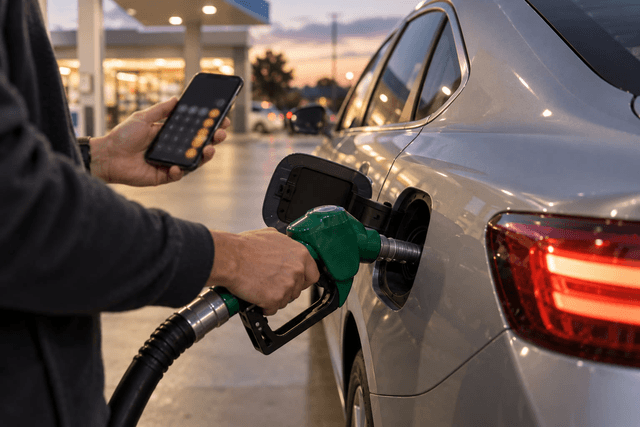
To read a fuel economy label, start with the km/L value: the number of kilometres the car travels on one litre of fuel. The higher the number, the more economical the car. Next, make sure the label belongs to the exact model, model year and engine capacity you intend to buy, verify it through the Taakad app, and then divide your annual distance by the figure to estimate how many litres you will need each year. This guide explains the label's fields, how to compare and calculate with an illustrative example, and why your car's real-world consumption may differ from the printed figure.
What is a vehicle fuel economy label?
A fuel economy label is a sticker you will find on new cars. It shows the model's fuel economy value in kilometres per litre, together with a level that rates this value. According to the Saudi Press Agency report on the Letabqa energy conservation campaign, the label classifies cars into seven levels: Excellent+, Excellent, Very Good, Good, Average, Poor and Very Poor. The top levels appear in dark green and the lowest in red.
There are two types of label, depending on how the vehicle is used: one for passenger cars such as sedans and minivans, and one for light trucks such as four-wheel drives, pickups and cargo vans. Pay attention to the label type when comparing, and compare cars of similar size and use wherever possible.
What information does the fuel economy label show?
The label combines the vehicle's basic information with its fuel economy result. According to the same source, it includes:
- The manufacturer's name and the vehicle's trade name (model).
- Engine capacity and model year.
- Vehicle type: passenger car or light truck.
- The fuel economy value in kilometres per litre, and its corresponding level.
- The required fuel type: 91 petrol, 95 petrol or diesel.
- The logo of the Saudi Standards, Metrology and Quality Organization (SASO), the label's regulatory statement, and a QR code.
Before focusing on the number, match these fields with the car in front of you, especially the model year, engine capacity and fuel type. A single model may come with more than one engine or trim, and each may have a different value. Take a clear photo of every label so the details do not get mixed up if you visit several showrooms.
How do you read the km/L figure and compare two cars?
The km/L figure tells you how far the car travels on one litre. A value of 18 km/L, for example, means the car covers 18 kilometres per litre according to the label value. With this unit, the higher number is better. When comparing:
- Read the value itself rather than relying on the colour alone; two cars at the same level may have different values.
- Make sure both labels are of the same type, passenger car or light truck.
- Pay attention to fuel type; if one car needs 95 petrol and the other 91 petrol, calculate each car's cost using the price of its own fuel.
- Do not carry a value from one trim or engine to another version just because the trade name or exterior looks the same.
- Treat fuel economy as one factor alongside space, comfort, safety and maintenance; our guide to the best fuel-efficient cars can help you narrow your options.
How do you verify the label with the Taakad app?
The Saudi Standards, Metrology and Quality Organization provides the Taakad app for checking fuel economy label and energy efficiency label information, and it can be downloaded free for iOS and Android devices. The steps, as described on the app's page and in the previous source, are:
- Open the app, choose the vehicles section, and point the camera at the QR code on the label.
- If the vehicle is registered in SASO's database, its details will appear, such as manufacturer, engine capacity, model year, fuel type, body type, drive type, transmission, fuel economy value and level.
- Compare the details shown in the app with the label on the car, field by field.
- If there is no QR code on the label, use the app's search feature.
- If the details do not match, use the report feature, which takes you to the Commercial Report app.
How do you calculate the fuel you need each year?
The formula is simple: annual distance in kilometres ÷ fuel economy in km/L = estimated fuel in litres. To estimate your annual distance accurately, compare the dashboard odometer readings on two service records about a year apart, or take a typical week's distance and multiply it by the number of weeks in a year, then add the trips you know you will make.
Illustrative example: an annual distance of 20,000 km and two cars, the first rated at 15 km/L and the second at 20 km/L. These are hypothetical teaching figures only, not specifications of cars offered for sale.
| Item | First car | Second car |
|---|---|---|
| Assumed fuel economy | 15 km/L | 20 km/L |
| Annual distance | 20,000 km | 20,000 km |
| Calculation | 20,000 ÷ 15 | 20,000 ÷ 20 |
| Estimated quantity | About 1,333 litres | 1,000 litres |
The difference in this example is about 333 litres a year. To turn it into an amount of money, multiply each car's quantity by the price per litre of the fuel it needs at the time of comparison, then subtract the two results.
How do you convert km/L to litres per 100 km?
Some brochures, websites and dashboard displays show consumption in litres per 100 km, where the lower number is better. To convert, divide 100 by the km/L value; to convert back, divide 100 by the L/100 km value:
- 15 km/L: 100 ÷ 15 = about 6.67 litres per 100 km.
- 20 km/L: 100 ÷ 20 = 5 litres per 100 km.
- In reverse: 5 litres per 100 km means 100 ÷ 5 = 20 km/L.
This unit reveals something many people overlook: the same increase in km/L saves more fuel when the starting value is low. In another illustrative example over 20,000 km, moving from 10 to 12 km/L saves about 333 litres, while moving from 20 to 22 km/L saves only about 91 litres. Do not compare a km/L figure with a figure in another unit, such as miles per gallon, before converting to the same unit.
Why does your real consumption differ from the label figure?
The label figure is a reference value that helps you compare models, but it does not describe your own driving style or road conditions. The main things that change real-world consumption are:
- Driving style: sudden acceleration and braking, and high speeds on highways.
- Heavy traffic and frequent stops, and leaving the engine running for long periods while parked.
- Running the air conditioning for long periods in summer heat.
- Excess load and low tyre pressure.
- Maintenance condition, such as the air filter, spark plugs and engine oil.
Use the label for an initial comparison, then monitor your car's consumption over several refills. If consumption rises clearly and persistently above your usual level, read about the common causes of higher fuel consumption and arrange an inspection when needed, rather than assuming the label is wrong. If your car offers an economy driving mode, learn about the ECO system and whether it really saves fuel.
How do you measure your car's consumption yourself?
The most accurate home method is the full-tank method, and all you need is the dashboard trip meter and your fuel receipt:
- Fill the tank until the pump nozzle clicks off automatically, then reset the trip meter.
- Drive the car as usual until you need to refuel.
- Fill the tank again until the automatic click-off, and note the litres added and the distance on the trip meter.
- Divide the distance by the litres; if, for example, you drove 500 km and added 40 litres, your consumption is 12.5 km/L.
- Repeat over several refills and in different conditions, in the city and on the highway, then take the average.
The consumption reading on the trip computer is useful for daily monitoring, but it is an estimate and may differ slightly from the manual calculation, so rely on the manual calculation for long-term comparison.
Frequently asked questions about the fuel economy label
- Is a higher number on the label always better? Yes when the unit is km/L; with litres per 100 km, the lower number is better.
- Does the label guarantee the consumption I will get? No. It is a value for comparison, and your real consumption depends on driving style, roads, load and the car's condition.
- Does a larger tank mean better economy? No. Tank capacity determines the distance between refills, while fuel economy describes distance per litre.
- Can I compare a sedan with a four-wheel drive using the label? The unit is the same, so you can compare the two values, but each has a different label type, and the fairest comparison is between cars of similar size and use.
- What should I do if the label does not match the Taakad app? Ask the seller for an explanation, and use the app's report feature if the difference remains.
The fuel economy label is a quick comparison tool if you read it in the right order: match the details, verify them through the Taakad app, then turn the figure into litres that fit your distance. When you compare cars at Saleh Cars Group, ask for the label of the version that interests you and calculate your own needs before deciding.
When to Replace Car Tyres: Tread, Cracks and Warning Signs
Table Of Contents:
|
If you are asking when to replace car tyres, the short answer is: replace a tyre when the surface of the tread reaches the level of the raised wear indicators inside the grooves, when a bulge, a deep cut or clear cracks appear in its sidewall, or when the rubber has aged to the point at which the tyre or car manufacturer recommends replacement, even if the tread looks good. In this guide we explain how to check your tyres, what the wear pattern reveals, and how to choose the right replacement.
When should you replace car tyres? The key signs in brief
Replacement is not tied to a single distance for every car, but to the tyre's condition and its maker's recommendations. The main signs are:
- The tread surface has reached the level of the wear indicators in any part of the tyre, not just on average.
- A bulge or bubble in the sidewall, a deep cut, or exposed cords or internal fabric.
- Clear cracks in the sidewall or between the tread blocks, showing that the rubber has aged and hardened.
- Uneven wear that has left part of the tyre smooth even though the rest of its surface is sound.
- A persistent vibration that does not go away after balancing, or repeated pressure loss in the same tyre with no visible cause.
How do you check tread depth using the TWI wear indicators?
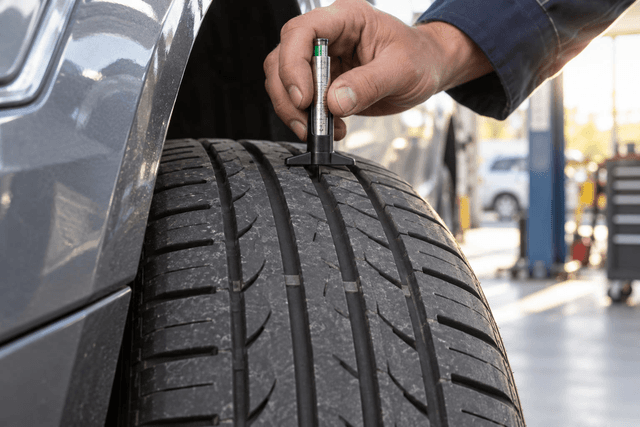
Inside the grooves are small raised bars called wear indicators, whose location is marked by the letters TWI or a small triangle on the tyre's shoulder, and when the tread surface is level with them, the tyre has reached the end of its usable life. To check:
- Park the car on level ground and turn the steering wheel to one side so you can see the front tyres clearly.
- Look for the TWI mark or triangle on the tyre's shoulder, then look into the groove next to it to find the raised bar.
- Compare the level of the tread surface with the bar; the closer they are to level, the closer the replacement date.
- Repeat the check on the inner edge, the centre and the outer edge, and at several points around the tyre's circumference.
- For a more precise reading, use a tread depth gauge, available at tyre shops, and record the reading for each tyre.
- Some drivers use a coin as a rough gauge, but it is no substitute for a proper gauge or a look by a qualified technician.
Do not wait until they are exactly level if you travel often or drive in the rain, as water clearance and grip weaken gradually as the tread gets shallower.
What do tyre cracks and sidewall bulges mean?
The sidewall flexes with every turn of the wheel and carries the car's weight, so any damage to it is more dangerous than tread wear:
- Fine surface cracks: an early sign of rubber ageing caused by heat and sun, which calls for the tyre to be inspected by a specialist and monitored.
- Deep cracks: if they widen or reach the tyre's inner layers, it is time to replace it.
- A bulge or bubble: damage to the tyre's internal structure, usually after hitting a pothole or kerb, which requires immediate replacement and no travelling on it.
- Cuts and gashes: a deep cut in the sidewall weakens the tyre even if no air is leaking from it yet.
What does the tyre wear pattern reveal?
The wear pattern reveals the cause of the problem, and if you do not fix it, new tyres will wear the same way:
| Wear pattern | Likely cause | What to do |
| Both edges more than the centre | Pressure lower than recommended | Set the pressure according to the driver's door sticker and check it regularly |
| Centre more than the edges | Pressure higher than recommended | Set the recommended pressure, not the maximum pressure printed on the tyre |
| One inner or outer edge | Wheel alignment or suspension fault | Check the alignment and suspension parts |
| Diagonal, feather-like wear | Incorrect toe between the two wheels | Have the alignment set at an equipped workshop |
| Repeated patches or scallops | Unbalanced wheels or worn shock absorbers | Balance the wheels and check the shock absorbers |
| A single flat spot | Hard braking with a locked wheel, or standing a long time without moving | Have a specialist assess the tyre |
If you see wear on both edges, start by reviewing the causes, signs and solutions for low tyre pressure, and if the wear is on one edge or comes with the car pulling to one side, read about the difference between wheel balancing and alignment.
How do Saudi heat and sand affect tyre life?
Rubber ages over time even if the car is used little, and you will find how to tell a tyre's age from the DOT code in our article on how to read tyre size and manufacture date. There is no single lifespan for all tyres, so refer to the tyre and car makers' recommendations. In the Kingdom's climate, some factors speed up deterioration:
- Direct sun and high heat speed up the hardening and cracking of rubber, especially for cars standing for long periods in open car parks, so park in the shade whenever possible.
- Hot asphalt raises tyre temperature, and the effect grows with low pressure or overloading on long trips.
- Sandy, gravel and desert tracks expose the tread and sidewall to cuts from sharp stones, so inspect the tyres after every desert trip.
- If you lower tyre pressure (deflating) to drive on sand, restore it to the recommended value before returning to asphalt, because highway driving at low pressure raises tyre temperature.
Should you replace tyres in pairs or all four together?
Ideally all four tyres match, but replacing them all together is not always necessary:
- Replace both tyres on the same axle together at least, so grip does not differ between the two sides when braking or cornering.
- When replacing only one pair, many tyre makers recommend fitting the newer pair on the rear axle for better stability, unless the owner's manual says otherwise.
- In four-wheel-drive or all-wheel-drive cars, the owner's manual may require the four tyres to be close in size and degree of wear to protect the drive system, so check it before replacing only two.
What about the spare tyre?
The spare forgotten in the boot ages just like the other tyres, even if it is never used:
- Check its pressure regularly and before every trip, because a flat spare will not help you when you get a puncture.
- Read its manufacture date and inspect its sidewall, as it may be older than the tyres on the car.
- A small temporary spare is designed for a limited distance and speed stated in the owner's manual or on the tyre's side, so use it only to reach the nearest tyre shop.
- If your car comes with a repair kit instead of a spare, check its expiry and how to use it.
How do you choose the right replacement tyre: size, load and speed?
Choose what your car was designed for, not just what the shop has in stock, and check the following:
- Size: copy it from the sticker on the driver's door frame or from the owner's manual, not from the tyre currently fitted, which may be different.
- Load index and speed symbol: choose values equal to or higher than the car manufacturer's recommendation, never lower.
- Manufacture date: ask for recently made tyres with close dates, especially on the same axle.
- Type of use: a driver who often travels on highways has different needs from one who drives in the desert or carries heavy loads, so ask about the tyre designed for your use.
- Changing the size: do not change the size of your tyres or rims without consulting a specialist; to learn the effect, read our article on whether the wrong rims make your car use more fuel.
- After fitting: balance the wheels, set the pressure according to the driver's door sticker, and check the alignment if the old tyres were worn unevenly.
What is the tyre energy efficiency label in Saudi Arabia?
The Saudi Standards, Metrology and Quality Organization offers the Energy Efficiency Label for Tires service, and explains that the label serves as a guide for consumers before purchasing the product to increase their awareness of its energy efficiency before buying it.
The organization lists tyres among the products subject to the efficiency label regulations, and the aims of these labels include reducing energy consumption for the consumer, enabling the consumer to know a product's efficiency before buying, and protecting consumer safety and health and the environment. In practice:
- When comparing tyres of the same size, ask to see the energy efficiency label for each one and read its details.
- Do not make the label your only criterion; size, load index, speed symbol, manufacture date and the tyre's suitability for your use come first.
- Requirements and procedures may be updated from time to time, so check the latest information on the organization's website.
Frequently asked questions about replacing car tyres
- Should I replace a tyre that is old even if its tread is good? Tread depth alone is not enough, as rubber hardens over time; have it checked by a specialist and follow the tyre maker's recommendation.
- Can a puncture in the side of the tyre be repaired? Repairing holes in the sidewall or shoulder is not usually recommended, while for a hole in the tread area the technician decides whether it can be repaired based on its size and position.
- Can I fit two tyres of different types? This is not recommended on the same axle, and it is best for all four tyres to match in type and tread pattern, especially in four-wheel-drive cars.
- Are small cracks between the tread blocks dangerous? They are a sign of ageing that may not require immediate replacement, but have a specialist monitor them, and if they deepen, replace the tyre.
- How often should I check my tyres? Check their pressure and appearance regularly, for example when refuelling, before every trip, and after hitting a pothole or kerb or after a desert trip.
Checking your tyres takes only minutes: look at the wear indicators, inspect the sidewall, notice the wear pattern and read the manufacture date. If a danger sign appears, do not postpone the change; choose a replacement with the recommended size, load and speed ratings, then fix the cause of any uneven wear.