The Difference Between Hybrid and Electric Cars
Table Of Contents:
|
The Difference Between Hybrid and Electric Cars: A Comprehensive Guide
With the rapid advancement of the automotive industry and the increasing focus on environmental sustainability, hybrid and electric cars have become two main options for those looking to reduce carbon emissions and save fuel. But what is the difference between them? And which one is the best choice for you?
In this article, we will provide a comprehensive comparison between hybrid cars and electric cars, highlighting key differences, advantages, disadvantages, and which one suits different users best.
What is a Hybrid Car?
A hybrid car is a vehicle that combines an internal combustion engine (running on gasoline or diesel) with an electric motor. These two power sources work together to enhance fuel efficiency and reduce emissions. There are different types of hybrid cars, including:
Types of Hybrid Cars:
-
Traditional Hybrid (HEV - Hybrid Electric Vehicle):
- Primarily relies on the fuel engine, but the electric motor assists in improving performance and fuel efficiency.
- Does not require external charging; the battery is charged through regenerative braking and excess energy from the engine.
- Example: Toyota Prius, Honda Insight.
-
Plug-in Hybrid (PHEV - Plug-in Hybrid Electric Vehicle):
- Has a larger battery than traditional hybrids and can be charged via an external power source.
- Can travel short distances using only electric power before switching to fuel when the charge runs out.
- Example: Mitsubishi Outlander PHEV, BMW X5 xDrive45e.
What is an Electric Car?
An electric car (EV - Electric Vehicle) relies entirely on an electric motor with no internal combustion engine. It gets its power from a rechargeable battery and can be charged at home or at public charging stations.
Types of Electric Cars:
-
Battery Electric Vehicles (BEV - Battery Electric Vehicle):
- Operate solely on electric power.
- Produce zero carbon emissions while driving.
- Charging time depends on battery capacity and the charger used.
- Example: Tesla Model 3, Nissan Leaf, BMW i4.
-
Fuel Cell Electric Vehicles (FCEV - Fuel Cell Electric Vehicle):
- Generate electricity from hydrogen instead of using conventional batteries.
- More efficient and quicker to refuel compared to battery-powered electric cars.
- Example: Toyota Mirai, Hyundai Nexo.
Comparison Between Hybrid and Electric Cars
| Feature | Hybrid Cars | Electric Cars |
|---|---|---|
| Power Source | Combination of fuel and electricity | Fully electric |
| Emissions | Lower than traditional cars but still emit some carbon | Zero emissions |
| Driving Range | Longer due to the use of both fuel and electricity | Limited to battery range (depends on capacity) |
| Charging Time | No need for external charging (except for PHEV) | Requires charging, which can take hours depending on the charger |
| Fuel Costs | Lower than traditional cars but still requires some fuel | No fuel cost, but depends on electricity prices |
| Upfront Cost | Cheaper than fully electric cars but more expensive than traditional cars | Generally more expensive due to battery costs |
| Infrastructure Needs | No charging stations required, only fuel stations | Requires access to charging stations |
| Environmental Impact | Less pollution than fuel cars but still contributes to emissions | Completely eco-friendly |
Advantages and Disadvantages of Hybrid and Electric Cars
Advantages of Hybrid Cars:
✅ Improved fuel efficiency compared to conventional cars.
✅ Longer driving range due to the combination of fuel and electric power.
✅ No need for advanced charging infrastructure.
✅ Lower initial cost compared to fully electric cars.
Disadvantages of Hybrid Cars:
❌ Still emit carbon emissions.
❌ Maintenance can be complex due to the presence of both a fuel engine and an electric motor.
❌ Limited electric-only performance compared to fully electric vehicles.
Advantages of Electric Cars:
✅ Zero carbon emissions, making them environmentally friendly.
✅ Quieter driving experience as there is no combustion engine.
✅ Lower operating and maintenance costs, as there is no need for oil changes or many mechanical components.
✅ High performance and faster acceleration due to instant torque from electric motors.
Disadvantages of Electric Cars:
❌ Limited driving range compared to hybrid and traditional cars.
❌ Requires an extensive charging infrastructure.
❌ Charging times can be long compared to refueling.
❌ Higher upfront cost, although some countries offer incentives.
Which Car is Best for You?
Choosing the right car depends on your needs and driving habits:
✅ Choose a Hybrid Car if:
- You want a fuel-efficient car without worrying about charging stations.
- You frequently drive long distances.
- You want a balance between electric power and fuel reliability.
✅ Choose an Electric Car if:
- You prefer an environmentally friendly mode of transportation.
- You have access to home charging or nearby charging stations.
- You do not drive long distances daily (or have another car for longer trips).
- You want to reduce operating and maintenance costs in the long run.
Why Are Hybrid and Electric Cars Becoming More Popular Today?
- Rising fuel prices make Hybrid and Electric Cars more cost‑effective for daily commuting.
- Governments worldwide offer tax incentives and rebates for eco‑friendly vehicles.
- Consumers are increasingly aware of environmental impact and carbon emissions.
- Automakers are expanding their hybrid and EV lineups, making them more accessible.
- Charging networks are growing rapidly, reducing range anxiety for EV owners.
How Do Hybrid and Electric Cars Reduce Fuel Consumption?
- Hybrid cars use electric motors at low speeds, significantly reducing gasoline usage.
- Regenerative braking recovers energy that would otherwise be lost.
- Electric cars eliminate fuel consumption entirely by relying on battery designs and lightweight materials further improve energy savings.
What Are the Long‑Term Maintenance Differences Between Hybrid and Electric Cars?
- Hybrid cars require periodic engine maintenance, but electric motors need minimal servicing.
- EVs have fewer moving parts, reducing long‑term repair costs.
- Battery health is the most important maintenance factor for electric cars.
- Hybrids may require battery replacement after 8–10 years depending on usage.
- Electric cars avoid oil changes, spark plugs, and transmission repairs entirely.
How Does Driving Style Affect Hybrid and Electric Car Performance?
- Smooth acceleration improves battery efficiency in both hybrids and EVs.
- Frequent braking benefits hybrids through regenerative energy recovery.
- High‑speed driving drains EV batteries faster due to increased aerodynamic drag.
- City driving favors hybrids, while EVs perform best with consistent daily charging.
- Eco‑mode settings help optimize energy consumption for maximum range.
What Charging Options Are Available for Electric Cars?
- Home charging stations provide overnight charging convenience.
- Public Level 2 chargers offer faster charging during shopping or work hours.
- DC fast chargers can recharge an EV battery to 80% in 20–40 minutes.
- Some EVs support ultra‑fast charging for long‑distance travel.
- Mobile apps help drivers locate nearby charging stations in real time.
How Do Hybrid and Electric Cars Impact the Environment?
- Electric cars produce zero tailpipe emissions, reducing air pollution.
- Hybrids significantly lower CO₂ emissions compared to traditional gasoline cars.
- EVs help reduce dependence on fossil fuels.
- Battery recycling programs are improving sustainability in the EV industry.
- Widespread adoption of Hybrid and Electric Cars contributes to cleaner cities and healthier communities.
FAQs
Related Blogs
What to Do After a Car Accident: Najm Reporting Steps
Table Of Contents:
|
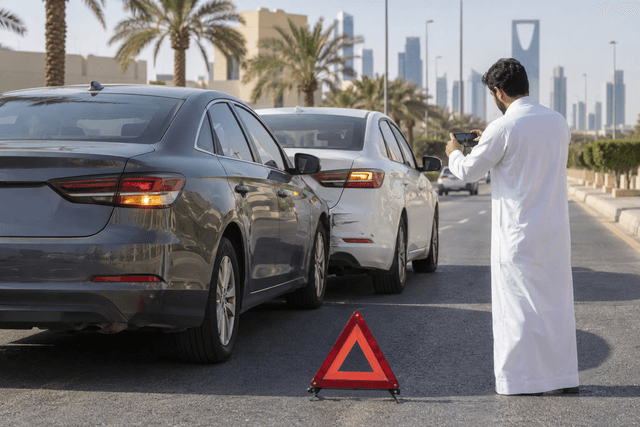
If you are involved in a traffic accident, God forbid, start with safety: stop in a safe place, turn off the engine and switch on the hazard lights, place the reflective triangle at a safe distance, then photograph the accident from all directions and have your ID, driving licence and vehicle registration (istimara) ready. Then report to Najm on the toll-free number 199033 if there are no injuries and at least one party to the accident holds a valid insurance policy. If there are injuries, or an insurance policy is not available for every party to the accident, call the traffic police on 993, and call the ambulance on 997 when there are injuries. Below are the Najm reporting steps as the company publishes them, the cases it does not handle, and what to check on your car after the accident.
What should you do in the first minutes after a traffic accident?
Your safety and the safety of those with you come before anything else. Najm's car accident advice page (in Arabic) summarises the first steps as follows:
- Before getting out of the vehicle, make sure that leaving it will not put you in danger, and keep away from the lane of passing cars.
- Turn off the vehicle's engine and switch on the hazard lights to warn other drivers.
- If you have a reflective triangle, place it at a safe distance from the vehicle.
- Check on the people with you and those in the other car; if there are injuries, call the traffic police on 993 and the ambulance (Red Crescent) on 997.
- Stay at the accident scene and wait for the response teams to arrive, and avoid acting on any personal opinions or assessments from bystanders.
Najm's guidance explains that staying at the scene protects your rights and the rights of others, and that leaving it may expose you to additional violations and fines. If a fire breaks out, God forbid, it advises using the fire extinguisher safely, not using water to put the fire out, and turning off the engine and getting out of the vehicle.
What are the Najm reporting steps after an accident?
Najm's accident reporting procedures page (in Arabic) sets out what is needed to report after stopping in a safe place:
- Making sure there is valid insurance from a licensed insurance company.
- If the accident results from natural disasters or fire, you must have comprehensive insurance on the vehicle to report it to Najm.
- Preparing the official documents: ID, driving licence and vehicle registration (istimara).
- All parties involved in the accident must be present.
- Reporting the accident through one of Najm's channels, including the toll-free number 199033.
The company states that the Najm investigator uses a body camera to document the facts of the accident to protect the rights of all parties, and that it handles accidents without charging the parties to the accident. It also offers the Najm smartphone app for faster electronic procedures.
These procedures may be updated from time to time, so confirm the latest steps on Najm's website or official app before relying on them.
When should you call the traffic police instead of Najm?
Najm does not handle every accident; according to its official page, it does not take on the following cases:
- No valid insurance for all parties to the accident.
- An accident caused by natural disasters or fire when the vehicle has third-party insurance rather than comprehensive cover.
- Injuries or a death, God forbid.
- Criminal accidents.
- One of the parties is absent or has fled the accident scene.
- Accidents that happen outside the cities or geographic areas Najm covers.
These accidents can be reported to the authorities Najm lists. These are the contact numbers on its pages:
| Authority | Number | What Najm's guidance says |
| Najm (toll-free number) | 199033 | Reporting the accidents Najm handles |
| Traffic Accidents | 993 | When there are injuries, or an insurance policy is not available for every party to the accident |
| Ambulance (Red Crescent) | 997 | When there are injuries |
| Unified Operations | 911 | Listed for accidents Najm does not handle |
| Civil Defense | 998 | Listed for accidents Najm does not handle |
| Road Security | 996 | Listed for accidents Najm does not handle |
How do you document the accident and the damage with photos?
Najm advises photographing the accident from all directions so you can refer to it when needed. To make the photos genuinely useful, take them in this order, without standing in the traffic lane:
- A wide shot from a distance showing where the cars are on the road, the lanes and nearby signals.
- Photos of each car from the front, rear and both sides, then close-ups of every damaged area however small, such as the bumper, lights, wheels and mirrors.
- A photo of the number plates of the vehicles involved, and of any parts scattered on the ground.
- A photo of the ground under your car if you notice a fluid leak.
- A photo of the dashboard if warning lights come on after the accident.
- Keep the photos unedited, note the time and place of the accident, and photograph the damage again when the car enters the workshop.
What should you check on your car after a minor accident before driving on?
Once the procedures are finished, do not assume the car is sound just because the visible damage is small; a light impact can affect parts behind the bumper or the tyres. Check the following with the car parked in a safe place:
- Lights and indicators: switch on the headlights, rear lights, indicators and brake lights, and make sure they work and their lenses are not broken.
- Tyres and wheels: look for a cut or bulge in the tyre sidewall, a bent wheel, or a tyre rubbing against the wheel arch when you turn the steering.
- Leaks: look under the car, as radiator coolant, oil or a smell of petrol is a sign not to drive.
- Dashboard warning lights: start the car and notice whether a warning light stays on, such as the temperature, airbag or brake light, and learn its meaning in the guide to dashboard warning lights and their meanings.
- Body and doors: make sure the bonnet, boot and doors close properly, the mirrors are secure, and no part is hanging loose that could fall off while driving.
- The first short distance: drive slowly in a safe place, and notice whether the steering pulls to one side, or unusual vibrations or rubbing noises appear.
If the airbags deployed, you notice a leak or a smell of fuel, a red light stays on, or the steering feels abnormal, do not keep driving, and ask for a tow truck to take the car to the workshop.
Why might sensors and cameras need calibration after a repair?
Many modern cars place radar and parking sensors in the bumper or behind the front grille, and the driver assistance camera behind the windscreen. So repairing or replacing the bumper, replacing the windscreen, or adjusting the wheel alignment after an accident can change the angle of these sensors even slightly, and they then need calibration according to the manufacturer's instructions.
- Ask the workshop before the repair: does the work include calibrating the sensors and camera after fitting?
- After collecting the car, notice whether an error message appears for the assistance systems, warnings appear where they should not, or the parking sensor alerts disappear.
- Do not rely on the assistance systems after the repair until you are sure they work normally.
You will find an explanation of these systems, the limits of their sensors and when they need calibration in our article on ADAS driver assistance systems.
What should you follow up with Najm and the repair workshop after an accident?
Najm's website offers services to follow up an accident after it has been handled, including:
- Viewing your accidents and their details.
- Issuing reports and documents.
- Amending the accident data.
- Objecting to the accident liability ratio, or adding damage or a party.
- Browsing your insurance record and the information it provides about your claims, accidents and vehicles.
When the car is repaired, keep a copy of the report and photos of the damage before and after the repair, and review the quality of the bodywork and paint when you collect it; our article on what it means when a car has been repaired helps you notice colour differences and uneven gaps between panels.
What are the common mistakes after a traffic accident?
- Getting out of the car into the traffic lane, or standing behind it without switching on the hazard lights and placing the reflective triangle.
- Leaving the scene before the response teams arrive or before all parties are present.
- Taking only a close-up of the damage without wide shots showing where the accident happened.
- Driving on despite a leak or a red warning light.
- Not having a fire extinguisher and a first aid kit in the car, both of which Najm advises keeping.
Frequently asked questions about traffic accidents and Najm reporting
- Do the parties to the accident pay for Najm to handle it? No, the company states that it handles accidents without charging the parties to the accident.
- Which documents are needed for the report? Your ID, driving licence and vehicle registration (istimara), and all parties to the accident must be present.
- Does Najm handle an accident caused by fire or a natural disaster? This requires comprehensive insurance on the vehicle; if it only has third-party cover, this is one of the cases Najm does not handle.
- What do I do if the other party flees the accident scene? A party being absent or fleeing is one of the cases Najm does not handle, and you can report through the authorities it lists, such as Unified Operations on 911 or Traffic Accidents on 993.
- How can I make sure a used car I plan to buy has not had a serious accident? Ask the seller about the car's history, have it inspected by a trusted inspection centre, look for signs of bodywork and paint repairs, and follow our vehicle inspection tips before buying a used car.
In short: your safety first, then the hazard lights and the reflective triangle, then the photos and documents, then reporting through Najm on 199033, or calling the traffic police on 993 when there are injuries or an insurance policy is not available for every party. Do not keep driving before checking the lights, tyres, leaks and dashboard warning lights, and make sure the sensors are calibrated after a bumper or windscreen repair.
Test Drive Before Buying a Car: Checklist and Comparison
Table Of Contents:
|
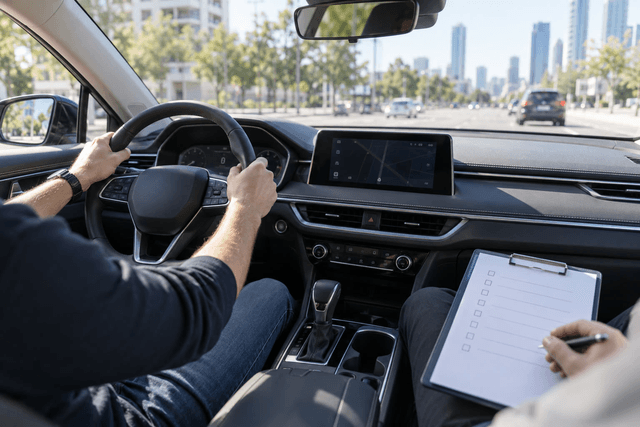
To get real value from a test drive before buying a car, ask to drive the same trim you plan to buy, and drive it on a route similar to your daily journeys: streets with speed bumps and traffic lights, a stretch of highway, and a place to park. Test the air conditioning, visibility, noise and family seating, and record your notes under the same items for every car. Budget, trims and the contract are covered in the new car buying guide.
How do you prepare for a test drive before visiting the showroom?
A successful test drive starts before you sit behind the wheel; good preparation makes you test what matters to you, not whatever catches your attention in the moment.
- Write a short description of how you will use the car: city journeys, a daily highway commute, intercity travel, passengers in the rear seats, or a tight parking space at home.
- Choose three priorities you will not compromise on, such as back comfort, easy parking and strong cooling, and make them the focus of your assessment.
- Ask the showroom in advance whether the model, trim and engine you are considering are available to test, how long the drive lasts, which route is available and which documents are required, and bring your driving licence.
- If the test car is a different trim, ask the team to explain the differences in engine, equipment, and wheel and tyre size, because they affect how the car feels and how much noise you hear.
- If you are comparing two cars, try to drive both on the same day and at a similar time, so the heat, traffic and road conditions are alike.
What should you check before the car moves?
Set aside a few minutes before driving off; much of what will bother you in everyday use shows up while the car is standing still.
- Adjust the seat, steering wheel and mirrors, and check that you can reach the pedals comfortably without stretching your leg or sitting too close.
- Stay seated for several minutes and notice whether the seat supports your back and thighs, or whether you keep changing position.
- Make sure the instruments and the dashboard screen are readable in sunlight, and that the screen does not reflect on the windscreen.
- Look at the front pillars and side sightlines: do they hide pedestrians or cars at junctions?
- Pair your phone and set a navigation destination while parked, and try the air conditioning controls without looking at them for long.
- Before handing the car back, unpair your phone and delete your data from the infotainment system.
What is the right route for a test drive?
If the showroom's arrangements allow it, ask for a route that resembles your daily driving instead of circling the building, and always keep to the speed limit and the accompanying employee's instructions.
- City streets with stop-and-go traffic: notice how smoothly the car moves off, how the transmission shifts and how the accelerator responds.
- Speed bumps and uneven asphalt: listen to the suspension, and notice whether the cabin shakes uncomfortably or the car absorbs bumps quietly.
- A roundabout or a series of bends: notice the steering weight and feel, and how much the car leans in corners.
- A stretch of highway: notice the car's stability, how easily it merges with traffic and overtakes, and the level of wind and tyre noise.
- A U-turn in a permitted place: it shows you how easy the car is to manoeuvre in narrow streets.
- Brakes: press them gradually as in normal use, and do not create a hazardous situation to test the brakes or driver assistance systems.
How do you test the air conditioning in Saudi heat during the drive?
Air conditioning is one of the most important things to test in the Kingdom's climate, but a short drive only gives a first impression and cannot prove cooling performance in every condition.
- If possible, try the car after it has been parked in the sun, which is closer to your real use than a car pre-cooled inside the showroom.
- Run the air conditioning at the setting you normally use, and notice when the air from the vents becomes cool and comfortable.
- Notice whether cooling stays good when stopped in traffic or at a signal, not only while moving.
- Ask about rear air vents, and ask your companion to assess the airflow reaching the rear seats.
- Raise the fan speed and listen to it, as some cabins become noisy at high settings.
- When comparing two cars, test the air conditioning in similar heat and at a similar time; otherwise, note the difference next to your observations.
How do you assess noise, visibility and parking?
These items are hard to judge from a specification sheet, but they become clear on a real drive.
- Noise: talk to your companion in a normal voice on the highway, and notice whether you have to raise your voice because of the tyres, wind or engine.
- Unusual sounds: if you hear a knock, squeak or vibration, ask about it and note it rather than diagnosing it yourself or treating it as a trait of every car of that model.
- Rear visibility: notice the size of the rear window and how clear the mirrors are, and whether you need to turn your head a lot when changing lanes.
- Camera and sensors: assess how clear the camera image is in strong sunlight, and how clear the sensor alerts are when approaching obstacles.
- Parking: try reverse and parallel parking in a safe, permitted place, and notice how easy it is to judge the car's corners.
- If your parking space at home is tight or its entrance is sloped, compare the car's published length and width with your space before the visit.
How do you test family seating and luggage space?
If the car is for the family, the opinion of whoever sits in the back matters as much as yours.
- Set the driver's seat to your position, then sit behind it and notice the room left for knees and head.
- Ask a family member to try getting in and out through the rear door, especially older relatives.
- If you have children, ask about the child seat anchor points (ISOFIX) and try fitting the seat with the showroom's agreement.
- In cars with a third row, try reaching it and folding the seats, and notice how much boot space remains.
- Put the pushchair or a suitcase in the boot, as written dimensions become clearer when compared with your own belongings.
How do you compare two cars after the test drive?
Write down your notes as soon as you step out of the car, before impressions get mixed up, and use a notes sheet with the same items for each car, like the table below:
| Item | What to notice | Example of a useful note |
| Seating position | Back comfort and ease of adjustment | Comfortable on the highway, but the seat is low for my mother |
| Visibility | Pillars, mirrors and rear window | The front pillar hides part of the roundabout |
| Transmission and acceleration | Smooth pull-away and overtaking | Calm pull-away, slight hesitation when overtaking |
| Brakes and steering | Pedal progression and steering weight | Progressive brakes, light steering when parking |
| Noise | Tyre and wind noise | Tyre noise is clear on rough asphalt |
| Air conditioning | Cooling speed and reach to the rear | Cold while moving, slightly weaker at the signal |
| Parking | Camera, sensors and judging corners | Clear camera, but the front end is hard to judge |
| Family and boot | Rear seats and luggage | The pushchair fitted in the boot with space to spare |
Give each item a score from one to five with a short reason, and give your three priorities more weight than the rest.
- Do not judge by the total score alone; one car beating the other on an item you do not care about does not make up for weakness in a key priority.
- Record the test conditions: the time, the heat, the route and the trim you drove.
- If the two cars are close, ask for a second drive focused on the item that remains undecided.
What are the common mistakes on a test drive?
- Settling for a short loop around the showroom that does not resemble your daily driving.
- Driving a higher trim and assuming all its equipment comes with the trim you will buy.
- Getting distracted by conversation or the screen while driving instead of focusing on the road and the car.
- Comparing two cars driven in very different conditions without noting it.
- Deciding in the first rush of excitement before calmly reviewing your notes.
Frequently asked questions about test drives
- How long should a test drive take? There is no fixed duration; what matters is that it is long enough for a route that resembles your use. A short drive may be enough to rule out a car, but it may not settle long-journey comfort.
- Should I test a higher trim if I plan to buy the base trim? It can still be useful if you know the differences, so match the engine, equipment and wheel size to the trim you want before relying on your impressions.
- Is a used car test drive different? Yes. In addition to the above, ask for the engine to be started cold, make sure the warning lights on the dashboard go out after starting, and do not rely on the drive alone; read our vehicle inspection tips before buying a used car.
- Should I take someone with me on the drive? A companion can assess the rear seats and notice what you might miss, after checking the showroom's policy on passengers.
- Do I have to decide on the same day? No. Review your notes once you are away from the showroom atmosphere, compare them with your priorities, then decide.
An organised test drive turns a general impression into information you can compare: prepare your priorities, choose a route that resembles your day, test the air conditioning, visibility, parking and family seats, and record everything under the same items. You can browse the cars available at Saleh Cars Group to compare models and trims, and contact the team to ask whether a test drive of the trim you are interested in is possible.
ADAS Driver Assistance Systems: What to Check Before Buying
Table Of Contents:
|
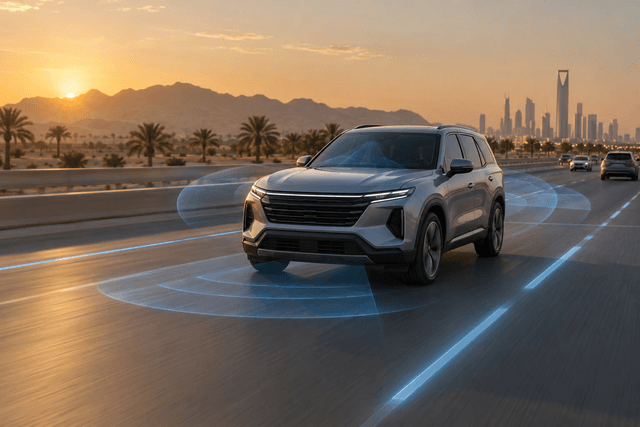
Advanced driver assistance systems (ADAS) are a set of sensors, cameras and software that monitor the area around the car, warning you of a potential hazard or intervening in specific conditions by braking, steering or adjusting speed. Before buying, it is not enough to see a system's name in the specification sheet; ask exactly what it does, when it stops working and how to try it safely.
What are ADAS driver assistance systems and how do they work?
These systems usually rely on a camera behind the windscreen near the rear-view mirror, a radar behind the grille or front bumper, radars in the corners of the rear bumper, plus parking sensors and cameras around the body. The car's computer combines their signals to estimate distances, speeds and the car's position between the lane markings.
They differ from the anti-lock braking system (ABS) and the traction control system (TCS); those two monitor the wheels themselves, while ADAS monitors the road, vehicles and pedestrians around you, and many of these systems use the same brake system when they intervene.
What is the difference between warning and intervention systems?
The US National Highway Traffic Safety Administration (NHTSA) explains in its guide to driver assistance technologies that some systems are designed only to warn you, while others take action to avoid a crash, and that manufacturers use different trade names for the same function; so rely on the function described in the owner's manual rather than the name.
| System | What it does |
|---|---|
| Forward Collision Warning (FCW) | Warning only when you close in quickly on a vehicle ahead. |
| Automatic Emergency Braking (AEB) | Intervention: supports your braking or brakes automatically if a collision appears imminent. |
| Lane Departure Warning (LDW) | Warning only when the car leaves its lane without a signal. |
| Lane Keeping Assist (LKA) | Intervention: gently corrects the steering to bring the car back into its lane. |
| Blind Spot Warning (BSW) | Warning by a signal in the mirror when there is a vehicle you cannot see. |
| Adaptive Cruise Control (ACC) | Intervention: adjusts speed to keep a distance from the vehicle ahead. |
| Rear Cross Traffic Warning (RCTW) | Warning while reversing of a vehicle approaching from the side. |
| Surround-view camera | Visibility aid: a combined image of the car's surroundings while parking. |
| Driver attention monitoring | Warning when signs of drowsiness or distraction appear. |
Having a warning system does not mean a matching intervention is fitted; a trim may include blind spot warning without any steering or braking intervention, so ask for the system list for the exact trim and model year you will buy.
How does automatic emergency braking work and what are its limits?
The NHTSA page on active braking technologies explains that these systems use radar, cameras and other sensors to detect vehicles, pedestrians or objects in front of the car, increasing braking force if your braking is insufficient, or braking automatically if you do not respond to the warning, with the aim of avoiding a collision or reducing its severity. This does not mean they prevent every collision in all conditions.
Ask when buying: does the system detect pedestrians and cyclists, or only vehicles? Does it work when reversing? And what speed range does it operate in according to the owner's manual? Never test it by deliberately approaching a car, a person or an obstacle.
What is the difference between lane departure warning and lane keeping assist?
The warning system only gives a sound or a vibration in the steering wheel when the car drifts across the lane markings, while the assist system gently corrects the steering, and in some cars may brake one of the wheels. Lane centring, by contrast, steers the car continuously while it is active, and usually works together with adaptive cruise control.
These systems depend on the camera seeing the road markings, so their performance weakens when the lines are faded or missing, as on some desert roads and in diversion zones, and many cars alert you if you take your hands off the wheel while they are active.
How does adaptive cruise control differ from standard cruise control?
Standard cruise control keeps a fixed speed that you set, whereas the adaptive version slows down if you approach a slower vehicle, then returns to the set speed when the road clears, and in some cars it can stop and move off again in traffic.
Before using it, learn how to choose the following distance and how to cancel it with the brake pedal or the cancel button. Its braking ability is limited, and it may not respond as you expect to a stationary vehicle or a car that cuts in suddenly; so stay ready to brake yourself.
What are the benefits of blind spot monitoring, rear cross traffic warning and the surround-view camera?
Blind spot monitoring alerts you with a light in the side mirror, some systems add a sound if you signal towards a lane with a vehicle in it. Rear cross traffic warning is useful when reversing out of a parking space between large vehicles that block your view.
The surround-view camera shows a combined image as if you were seeing the car from above, but it can distort distances at its edges and does not replace the mirrors and turning to look yourself.
How do you check ADAS features during a test drive?
Alongside the general steps in our new car buying guide, set aside part of the test drive for the assistance systems:
- Before moving off, get to know the settings menu and each system's symbols on the instrument cluster: ready, active and unavailable.
- On a highway with clear markings, switch on adaptive cruise control and set the distance, then cancel it with the brakes and with the button.
- Notice the lane departure alert, whether it stays quiet when you use the turn signal, and whether the correction is smooth or intrusive.
- Watch the blind spot signal when a car passes alongside you, without relying on it to change lanes.
- In a car park, reverse slowly and check how clear the camera is and how the rear cross traffic alert works.
- Make sure no persistent fault message appears, and that the windscreen and bumpers around the sensors are undamaged.
What conditions limit how sensors and cameras work?
- Dust, sand, mud and insects covering the camera, the radar or the bumper sensors.
- Sandstorms, fog and heavy rain.
- Low sun at sunrise and sunset, and glare from oncoming headlights.
- Extreme heat after long parking in the sun; some owner's manuals state that the function may stop temporarily until the camera cools down.
- Stickers, tint films and non-original accessories in front of the camera or radar.
If a message says the system is unavailable, continue driving carefully without relying on it, clean the sensors with water and a soft cloth while keeping high-pressure water away from them, and if the message persists, have the car inspected.
When do ADAS sensors need calibration?
The camera and radar are mounted at a precise angle, and even a small change can make the system misjudge distance or lane position. That is why the manufacturer may require the sensors to be checked or calibrated in cases such as:
- Replacing the windscreen that the camera is mounted on.
- Repairing the bumper or the grille, or removing and refitting the radar.
- A minor collision, even if the damage looks superficial.
- A wheel alignment, a change in suspension height, or a change of tyre size.
Before any repair, ask the service centre about the calibration requirements for your car, and ask for proof that it was carried out. With a used car, ask whether the windscreen has been replaced or the bumper repaired, and whether the sensors were calibrated afterwards.
Do driver assistance systems replace the driver's attention?
No. NHTSA's classification in the guide mentioned above makes clear that the driver remains responsible for driving and attentive at all times, even with systems that combine speed control and steering. Even driver attention monitoring is a reminder to stop and rest, not a substitute for rest; if you feel drowsy on a long journey between cities, stop in a safe place.
Frequently asked questions about driver assistance systems
- Can ADAS be added to a car that does not have it? Add-on warning devices and cameras are available, but they are not equivalent to factory systems linked to the brakes and steering.
- Can these systems be switched off? Many cars let you turn off some alerts or change their sensitivity, and some switch back on every time you start the car. It is best to keep them on.
- Does windscreen tint affect the camera? Any film or sticker covering the camera area may affect its view, so leave that area clear.
- Do assistance systems differ between trims of the same model? Usually yes; a higher trim may include systems that the base trim lacks.
- Do these systems work just as well at night? Camera performance may suffer on dark roads, while radar does not depend on light.
Driver assistance systems add a useful layer of protection when you understand what each system does and its limits, and keep the sensors clean and calibrated after any repair. When browsing the cars listed by Saleh Cars Group, compare the assistance systems in each trim and ask how they work before you decide, because the final decision on the road always remains yours.
Choosing a Family Car: 5 or 7 Seats? A Practical Guide
Table Of Contents:
|
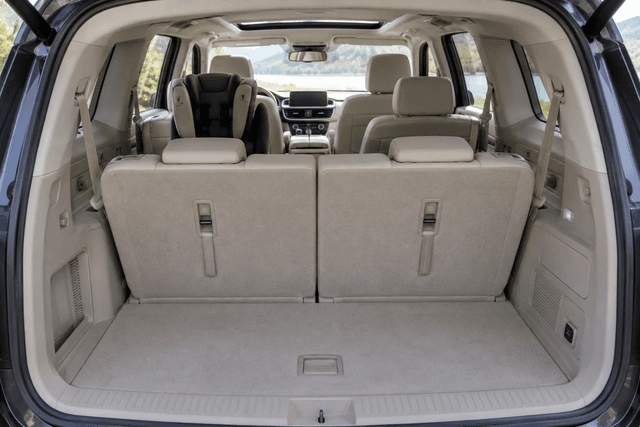
A five-seat family car is usually enough if no more than five people ride with you regularly and the child seats you need install correctly in the rear seat, while a seven-seat car becomes the practical choice when your regular passengers exceed five or you often travel with relatives. Seat count alone does not settle the decision, though: boot (trunk) space, access to the back row and child-seat fitting all need to be tried in the actual car. This guide walks you through the choice, from counting passengers to a final checklist.
How do you work out how many seats your family needs?
Start with the number of passengers, not just the size of your family, and write down two clear scenarios to compare each car against:
- A normal day: the school run, commute and shopping, and who rides with you on most days.
- A longer trip: intercity travel or family visits, with suitcases, a pushchair and trip essentials.
- Regular passengers from outside your immediate family, such as relatives or a household helper, each of whom needs a seat and belt.
- How many child seats you need now, and what you may need over the next few years.
If the third row would be used only a few times a year, a five-seat car with a large boot may suit your daily life better, and bigger trips can be handled in other ways. If you would need it almost every week, put it at the top of your priorities.
What is the practical difference between five-seat and seven-seat cars?
The table below is a general comparison; details can differ greatly between models, so verify them in the car you are considering.
| Aspect | Five seats | Seven seats |
| Passengers | Enough if regular passengers do not exceed five | Suits households with more than five regular passengers |
| Boot space | Fairly constant because the rear row does not change | Shrinks considerably with the third row up and grows when it is folded |
| Getting in and out | Simpler, with no extra row | Reaching the third row means folding or sliding a seat |
| Rear-row comfort | Usually seats three, though middle-seat comfort varies between cars | In many cars the third row suits children and short trips best |
| Size and parking | Usually smaller and easier in tight spaces | Usually longer and needs a wider parking space |
| Daily running | Usually lighter | Greater weight and size may raise fuel consumption |
How do you test the third row before choosing seven seats?
- Set the second row to a comfortable position for its occupants first, then sit in the third row; judging it with the second row pushed forward does not reflect real use.
- Check knee room, foot room and headroom yourself, and notice whether a low floor pushes your knees up.
- Try getting in and out and folding the second-row seat, and ask the child or person who will actually use the third row to try it.
- Make sure every seat has an easily reachable seat belt and a suitable head restraint.
- Look for rear air-conditioning vents for the third row and how they are controlled, and confirm they are fitted to the trim you will buy, not only the higher trim.
- Ask how passengers reach the back when a child seat is installed in the second row, and do not assume the folding mechanism works with it fitted; check the vehicle manual and the child-seat instructions.
The second row may be a single bench for three passengers or two separate captain's chairs with a walkway between them; separate chairs make it easier to reach the back, but they reduce total seating by one compared with a bench.
Does the boot hold your belongings with every seat in use?
Luggage space with the third row folded answers a completely different question from the space available with the whole family on board, so compare both configurations:
- Raise every seat you will need on a family trip, then load your actual belongings, or their measurements, into the boot.
- Try fitting a folded pushchair, a large suitcase and the weekly shopping.
- Notice the height of the loading lip, how easily items can be lifted in and how much room the tailgate needs to open in your parking space at home.
- Check the maximum payload in the owner's manual or on the label fixed to the vehicle, and secure luggage as instructed, because a car full of passengers and belongings may approach this limit.
- If you are considering a roof rack, ask specifically about the permitted roof load.
How do you make sure your child seats fit the car?
The US National Highway Traffic Safety Administration (NHTSA) recommends choosing a seat that suits the child's age and size, then making sure it fits the vehicle itself, and referring to the car-seat manufacturer's instructions and the vehicle owner's manual on installing it with the seat belt or the lower anchors and a top tether, if available. In practice this means:
- Use the vehicle manual to identify the seating positions intended for child seats, and do not assume every rear seat has identical anchor points.
- If you need two or three child seats, try installing them together in their actual arrangement, and make sure each one can be secured and used correctly.
- Make sure the other passengers can still reach their belts and buckles once the seats are fitted.
- Do not rely on an anchoring-system logo in an advert; it does not mean your particular seat will fit that position.
Which comfort details do many buyers overlook?
- Sit in the back for a few minutes with the air conditioning on, and check that air reaches every row in hot summer weather.
- Assess the step height for older passengers and children, and how wide the rear doors open in tight parking spaces.
- Check the view from the rear windows and whether there are sunshades for the rear windows if you need them.
- Look for charging ports, cup holders and small-item storage for each row.
- During the test drive, ask passengers to judge the seating, noise level and stability on the road from their own seats, not just from the driver's seat.
We cover the general steps of a test drive and comparing trims in our new car buying guide; here, what matters is testing the car from your own family's seats.
How does a family car's size affect daily use and running costs?
- Measure your home parking space and driveway, and make sure the car's length and tailgate opening suit them.
- Try parking in a busy or tight car park, and check that the chosen trim has a rear camera and parking sensors.
- A bigger, heavier car may use more fuel; if economy matters to you, review our list of the best fuel-efficient cars when comparing.
- Ask about the tyre size and the manufacturer's maintenance schedule, as both are recurring ownership costs.
What is the short checklist before you decide?
- Every regular passenger has a suitable, easily reachable seat and belt.
- The child seats you need install in the correct positions according to the instructions.
- Your essential belongings fit in the boot with the necessary seats still upright.
- The rear air conditioning and comfort features you need are included in the chosen trim.
- The car's dimensions suit your home parking space and the places you drive to every day.
- The periodic maintenance schedule, tyre size and warranty terms are written down and clear before purchase.
After you buy, keeping up with routine car maintenance helps keep your family comfortable and safe on long trips.
Frequently asked questions about choosing a family car
Is every seven-seat car suitable for seven adults on a trip?
Not necessarily; in many cars the third row suits children or short journeys best. Have an adult sit in it, and check boot space and payload limits with all seven passengers and their belongings.
Can three child seats fit in a five-seat car?
It depends on the width of the rear seat, the number of anchor points and the size of the seats themselves. Check the vehicle manual and try installing all three seats together before buying.
Are two separate second-row seats better than a bench?
Separate seats make it easier to reach the third row and give their occupants more comfort, but they reduce total seating by one compared with a bench, so choose according to your passenger count.
Can a car's exterior size tell you how spacious it is inside?
Not on its own; the seating layout, floor height and boot opening shape all affect the usable space, so try sitting in the car and loading your belongings yourself.
When is a five-seat car enough for a large family?
When regular passengers on most journeys do not exceed five, and trips needing more seats are rare and can be handled in another way.
The right family car is the one that serves both your normal day and your longer trips, not the one with the most seats. Count your passengers, try the third row, child seats and your own belongings, then compare the results calmly. You can also browse the cars available at Saleh Cars Group to compare options that suit your passenger count.
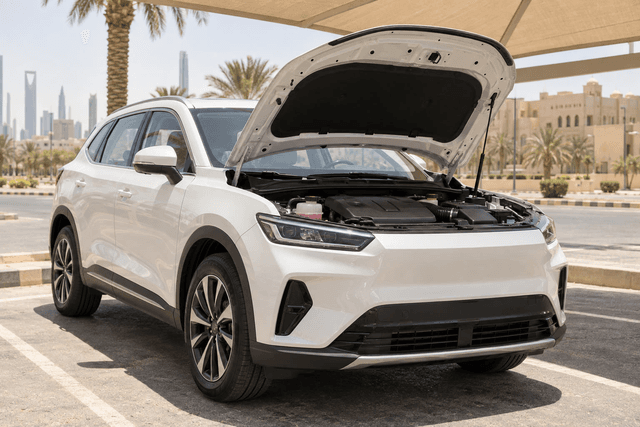
Summer Car Care: Protecting Your Car in Saudi Heat
Table Of Contents:
|
Summer car care means focusing on the systems that heat strains the most: check the cooling system and radiator coolant, the battery, tire pressure, AC performance, and engine oil before the peak of the heat, and protect the paint and cabin from direct sun. The Kingdom's long summer, with its high temperatures, dust, and desert trips, doubles the strain on the car, and most summer breakdowns can be avoided with a simple, regular review. In this guide, we show you what to check and how to act if a problem appears on the road.
Why does your car need special care in the Saudi summer?
Air and asphalt temperatures rise sharply in the summer months, so the car's systems work in harsher conditions than usual, and the strain on them increases with traffic, hours of AC use, and long trips.
- The engine and cooling system work harder to get rid of heat, especially in traffic and during long stops with the AC running.
- Heat speeds up the evaporation of battery fluid and the corrosion of its terminals, shortening its life even if it seems fine.
- Hot asphalt raises tire temperature and internal pressure, and magnifies the effect of any weakness or crack in them.
- Direct sun and dust affect the paint, dashboard, seats, and glass.
- Any small fault becomes more serious in summer, because breaking down on a highway at midday is unpleasant and can be dangerous.
How do you protect the engine and cooling system from the heat?
The cooling system is the first line of defence in summer, and neglecting it is one of the most common causes of costly breakdowns in this season.
- Check the coolant level in the reservoir with the engine cold, and never open the radiator cap while the engine is hot.
- Use the type of coolant recommended in the owner's manual rather than plain water, and learn about the difference between red and green radiator coolant before topping up or mixing.
- Look at the radiator hoses: cracking, swelling, or excessive softness are signs that they need replacing.
- Make sure the radiator fan runs when the temperature rises or the AC is on, and clean insects and dust off the front of the radiator.
- Keep an eye on the temperature gauge on the dashboard; if it rises repeatedly, read about the main causes of car engine overheating and deal with the cause early.
- Stick to the engine oil change schedule in the owner's manual, as oil endures higher temperatures in summer and needs to be in good condition.
How is the heat linked to a weak battery, and how do you look after it?
Many people believe that batteries only struggle in winter, but summer heat speeds up their internal wear, and the weakness then appears suddenly at the first hard start.
- Have the battery tested by a technician or parts shop before summer, especially if it has been installed for a long time.
- Clean white or green corrosion off the terminals, and make sure the cables are tightened properly.
- Watch for a slow-cranking starter or dim lights, as these are early signs of weakness.
- Try to park the car in the shade whenever possible, as this reduces the heat in the engine bay.
- To learn the signs in detail and ways to extend its life, see our article on car battery failure symptoms and how to extend its life.
How do you keep the AC working efficiently in summer?
In summer, the AC is not a luxury, and any weakness in it shows quickly as temperatures rise; servicing it early before the season is easier than repairing it at the peak.
- When getting into a car that has been parked in the sun, open the windows slightly for the first minute to let the hot air out, then close them and switch on the AC.
- Replace the cabin air filter on time, as a filter clogged with dust weakens airflow and causes an unpleasant smell.
- If the air becomes less cold than usual, the cause may be low refrigerant, a leak, or a weak condenser fan, and it needs a technical check.
- Pay attention to any strange noise when the compressor engages, or the engine stalling at idle with the AC on.
- To understand AC faults and how to fix them in detail, read our article on the car air conditioning system and its faults.
How do you protect the tires from hot asphalt?
The tire is the only part that touches the hot asphalt directly, so it needs closer monitoring in summer, especially before a trip.
- Check the air pressure in the morning when the tires are cold, and set it to the value on the driver's door sticker.
- Do not let air out of a tire because it is hot after driving; the rise in pressure with heat is normal and accounted for.
- Check the sidewalls for cracks or bulges, as old rubber is affected more by sun and heat.
- Check the manufacturing date printed on the tire's sidewall, and consult a technician if the tire is old even if the tread looks good.
- Do not exceed the car's permitted load on summer trips, as overloading raises tire temperature.
- Do not forget to check the spare tire and the tools for changing it before any long trip.
How do you protect the paint and cabin from the sun?
Strong sunlight affects the car's appearance and value over time, and simple daily protection is better than repairs later.
- Park the car in the shade or under a canopy whenever possible, and use a suitable cover when parking for long periods.
- Place a sunshade on the windscreen to reduce cabin heat and protect the dashboard from cracking.
- Suitable window tint reduces the heat inside the cabin and protects the seats; learn about how the right window tint protects your car.
- Wash the car early in the morning or in the evening, and do not wash it while the surface is hot in the sun, so water spots do not remain.
- Rinse the dust off with water first after sandstorms, and do not wipe it off dry so it does not scratch the paint.
- Do not leave lighters, aerosol cans, plastic water bottles, or electronic devices inside the car, as extreme heat may damage them or make them dangerous.
What should you do if your car overheats while driving?
If you notice the temperature gauge rising or steam coming from the front of the car, acting calmly and quickly reduces the damage to the engine.
- Switch off the AC immediately; you can temporarily run the heater at its highest setting to draw some heat away from the engine.
- Stop in a safe place away from the traffic lanes, and switch on the hazard lights.
- Turn off the engine if the gauge keeps rising or steam appears, and do not keep driving with the gauge in the red zone.
- Do not open the radiator cap or the coolant reservoir while the engine is hot, and wait until it has cooled down completely.
- Once the engine has cooled, check the coolant level and look for an obvious leak, then head to the nearest workshop or call for help.
Frequently asked questions about summer car care
- Does running the AC all the time harm the engine? No, if the cooling system is in good condition, but it adds load on the engine and battery, which is why maintenance matters more in summer.
- Should I change the engine oil earlier in summer? Follow the schedule in the owner's manual, and use the severe-conditions schedule, if there is one, if you drive a lot in traffic and extreme heat.
- Can I put plain water in the radiator when necessary? Only in an emergency and to reach the nearest workshop, then refill the system with the recommended coolant.
- Can tires burst because of the heat? Heat alone does not usually cause this, but it multiplies the risk of underinflated, old, or cracked tires.
- When should I check the car before a summer trip? A few days before the trip, so there is enough time to fix any issue with the cooling system, tires, or battery.
Summer in Saudi Arabia is a real test for every car, but most of its breakdowns start with small signs that can be noticed early. Review the cooling system, battery, tires, and AC before the peak of the heat, protect the paint and cabin from the sun, and never ignore the temperature gauge or any strange noise; with these simple habits, the summer months pass without surprises on the road.
Buying a Car With Financing or Cash: Which Is Better?
Table Of Contents:
|
Should you buy your car in cash or with financing? Paying cash usually means you pay the lowest total amount and own the car immediately with no monthly commitments, but it can drain your savings. Financing lets you get the car now and spread its price over installments, but what you pay in the end is usually higher because of the financing cost and fees. The right decision depends on your savings, the stability of your income, and the total cost of each option, not on the monthly installment alone. In this article we compare the two methods and explain how to calculate the cost, compare offers, and read the contract before signing.
What is the difference between buying a car in cash and with financing?
When you buy in cash, you pay the full price of the car at the time of purchase and the financial relationship with the seller ends. When you buy with financing or installments, you pay part of the price as a down payment, the rest is split into monthly installments over a period set by the contract, and the financing cost is added to it.
- Cash: one amount paid once, with no monthly installments and no financing cost.
- Financing: a down payment smaller than the car's price, followed by monthly installments that are usually fixed until the end of the term.
- Some finance contracts include a final payment larger than the installments at the end of the term; it lowers the monthly installment but does not cancel the amount.
- In both cases, you still carry the same running costs, such as fuel, insurance, and scheduled maintenance.
What are the pros and cons of buying a car in cash?
- You usually pay the lowest possible total, because you carry no financing cost or related fees.
- You own the car immediately and can sell or trade it in whenever you like without going back to any party.
- There is no monthly commitment putting pressure on your budget if your income changes or unexpected expenses come up.
- Paying cash may give you a better chance to negotiate, or to benefit from cash-payment offers if available.
- On the other hand, buying in cash can drain your savings and leave you without enough of an emergency reserve.
- The amount you have may also push you toward a car that is less than you need, or make you delay the purchase until your savings are complete.
What are the pros and cons of buying a car with financing?
- You get the car now without waiting until you have saved its full price.
- You keep part of your savings for emergencies or other priorities in your life.
- The price is spread over installments known in advance, making it easier to plan your monthly budget.
- On the other hand, the total you pay is higher than the car's cash price in most cases, because of the financing cost and fees.
- The installment commits you for years, and any change in your income can turn it into a heavy burden.
- Financing may require a certain type of insurance throughout the term, and there may be restrictions on selling the car before full payment, depending on the contract.
How do you calculate the total cost of the car in both cases?
Do not compare the cash price with the monthly installment; compare the total amount that will come out of your pocket with each option.
- For cash: add the car's price to the registration fees, the extras you will buy, and the cost of insurance.
- For financing: add the down payment, the monthly installment multiplied by the number of months, the final payment if any, the administrative fees, and the cost of insurance for the whole term of the contract.
- Subtract the car's cash price from the financing total; the difference is the real cost of getting the car now instead of waiting.
- Add the expected running costs of fuel and maintenance; they are similar under both options, but they affect your ability to pay the installment. If fuel consumption matters for your budget, check our list of the best fuel-efficient cars.
- Work out how much of your savings will remain after each option, and make sure it is enough for emergencies.
How do you compare car finance offers?
- Ask each provider for a written offer for the same car, with the same term and the same down payment, so the comparison is fair.
- Compare the total amount paid and the overall financing cost, and do not settle for comparing the monthly installment.
- Ask about all fees linked to the contract, such as administrative fees, the cost of insurance, and any other charges.
- Pay attention to the effect of the term: a longer term lowers the installment, but it usually raises the total you pay.
- Pay attention to the effect of the down payment and the final payment on both the installment and the total amount.
- Ask about early settlement terms and the possibility of paying off the remaining amount before the end of the term.
- Check the current car offers, as some offers include special benefits on financing or on cash payment.
What should you read in the finance contract before signing?
- The car details in the contract: model, trim, model year, color, and VIN when available, and that they match what you agreed on.
- The down payment amount, the number of installments, the value and due date of each installment, and the final payment if any.
- The total amount you will pay until the end of the contract, clearly written.
- What happens if an installment is late or you default on payments, and the consequences of that.
- Insurance terms: its type, who bears its cost, and who receives the compensation in the event of an accident.
- When ownership of the car passes to you, and whether you can sell or trade it in before the contract ends.
- Early settlement terms and any fees or discounts linked to it.
- Do not sign any paper with blank spaces, ask about every clause you do not understand, and keep a full copy of the contract and the installment schedule.
When is cash better for you, and when is financing better?
- Cash is better if you have the car's price available and still keep enough of an emergency reserve afterwards.
- Cash is also better if you prefer not to commit to installments, or if your income is not steady.
- Financing is better if you need the car now for your work or your family and do not want to drain all your savings.
- Financing suits you if your income is stable and the installment leaves comfortable room in your budget for fuel, maintenance, and emergencies.
- There is a middle option: a larger down payment from your savings with a shorter term, which lowers the total financing cost without draining everything you have.
- If your budget is limited either way, consider a less expensive car or a used car in good condition; before that, read our important tips before buying a used car.
What are the common mistakes when buying a car with financing?
- Choosing the car based only on the monthly installment, without calculating the total amount.
- Stretching the finance term to lower the installment, then paying a larger total in the end.
- Ignoring the final payment and not preparing for it as the end of the contract approaches.
- Forgetting the costs of insurance, fuel, and maintenance when working out your ability to pay.
- Putting all your savings into the down payment and leaving no emergency reserve.
- Signing quickly under the pressure of an offer, without reading the contract or comparing other offers.
Frequently asked questions about buying a car in cash or with financing
- Is financing always more expensive than cash? Usually yes, because of the financing cost and fees, but some promotional offers may narrow the gap, so compare the total amount in each case.
- Is a larger down payment better? It reduces the amount financed, and therefore usually reduces the installment and the financing cost, as long as it does not drain your emergency reserve.
- Can I pay off the financing before the end of the term? That depends on the contract terms, so ask about early settlement and any fees or discounts linked to it before signing.
- Can I sell a financed car before the installments end? The contract determines this, and it usually requires settling the remaining amount first or getting the finance provider's approval.
- What matters more when comparing: the installment or the total amount? The total amount matters most; then make sure the installment fits comfortably in your monthly budget.
There is no single best option for everyone; cash saves you the financing cost, and installments give you flexibility. Calculate the total amount in both cases, keep an emergency reserve for yourself, and read the whole contract before signing. Once you have set your budget, browse the cars available at Saleh Cars and choose what suits your needs.