
Kia Models 2026: Trims, Specs and Which One Suits You
Table of Contents:
|
Kia models 2026 listed on our site comprise ten models from the 2025 and 2026 model years that cover most buyer needs in Saudi Arabia: sedans for the city and daily driving (PEGAS, K3, K4 and K5), SUVs (Sonet, SELTOS and SPORTAGE), two family models with seven and eight seats (Carens and Carnival), and the Tasman pickup. This guide explains how they differ in body type, engine, power, seats and drive, and suggests which model suits each kind of use; you can browse the full list on the Kia cars page.
Which Kia Models 2026 Are Listed on Our Site?
Kia is a South Korean car brand. The table below summarises the models listed on our site using one representative trim per model; its specifications are those of that listed trim only and vary by trim and model year, so check the car page for the trim you want before deciding. A dash means the value is not given in this guide.
| Model | Type | Engine | Power | Seats | Drive | Transmission |
| PEGAS | Sedan | 1.4 L | 95 HP | 5 | Front | Automatic |
| K3 | Sedan | 1.6 L | 123 HP | 5 | Front | Automatic |
| K4 | Sedan | 1.6 L | 123 HP | 5 | Front | Automatic |
| K5 | Sedan | 2.5 L | 194 HP | 5 | Front | Automatic |
| Sonet | Small SUV | 1.5 L | 115 HP | 5 | Front | CVT |
| SELTOS | Compact SUV | 1.5 L | 115 HP | 5 | Front | CVT |
| SPORTAGE | SUV | - | - | 5 | Front | Automatic |
| Carens | Three-row family car | 1.5 L | 115 HP | 7 | Front | CVT |
| Carnival | Family van | 3.5 L V6 | 268 HP | 8 | Front | Automatic |
| Kia Tasman | Pickup | 2.5 L | 277 HP | 5 | Four-wheel | Automatic |
The representative trims in the table are: PEGAS GL 2026, K3 GL Retail 2026, K4 GL 2026, K5 GLS 2026, Sonet GL Upgraded 2026, SELTOS GL 2026, SPORTAGE GL - LARGE 2026, Carens GL 2026, Carnival GLS 2025 and Tasman EX-TOP 2026. The SPORTAGE engine and power are left to the trim page.
Sedans for the City and Longer Trips: PEGAS, K3, K4 and K5
The Kia PEGAS has the smallest engine among the listed sedans; the GL 2026 trim has a 1.4 L four-cylinder engine with 95 HP and 132 Nm of torque, an automatic transmission and 14 inch wheels, plus Bluetooth and a USB port. It suits buyers who want a simple sedan for daily city driving, and it is listed in GL and GLS trims for the 2025 and 2026 model years.
The Kia K3 is listed in the GL Retail 2026 trim, with a 1.6 L four-cylinder engine producing 123 HP and 151 Nm of torque, an automatic transmission and 15 inch wheels. Its equipment includes an 8 inch touchscreen, Apple CarPlay and Android Auto, a rear camera and rear-seat air vents, making it a practical choice for daily use.
The Kia K4 (often searched as Kia K 4) shares the K3 engine figures in the GL 2026 trim: 1.6 L, 123 HP and 151 Nm, with a stated fuel economy of 15.3 km/L, but it comes with 16 inch wheels, a 12.3 inch touchscreen, a rear-seat occupant alert and a drive-mode selector. Its listed trims are GL, GL Upgraded 1.6, GL Upgraded 2.0L and GLS.
The Kia K5 (sometimes searched as Kia 5 or Kia Five) has the most powerful engine among the listed sedans; the GLS 2026 trim has a 2.5 L four-cylinder engine producing 194 HP and 246 Nm of torque, a fuel economy of 15.7 km/L and 17 inch wheels. Its equipment includes a panoramic roof, ventilated and heated seats, a power driver seat with memory, a 12.3 inch touchscreen and a wireless charger, which makes it suitable for drivers who cover long trips between cities.
SUVs for Smaller Families: Sonet, SELTOS and SPORTAGE
The Kia Sonet is the smallest SUV in the list and is listed in the GL Upgraded 2026 and LX 2025 trims. The listed trim has a 1.5 L four-cylinder engine with 115 HP and 144 Nm of torque, a CVT transmission, a fuel economy of 17.0 km/L, 16 inch wheels, an 8 inch touchscreen and automatic climate control. It suits buyers who want the height of an SUV with easy city driving.
The Kia SELTOS is larger than the Sonet, and the engine figures of its GL 2026 trim match it: 1.5 L, 115 HP and 144 Nm with a CVT transmission, a fuel economy of 17.5 km/L and 16 inch wheels. It adds a wireless charger, Apple CarPlay and Android Auto, smart entry and a rear camera. Its listed trims are EX and GL for the 2025 model year, and GL and GLS for the 2026 model year.
The Kia SPORTAGE is a five-seat SUV listed in GL, GLS 1.6 and L - GLS trims for the 2025 model year, and GL - LARGE and L - GLS trims for the 2026 model year. The GL - LARGE 2026 trim has front-wheel drive, a fuel economy of 14.6 km/L and 17 inch wheels, with smart entry, push-button start, cruise control and rear air conditioning. Engine specifications differ between trims, so check them on the page of the trim you want. It suits small families who want a roomier cabin and air conditioning for rear passengers.
For Large Families: Carens With Seven Seats and Carnival With Eight
The Kia Carens is a three-row family car with seven seats in the GL 2026 trim, with a 1.5 L engine producing 115 HP and 144 Nm of torque, a CVT transmission, a fuel economy of 16.6 km/L and 16 inch wheels. Its equipment includes a folding third row, a sliding second row, USB ports for the second row and a front cup holder with cooling and heating. Its listed trims are GL, GL Camera and GLS for the 2025 model year, and GL and GLS for the 2026 model year.
The Kia Carnival is the largest model in the list with eight seats, and it is listed in GL and GLS trims for the 2025 model year. The GLS trim has a 3.5 L V6 engine producing 268 HP and 331.5 Nm of torque, a fuel economy of 11.2 km/L and 19 inch wheels, with an electric sunroof, ventilated front seats, a power tailgate, rear air conditioning and rear sunshades. It suits large families and long trips between cities.
For the Desert and Work: the Kia Tasman Pickup
The Kia Tasman is the only pickup among the Kia models on our site, and it is listed for the 2026 model year in three trims: EX-TOP, LX GLS 4x4 and LX 4X2. The EX-TOP trim has four-wheel drive and a 2.5 L four-cylinder engine producing 277 HP and 422 Nm of torque, a fuel economy of 10.7 km/L and 18 inch wheels, with forward collision warning, blind-spot information and two 12.3 inch screens. If you head out to the desert or need four-wheel drive, choose a 4x4 trim, while the 4X2 trim suits paved roads and everyday work.
How Do You Compare Kia Trims Before Buying?
Most Kia models on our site carry trims with similar names such as GL and GLS, along with special names such as GL Upgraded, GL - LARGE, GL Camera, GL Retail, EX, LX and EX-TOP. Do not rely on the trim name alone, and compare with these steps:
- Decide on the model year first, because some models are listed for 2025 and 2026 with different trims.
- Compare engine, power and torque on each trim page, as with the K4, which includes the GL Upgraded 1.6 and GL Upgraded 2.0L trims.
- Check the drive system on the Tasman between the LX 4X2 trim and the LX GLS 4x4 trim before choosing.
- Compare the equipment that matters to you: camera, screen size, seat type, rear air conditioning and sunroof.
- Confirm the number of seats if your family is large: the Carens has seven seats and the Carnival eight.
Once you have chosen a trim, the guide to new car buying steps before you sign and take delivery helps you organise the inspection and paperwork.
How Do You Find Kia 2026 Prices and Buy the Right Trim?
The price of each trim is shown on its own car page and changes with the trim and model year, which is why this guide does not state prices. If there are offers on Kia models, you will find them on the current offers page, and to estimate instalments before applying, use the car finance calculator.
You can view the listed models at the Saleh Cars branches and find their locations on the contact and branches page or through the unified number 920022122.
Frequently Asked Questions About Kia Models 2026
What is the price of the Kia PEGAS 2026?
The PEGAS price differs between the GL and GLS trims and by model year; the current price of each trim, with any running offer, is shown on the car page and the offers page, and you can estimate instalments with the finance calculator.
What is the difference between the Kia K4 and the Kia K3?
The listed trims of both have a 1.6 L engine with 123 HP and 151 Nm of torque, but the K4 GL comes with 16 inch wheels and a 12.3 inch touchscreen, while the K3 GL Retail comes with 15 inch wheels and an 8 inch touchscreen.
Is Kia 5 the same as the Kia K5?
Yes, many people write the K5 name as Kia 5 or Kia Five. It is a sedan listed in GL, GL Retail and GLS trims for the 2025 and 2026 model years.
What is the difference between the Kia SPORTAGE 2025 and 2026 on the site?
The listed 2025 trims are GL, GLS 1.6 and L - GLS, and the 2026 trims are GL - LARGE and L - GLS, so compare each trim page to see the differences in engine and equipment.
Which Kia model suits a large family?
The Carens with seven seats in the GL 2026 trim, and the Carnival with eight seats in the GLS 2025 trim with a 3.5 L V6 engine.
Conclusion
Kia models on our site include the city sedans PEGAS, K3 and K4, the more powerful K5 sedan, the Sonet, SELTOS and SPORTAGE SUVs, the Carens and Carnival family models and the Tasman pickup. Decide what you need in seats, drive and equipment first, then compare the trims on the car pages and browse the full list in Kia cars.

No Down Payment Car Finance: How It Works, What to Check
Table of Contents:
|
No down payment car finance means asking a finance company to finance the full price of the car instead of paying part of it upfront, so the whole amount is spread over monthly instalments. This option eases the burden of a large sum at purchase, but it raises the amount financed, so the monthly instalment is usually higher and the total you pay by the end of the contract is often greater. It is not necessarily available to every applicant, because approval and its details are subject to the finance company’s terms and credit approval. In this guide we explain how this option works, what finance companies look at, the documents and costs that still apply, and the questions to ask before signing.
What Does No Down Payment Car Finance Mean?
In standard instalment buying you pay part of the car’s price at purchase, known as the down payment or deposit, and the finance company finances the rest in instalments. With no down payment, which many people search for as instalments without a deposit, you ask for the full price to be financed, and your instalment commitment starts according to the contract schedule.
The financing here is provided by the finance company, not the car showroom, so it decides on approval, the term and the instalment according to its terms. The option may also come in different forms: some contracts require no down payment but include a final payment at the end of the term, and some ask for fees or amounts at signing even without a down payment. So ask for the offer details in writing, and do not rely on the advertising headline alone.
How Does Skipping the Down Payment Change the Instalment and the Total?
The general rule is simple: whatever you do not pay upfront goes into the amount financed. The larger the amount financed, the higher the monthly instalment usually is if the term stays the same, and the total financing cost is often greater because it is calculated on a larger amount. If the term is extended to lower the instalment, the total you pay may rise even further.
| Item | No down payment | With a down payment |
| Amount you pay at purchase | Lower, though fees or insurance may still apply depending on the offer | Higher because it includes the deposit |
| Amount financed | The full price of the car | The price minus the deposit |
| Monthly instalment for the same term | Usually higher | Usually lower |
| Total paid by the end of the contract | Often higher | Often lower |
| Impact of any change in your income | Heavier because the monthly commitment is larger | Relatively lighter |
| Your emergency savings | Stay with you | Shrink by the amount of the deposit |
To try out the effect of the down payment and the term on the instalment before requesting a formal offer, use the car instalments and finance calculator page, and treat the result as an estimate, because the actual instalment is set by the finance company in its written offer.
What Do Finance Companies Look at When You Apply With No Down Payment?
Criteria differ from one company to another, but finance companies generally look at your ability to repay, and the conditions for an application without a down payment may differ from those with one, depending on each company’s policy. The main points usually reviewed include:
- Your income, its source and stability, and how your salary is deposited, according to the finance company’s terms.
- Existing obligations such as other instalments or financing, and what remains of your income after them.
- Your credit record and how regularly you have repaid past obligations.
- Your employer, its sector and your length of service, as required by the finance company.
- Residency status and validity for residents, since residents can buy with financing according to the finance company’s terms.
There is no single rule that guarantees approval, and the final decision rests with the finance company after reviewing the application. Ask it directly about its criteria before applying, and if you want to know where you stand in advance, check your credit record through the official approved channels.
What Documents Are Commonly Requested for Car Finance?
The list varies by finance company and customer type, and the documents commonly requested include:
- Proof of identity: the national ID for citizens, or a valid residence permit for residents.
- A salary definition letter or salary certificate from your employer.
- A bank statement for the period set by the finance company.
- National address details and contact information.
- Additional documents for the self-employed or for certain cases, as requested by the finance company.
Ask the finance company for its up-to-date list before applying, and make sure your details match across all documents, because a different name or employer from one paper to another may delay the review of your application.
What Costs Still Apply Even Without a Down Payment?
Not paying a deposit does not mean the car will cost you nothing beyond the instalment. Review these items with the finance company:
- Insurance: finance companies usually require the car to be insured for the whole contract, so ask about its type, who pays for it and whether it is included in the instalment or paid separately. To understand the difference between policies, read about comprehensive vs third-party car insurance.
- Administrative or file-opening fees, and when they are due.
- A final payment at the end of the contract, if there is one; it lowers the instalment but is an amount you must prepare for.
- Normal running costs such as fuel and routine maintenance, which do not change with or without a deposit.
Ask for all these items to be stated in the written offer, and add them to the instalments to know the real total cost before you decide.
What Questions Should You Ask the Finance Company Before Signing?
- Is the offer truly without a down payment, or has the deposit moved into a final payment or fees at signing?
- What is the monthly instalment, the number of instalments and the total amount by the end of the contract?
- What are the administrative fees, and are any other amounts due before delivery?
- What type of insurance is required, and is its cost included in the instalment?
- What are the early settlement terms, and what happens if an instalment is late?
- When does ownership of the car pass to you, and can you sell it before the contract ends?
- Is the approval final or preliminary, and how long does the offer remain valid?
Compare the answers from more than one company for the same car and the same term, and check the contract and the finance company’s official disclosures before signing. For calculating the total cost, reading the contract terms and comparing offers in detail, see our comparison of buying a car with financing or cash.
When Does No Down Payment Suit You, and When Is a Down Payment or the Two-Payment Option Better?
Instalments with no down payment may suit you in the following cases:
- Your income is stable, and the higher instalment leaves comfortable room in your monthly budget.
- You need the car now and do not want to drain your emergency savings.
- You accept that the total you pay will often be higher in return for not paying a large sum at the start.
A down payment may be better if you have money beyond your emergency reserve, because it usually lowers the amount financed, the instalment and the financing cost. And if you have part of the price but not enough to pay it in full, the two-payment option may be worth asking about, including its details and conditions, before turning to financing.
Start by choosing a car that fits your budget from the list of new cars on offer, then request a finance offer for that specific car, because the instalment changes with the car and its trim. Saleh Cars Group offers buyers whose money does not cover the full price the two-payment option or financing of the rest through approved finance companies, and you can ask its team about this through the contact and branches page.
Frequently Asked Questions About No Down Payment Car Finance
Can you buy a car in instalments with no down payment?
This is possible with some finance companies and in some offers, but it is subject to the finance company’s terms and credit approval, and it is not necessarily available to every applicant. Ask the finance company whether it is available in your case.
Is the instalment higher without a down payment than with one?
Usually yes for the same term, because the amount financed is larger. The instalment may look similar if the term is longer or there is a final payment, so compare the total amount, not the instalment alone.
Can a resident finance a car with no down payment?
Residents can buy with financing, but whether the no down payment option is available and its conditions, such as the employer and residency validity, are set by the finance company; ask it about its requirements for residents.
Is insurance required for car finance with no down payment?
Finance companies usually require the car to be insured for the whole contract, and the contract sets its type and who bears its cost, so read this clause carefully and ask about it before signing.
Does no down payment mean I will pay nothing at delivery?
Not necessarily; there may be administrative fees, insurance costs or other amounts depending on the finance company’s terms, so ask for a written list of everything payable before delivery.
Conclusion
Instalments with no down payment let you get the car without a large sum at the start, but they mean a larger amount financed, a usually higher instalment and an often higher total. Prepare your documents, know what the finance company looks at, add insurance, fees and any final payment to the instalments, and do not sign before you have written answers. If you have money beyond your emergency reserve, compare this option with a down payment or the two-payment option.
Car Won't Crank: Battery or Starter Problem? How to Tell
Table of Contents:
|
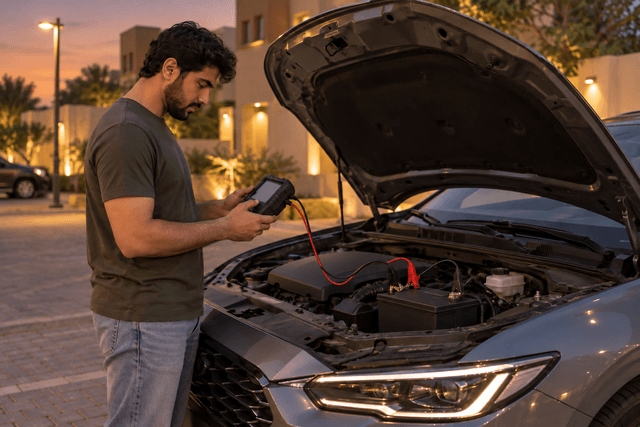
If you turn the key or press the start button and the engine does not turn over at all, the cause may lie in the car battery or its connections, in the starter motor and its circuit, or in a starting condition that has not been met, such as the gear position or key recognition. Whether it is a battery or starter problem usually shows in the dashboard lights, the type of sound and the result of a jump start test. These are indications for ordering the checks, while confirmation comes from a qualified technician with proper equipment.
How Is a No-Crank Different from Cranking Without Starting?
A no-crank means the engine does not turn when you try to start it: you hear nothing, or only a click or rapid clicking. If the starter turns the engine at its usual sound but the engine does not fire, that is a different situation, usually caused by fuel, spark or sensors, which we cover in the guide on an engine that cranks but will not start. Here we focus on the first case, whose diagnosis starts with the electrical side.
How Can Sounds and Lights Reveal a Battery or Starter Problem?
Watch the moment of starting and the dashboard lights before and during it, as each sign has a more likely cause, not a final verdict:
- No sound and no lights, or a very dim dashboard: this may point to a completely flat battery, a loose or corroded terminal, or a main fuse.
- No sound with bright lights: this may mean the start command is not reaching the starter, because of the gear position, the brake or clutch pedal, the key not being recognised, or a relay or fuse.
- A single click with bright lights that do not dim: this may point to the starter or the switch that pushes its gear (the solenoid), or to a weak starter cable or ground strap.
- Rapid repeated clicking with dimming lights: this may point to a poorly charged battery or badly connected terminals, so the solenoid does not receive enough current, releases and tries again.
- Slow, laboured cranking: this may point to a weak battery or corroded connections, and sometimes to a starter drawing excess current because of internal wear.
- Whirring or grinding without the engine turning: this may mean the starter gear is not meshing with the flywheel ring gear or that teeth on one of them are damaged, so stop trying.
- It starts one time and not the next: this may point to a loose connection, a starter that is starting to fail, an intermittent relay or the gear position sensor, so note when the problem occurs and tell the technician.
For more detail on each side, see the signs of a failing starter motor and car battery failure symptoms and how to test them.
Why Won’t the Car Crank with a New Battery?
Fitting a new battery does not mean the problem is over; the old one may have been fine, or the cause may be somewhere that was never checked. The main possibilities are:
- Terminals not tightened properly, corrosion left on the cable ends, or a damaged or loose ground strap between the engine and the body.
- A new battery that is not fully charged, because it was stored for a long time or was drained by lights or accessories left on.
- A battery that does not match the car’s specification in capacity, cranking current or technology; see the guide to choosing a new car battery.
- A parasitic drain that empties the battery while parked, so the car starts today and will not crank tomorrow morning; read about hidden electrical drain in the car.
- A weak charging system (alternator), so the battery runs down gradually despite driving, and a charging warning light may appear on the dashboard.
- The starter relay or the starting circuit fuse, or the starter motor itself and its solenoid, especially if the symptoms were present before the battery was changed.
- The key not being recognised because of a weak remote battery or a fault in the immobilizer, which blocks the starter in some cars.
- The gear selector not in P or N on an automatic, the clutch not fully pressed or its switch faulty on a manual, or the brake not pressed in cars with a start button.
Which Safe Checks Can You Do Before the Workshop?
These checks do not require removing any part, and they help you narrow down the likely cause:
- Make sure the gear selector is in P or N and that you are pressing the brake or clutch as the owner’s manual requires, and try starting in N if it fails in P.
- Look at the dashboard lights: bright, dim or off? Does a message about the key or a battery warning light appear?
- Headlight test: switch on the headlights and watch their reflection on a wall while trying to start. Heavy dimming may point to the battery or its connections, while lights that stay bright with a single click may point to the starter. Some cars switch off electrical loads during starting, so do not rely on this observation alone.
- Try the spare key, check the remote battery if a key-not-detected message appears, and follow the alternative starting method if the owner’s manual gives one.
- Inspect the terminals by eye with the engine off: are the cables secure? Is there white or green corrosion? Do not move them with a metal tool, and never touch both terminals together.
- Try a jump start by following the steps to jump-start a car safely: if the engine cranks normally, the battery or its connections are more likely; if the same click remains, the starter or its circuit is more likely.
What Should You Avoid When the Car Won’t Crank?
- Do not tap the starter with a tool while someone else tries to start the car; being close to the fan, belts and hot parts during a sudden turn can cause injury.
- Do not keep cranking without a pause or hold the start for long; the starter is designed for intermittent use and can overheat, so let it rest between attempts as the owner’s manual advises.
- Do not bypass the relay or bridge the starter or battery terminals with a screwdriver or wire; the engine may turn suddenly while the car is in gear, or sparks and electrical damage may occur.
- Do not replace the starter or battery by guesswork before testing, as that may not fix the problem.
- Do not try to jump-start a battery that is swollen, cracked or leaking fluid; ask for help.
How Do You Read Battery and Starter Signs in One Table?
The table below summarises common signs, the more likely side and the suggested next step:
| Sign | More likely | Also worth ruling out | Next step |
| No sound, dashboard dark | Battery or terminals | Main fuse | Inspect the terminals by eye and try a jump start |
| No sound, dashboard bright | Starting circuit | Gear position, key and relay | Confirm P or N and the brake, and try the spare key |
| Single click, bright lights | Starter or solenoid | Starter cable or ground strap | Have the starter and its circuit tested |
| Rapid clicking, lights dim | Battery or terminals | Weak charging system | Try a jump start, then test the battery and charging |
| Slow, laboured cranking | Battery or connections | Starter drawing high current | Ask for a battery load test and a starter draw test |
| Whirring or grinding, no crank | Starter gear | Flywheel ring gear teeth | Stop trying and have it inspected |
| Intermittent problem | Loose connection or weakening starter | Relay or gear position sensor | Note when it happens and tell the technician |
What Does a Technician Test to Confirm the Cause?
A technician relies on measurement against the manufacturer’s data, and usually checks:
- The battery’s condition under load or with a battery tester, not just its charge.
- Voltage drop across the positive cable and the ground path while cranking, to reveal resistance in connections that cannot be seen.
- The current the starter draws, since a high draw may point to a tired starter or mechanical resistance in the engine.
- Whether the start signal reaches the starter through the relay, the fuse and the gear position or clutch switch.
- The charging system, and stored fault codes in the car’s computer if messages about the key or the immobilizer appear.
Frequently Asked Questions About a Car That Won’t Crank
What is the starter motor in a car?
The starter motor is a small electric motor that draws its current from the battery and turns the engine at the moment of starting through a gear that meshes with the flywheel, then disengages once the engine runs, so it needs a healthy battery and good connections.
How can I tell the starter has failed rather than the battery?
If the battery is charged and tested, the terminals are sound, and the single click with bright lights repeats even with a jump start, the starter or its circuit becomes more likely, and a technician confirms it by measuring voltage drop and current draw.
What does a clicking sound from the starter mean when starting?
Rapid clicking usually happens when the starter does not receive enough current because of a weak battery or corroded or loose terminals, while a single click with bright lights may be linked to the starter or its solenoid.
Does tapping the starter fix the problem?
The starter may work temporarily after being tapped, but that is a sign of a fault in it rather than a fix, and it is dangerous while someone else tries to start the car.
Can a smart key stop the car from starting?
Yes. If the car does not recognise the key because of a weak key battery or a system fault, the starter may not turn or the engine may not fire, a message usually appears on the dashboard, and the owner’s manual may explain an alternative starting method.
Conclusion
When the car will not crank, note the dashboard lights, the type of sound and the result of a jump start: dim lights and rapid clicking lean towards the battery, while a single click with bright lights leans towards the starter, and do not forget the gear position and the key. Avoid risky shortcuts, and leave confirmation to a qualified technician.

Instalments at the Cash Price: Meaning and What to Check
Table of Contents:
|
An offer of instalments at the cash price basically means that the total you pay for the car in instalments equals its price if you paid the full amount at once, so the finance cost is not added to the car’s price because the seller or the offer absorbs it. But the advertising phrase instalments at the cash price is not enough on its own; there may still be administration fees, comprehensive insurance required throughout the contract, a final payment, or add-ons bundled into the offer. So ask for the cash price and the total amount payable in writing, compare the two, and read the repayment schedule, the offer’s terms and its validity before you sign.
What Do Instalments at the Cash Price Mean?
The idea is that you buy the car in instalments without its price rising above the cash price. In ordinary financing, the buyer pays the finance cost on top of the car’s price, which is what the finance company charges for spreading the amount over the contract term. In this type of offer, it is announced that this cost does not fall on the buyer, so the down payment, the instalments and any other payments together remain equal to the cash price.
Searches use several similar phrases, such as cash price instalment cars, a car on instalments at the cash price and two payments at the cash price, and the general meaning is the same: the contract price equals the full-payment price. For the general comparison between cash and instalments, with the pros and cons of each option and how to calculate the total cost, see the comparison of buying a car with financing or cash, while this article focuses specifically on instalments at the cash price and how to verify them.
How Do Cash Price Instalment Offers Usually Work?
The details of each offer differ, but the general picture is often similar: the seller agrees with a finance company to absorb all or part of the finance cost, so it appears to the buyer that what they pay does not exceed the cash price. The financing itself is provided by the finance company according to its terms and is subject to its credit approval, so the existence of an offer does not mean your application is automatically accepted.
- The offer may be limited to specific cars or trims, or to a certain quantity.
- It may be tied to a specific instalment term or a specific down payment, so if you change the term or the down payment the calculation changes and your application may fall outside the offer.
- It may be for a limited time, so it can expire or its terms can change while an old advertisement stays the same.
- It may not combine with discounts given to cash buyers, so the cash price stated in the offer may be higher than what you could get by paying the full amount.
In some cases the offer is at the cash price in name only, because the cost moves to other items such as fees or add-ons. That is why what counts is the total amount written in the contract, not the headline of the advertisement. At Saleh Cars Group, financing solutions are offered through approved banks and finance companies, and the financing is provided by the finance company, not the group; you can review the frequently asked questions about buying and financing to learn about payment methods and general financing conditions.
What Other Costs May Remain Even If the Offer Is at the Cash Price?
Even if no finance cost is added to the car’s price, other items may still apply, varying by offer and by the finance company’s terms. The table summarises the main ones and what to ask before signing:
| Item | What it may mean | What to ask |
| Administration or application processing fees | An amount the finance company charges for reviewing the application or opening the contract | Are there fees? Are they inside or outside the total amount? |
| Comprehensive insurance during the contract | The finance company may require comprehensive insurance on the car throughout the instalment term | Is the insurance at my expense? Who chooses the insurer? How is it renewed? |
| Down payment | Part of the price paid when the contract is signed | Does the offer require a specific down payment? Does the offer still apply if I change it? |
| Final payment | An amount larger than the monthly instalment due at the end of the contract | Is there a final payment in the repayment schedule? What are my options when it is due? |
| Add-ons bundled into the offer | Service packages, accessories, window tinting or protection added to the price | Are the add-ons mandatory? Can they be removed while keeping the offer? |
| Early settlement | The terms for ending the contract before its due date | Are there fees or conditions for early settlement? How are they calculated? |
The contract may also include items other than these. Ask for every item in writing, and check the contract and the finance company’s official disclosures, because these details differ from one contract to another; anything you do not understand, ask the finance company directly.
How Can You Verify That an Offer Is Really at the Cash Price?
- Ask for the cash price of exactly the same car, with the same trim, specifications and colour, in writing in an official quotation.
- Ask for the total amount payable under the instalment plan in writing: the down payment, the sum of the instalments, any final payment and all fees.
- Compare the two figures: if the total amount is higher than the cash price, the difference is what you are actually paying for the instalments, whatever the offer is called.
- Ask for the full repayment schedule, and make sure the number of instalments, their amounts and their due dates match what you were told verbally.
- Read the offer’s terms: the cars included, the permitted instalment term, the required down payment and the offer’s expiry date.
- Before signing, make sure the finance company’s offer and the contract state the same figures as the seller’s quotation.
To get a first estimate of the monthly instalment before visiting the showroom, you can use the car instalments and finance calculator page, bearing in mind that the final figures are set by the finance company according to its terms, and that a first estimate does not replace the official repayment schedule.
What Questions Should You Ask Before Signing?
- Is the cash price in the offer the same price I would pay if I bought in cash today, or does the cash discount not apply to the offer?
- What total amount will I pay up to the last instalment, including all fees and add-ons?
- Who bears the finance cost, and does that change if I change the term or the down payment?
- Is comprehensive insurance required throughout the contract, and who pays for its renewal?
- Is there a final payment in the contract, and what are my options when it is due?
- What are the early settlement terms, and do the offer’s benefits remain if I settle early?
- When does the offer end, and what happens if it ends before the finance company decides on my application?
Write down the answers and ask for them in writing, and never sign a contract with blank fields or terms that were not explained to you. For the other buying steps, from setting a budget to inspecting and receiving the car, see the new car buying guide before you sign and take delivery.
When Does an Instalment Offer at the Cash Price Suit You?
The offer usually suits you when you have already decided on instalments, and the comparison shows that the total amount really equals the cash price, and the car included is the one you need rather than the one the offer pushes. Signs that make it a reasonable option include:
- The monthly instalment is comfortable for your income and does not strain your other commitments.
- The insurance terms, fees and add-ons are clear and acceptable to you.
- You prefer to keep part of your savings rather than paying the car’s full value.
It may not suit you if the car included does not fit your needs, if the down payment or final payment is larger than you can manage, or if an available cash discount makes paying in full better value for you. If what you have does not cover a down payment at all, that is a different question about buying without a down payment, with its own conditions at finance companies. Before you decide, you can browse the current offers on cars and check the terms and validity of each offer.
Frequently Asked Questions About Instalments at the Cash Price
Does instalments at the cash price mean there is no extra cost at all?
Not necessarily. The seller may absorb the finance cost, but administration fees, comprehensive insurance or bundled add-ons may still apply. What counts is the total amount in writing compared with the cash price of the same car.
What does two payments at the cash price mean?
It usually means splitting the car’s price into two payments with no increase over the cash price, according to the seller’s terms. Ask when each payment is due and when the car is delivered and ownership transferred, and get this in writing.
Do cash price instalment offers cover all cars?
Usually not; the offer may be limited to specific cars, trims or quantities and for a limited time. Read the offer’s terms and expiry date before relying on it in your decision.
Is early settlement possible with these offers?
That depends on the finance company’s terms and the contract. Ask the finance company about the early settlement conditions and any fees, and about the effect on the offer’s benefits, and get the answer in writing.
Can a resident buy a car on instalments at the cash price?
Residents can buy with financing, but acceptance of the application and the required documents are set by the finance company according to its terms and credit approval, and each offer’s conditions may differ, so ask the finance company before applying.
Conclusion
Instalments at the cash price mean that the contract price equals the full-payment price, but they do not always mean the absence of any other cost. Ask for the cash price and the total amount in writing and compare them, review the repayment schedule, fees, insurance, final payment, early settlement terms and the offer’s validity, and sign only if the figures are clear and suit your budget.

Genesis Models 2026: G70, G80, G90, GV70 and GV80 Guide
Table of Contents:
|
If you are looking for Genesis models 2026, the Genesis cars page on our site lists five models: three sedans, the G70, G80 and G90, and two SUVs, the GV70 and GV80, with model years from 2024 to 2026. Genesis is a luxury car brand from South Korea. This guide explains how the models differ in size, engine, power, drive system and equipment, helps you choose what suits a family, city driving or long trips, and then shows how to compare trims before buying. The specifications given here are those of the representative trim of each model in our listings and may vary by trim and model year, so check the car page for the exact specifications of the trim you are interested in.
Comparison of Genesis Models 2026 Listed on Our Site
The table below summarises the listed models based on one representative trim per model, such as the GV70 Prestige Plus 2026, G70 Prestige 2026, G80 Prestige 2026, GV80 Premium 2026 and G90 Prestige 2026. A dash means the value is not stated in the listing data or that we left it out because it needs confirming on the car page.
| Model | Type | Listed model years | Engine | Power | Seats | Drive |
| GV70 | SUV | 2024, 2025, 2026 | 2.5 L, 4 cylinders | 304 HP | 5 | - |
| G70 | Sedan | 2025, 2026 | 2 L, 4 cylinders | - | 5 | Rear-wheel |
| G80 | Sedan | 2024, 2025, 2026 | 2.5 L turbo, 4 cylinders | 304 HP | 5 | Rear-wheel |
| GV80 | SUV | 2026 | 2.5 L, 4 cylinders | 304 HP | 5 | Four-wheel |
| G90 | Sedan | 2026 | 3.5 L, 6 cylinders | - | 5 | - |
The representative trim data lists petrol fuel and an automatic transmission for every model except the GV80, where these two values are not stated. All five trims share blind spot monitoring, while forward collision warning appears in the data for the GV70, GV80 and G90.
Genesis Sedans: G70, G80 and G90
The Genesis G70 is the smallest sedan in the listed range and has a sporty character. The representative trim (Prestige 2026) has a 2 L petrol engine with 4 cylinders, an automatic transmission, rear-wheel drive, a recorded fuel economy of 12.5 km/L and 19 inch wheels. Its recorded equipment includes ventilated and heated seats, a navigation system and a smart entry system. It suits drivers who mostly move around the city and want a smaller car that is easy to park. Its listed trims are Prestige and Platinum for 2025 and 2026.
The Genesis G80 is a mid-size executive sedan. The representative trim (Prestige 2026) has a 2.5 L turbo engine with 4 cylinders and 304 HP, an automatic transmission, rear-wheel drive, a recorded fuel economy of 12.5 km/L and 18 inch wheels. Its listing data mentions a power rear sunshade and a rear centre armrest with control buttons, alongside heated seats, navigation and smart entry, so it suits buyers who care about rear passenger comfort and long drives between cities. Its listed trims are Prestige (2025 and 2026), Platinum (2025) and Royal (2024).
The Genesis G90 is the large sedan at the top of the range. The representative trim (Prestige 2026) has a 3.5 L engine with 6 cylinders, an automatic transmission, a recorded fuel economy of 10.8 km/L and 20 inch wheels. Its recorded equipment includes a smart air massage system for the driver seat, memory for the front seats, ventilated and heated seats and a power tailgate. It suits those who cover long distances and want a large sedan with advanced comfort equipment. Its listed trim is Prestige 2026.
Genesis SUVs: GV70 and GV80
The Genesis GV70 is an SUV that is smaller than the GV80. The representative trim (Prestige Plus 2026) has a 2.5 L petrol engine with 4 cylinders and 304 HP, an automatic transmission, a recorded fuel economy of 11.5 km/L and 19 inch wheels. Its equipment includes a panoramic roof, forward collision warning, blind spot monitoring and a power tailgate. It combines the raised SUV seating position with a size that suits city streets, which makes it a fit for a small family. Its listed trims are Prestige Plus (2025 and 2026), Premium (2025), Platinum Sport (2024) and Royal Sport (2024).
The Genesis GV80 is the largest SUV in the listed range. The representative trim (Premium 2026) has a 2.5 L engine with 4 cylinders and 304 HP, four-wheel drive, 22 inch wheels and 5 seats. Its recorded equipment includes ventilated and heated seats, navigation, smart entry, forward collision warning, a power tailgate and natural wood interior trim. Four-wheel drive makes it the closest choice in the range for buyers who travel often or sometimes drive on light dirt roads. Its listed trims are Premium, Platinum and Royal for 2026.
Which Genesis Model Suits Your Use?
- Family: the GV80 and GV70 are practical choices thanks to the SUV seating position and the power tailgate in the representative trims, while the G80 and G90 suit those who prefer a comfortable sedan for rear passengers. All representative trims have five seats, so check the seat count on the car page if your family is larger.
- City: the G70 is the smallest of the listed sedans, and the GV70 suits those who want a moderately sized SUV that is easy to handle in traffic and car parks.
- Long trips: the G80 and G90 are comfortable sedans with equipment for rear passengers, and the GV80 offers four-wheel drive and SUV height for carrying the family and luggage on trips.
- Dirt roads and the desert: the GV80 is the only model whose data states four-wheel drive, and no off-road drive modes are listed for it, so it is more suited to light dirt roads.
If you are torn between two models, start with your daily use and then move on to size, because the differences between trims within one model can be larger than the differences you expect between two similar models.
How Do You Compare Genesis Trims Before Buying?
Trim names repeat across models, but the equipment of the same trim name can differ from one model to another and from one year to another. For example, the G80 comes in Prestige, Platinum and Royal trims, while the GV70 comes in Platinum Sport and Royal Sport for 2024, and Prestige Plus (2025 and 2026) and Premium (2025). Follow these steps:
- Choose the model first by size: a sedan (G70, G80 or G90) or an SUV (GV70 or GV80).
- Open the page of each trim and compare the engine, power, drive system and wheel size, because the figures in this guide apply to the representative trim only.
- Compare safety equipment such as blind spot monitoring, forward collision warning and the camera system.
- Compare comfort equipment such as seat ventilation and heating, the sunroof, smart entry, navigation and the power tailgate.
- Pay attention to the model year, as the same trim may be listed for two years, such as the G80 Prestige for 2025 and 2026.
Before you sign, read the new car buying guide with steps before signing and delivery to know what to check in the contract and when you take delivery of the car.
Genesis 2026 Prices, Offers and Finance
Many people search for the Genesis G80 price or Genesis 2026 prices, but the price varies by model, trim and model year, so we do not quote figures in this guide. The current price of each trim appears on its own car page, and any offers can be found on the current offers page. If you are considering instalments, use the car finance instalment calculator to estimate the instalment based on your details before applying to a finance provider.
The listed models can be viewed at the Saleh Cars Group branches, and you will find addresses and contact options on the contact and branches page or through the unified number 920022122.
Frequently Asked Questions About Genesis Models
Which Genesis models 2026 are listed on our site?
The site lists five models: the G70, G80 and G90 sedans, and two SUVs, the GV70 and GV80. Each has a trim for 2026, plus trims from 2024 and 2025 for some models.
How much is the Genesis G80 2026?
The price varies between G80 trims, and the current price of each trim appears on its car page, with offers on the offers page and the instalment calculator for estimating finance. We do not quote prices here because they can change.
What is the difference between the Genesis G80 Prestige, Platinum and Royal trims?
The listed G80 trims are Prestige (2025 and 2026), Platinum (2025) and Royal (2024). The specifications in this guide are for the Prestige 2026 trim; check the page of each car for the equipment differences between trims.
Is the Genesis GV80 four-wheel drive?
Yes in the representative trim (Premium 2026), whose data states four-wheel drive with a 2.5 L engine and 304 HP. Check the drive system on the page of the trim you are interested in before deciding.
Which Genesis car suits a family?
The GV80 and GV70 are practical family choices thanks to the SUV seating position and the power tailgate in the representative trims, while the G80 and G90 suit those who prefer a comfortable sedan for rear passengers. All representative trims have five seats.
Conclusion
The Genesis models listed on our site are five: the G70, G80 and G90 sedans, and the GV70 and GV80 SUVs, with the GV80 standing out for four-wheel drive in its representative trim. Choose the size that suits your use first, then compare trims on the car pages because the specifications here apply to the representative trim only, and browse all listings on the Genesis cars page.

Geely Models: Compare Trims, Specs and Which One Suits You
Table of Contents:
|
The Geely models listed on our site are eight models from the 2024 and 2025 model years: two sedans, EMGRAND and Preface; two compact crossovers, GX3 PRO and Coolray; and four SUVs, STARRAY, Okavango, Tugella and Monjaro. You can browse all of them on the Geely cars page. This guide explains how they differ in size, engine, seating, drive system and equipment, which kind of buyer in Saudi Arabia each model suits, and how to compare trims before you decide.
Geely Models on Our Site: Quick Comparison Table
Geely is a Chinese car brand. The table below summarises the specifications of the listed trim of each model as shown on its car page on our site, such as Coolray GK 2025 and Monjaro GK 4WD 2024. These specifications vary by trim and model year, so check the car page for the exact specifications of the trim you want. A dash means the value is not stated in the listing data.
| Model | Type | Engine | Power | Torque | Seats | Drive |
| Coolray | Compact crossover | 1.5L turbo | 172 HP | 290 Nm | 5 | FWD |
| EMGRAND | Sedan | 1.5L | 122 HP | 180 Nm | 5 | FWD |
| STARRAY | SUV | 2L turbo | 218 HP | 325 Nm | 5 | FWD |
| Okavango | Family SUV | 2L | 218 HP | 325 Nm | 7 | FWD |
| Tugella | Coupe SUV | 2L | 238 HP | 350 Nm | 5 | - |
| Monjaro | SUV | 2L turbo | 235 HP | 350 Nm | 5 | 4WD |
| GX3 PRO | Small crossover | 1.5L | - | 140 Nm | 5 | FWD |
| Preface | Sedan | 2L turbo | 215 HP | 325 Nm | 5 | FWD |
All engines in the table run on petrol and have four cylinders, and the transmission is automatic in every listed trim except GX3 PRO, which uses a CVT. The clearest differences between the models are engine size (1.5 or 2 litres), whether there is a turbo, the number of seats and the drive system.
Geely Sedans for Daily Driving and Travel: EMGRAND and Preface
The Geely EMGRAND is a five-seat sedan. Its listed GK 2025 trim has a 1.5-litre engine with 122 HP and 180 Nm of torque, an automatic transmission, front-wheel drive and 17-inch wheels, with fuel economy of 16.6 km/L according to the listing data. Its equipment includes smart entry, a rear camera, leather seats, automatic air conditioning with a rear vent and an electric parking brake. It suits buyers looking for a practical sedan for daily city driving and the commute, and the site lists its GK and GS trims for the 2025 model year.
The Geely Preface, by contrast, is a five-seat sedan with a larger engine. Its GL 2025 trim uses a 2-litre turbo engine with 215 HP and 325 Nm of torque, an automatic transmission, front-wheel drive, 18-inch wheels and fuel economy of 18.7 km/L according to the listing. It offers normal, sport and sand drive modes, an electric sunroof with a panoramic roof, an automatic tailgate and cameras around the car. It suits buyers who want a sedan with more performance and equipment for long trips between cities.
Compact Crossovers From Geely: GX3 PRO and Coolray
The Geely GX3 PRO is a small five-seat crossover. Its listed GF 2025 trim has a 1.5-litre engine with 140 Nm of torque, a CVT, front-wheel drive, 16-inch wheels and fuel economy of 14.9 km/L, while engine power is not stated in the listing data. Its equipment includes smart entry, a rear camera, leather seats, a multifunction steering wheel and front and rear power windows. It suits buyers who want an easy car to handle in city traffic, and the site lists its GF and GK trims.
The Geely Coolray is also a five-seat compact crossover. Its GK 2025 trim has a 1.5-litre turbo engine with 172 HP and 290 Nm of torque, an automatic transmission, front-wheel drive, 18-inch wheels, a 45 L fuel tank and fuel economy of 17.8 km/L. It adds a panoramic roof, smart entry, a rear camera, push-button start and an electric parking brake. It suits individuals and small families who want a turbo engine in a compact car, and its pages include the GF, GF Plus, GK and GS BASIC trims from the 2024 and 2025 model years.
Geely Family SUVs: STARRAY and Okavango
The Geely STARRAY is a five-seat SUV. Its listed GF 2024 trim has a 2-litre turbo engine with 218 HP and 325 Nm of torque, an automatic transmission, front-wheel drive and fuel economy of 14.9 km/L. Its listed equipment includes adaptive cruise control, ventilated seats, an electric sunroof with a panoramic roof, smart entry and cameras around the car. It suits families who travel between cities and care about driver assistance, and its listed trims are GF, +GF and GK 2WD for the 2024 model year.
The Geely Okavango comes with seven seats in its listed GF 2025 trim, the only seven-seat trim among those covered in this guide. It has a 2-litre engine with 218 HP and 325 Nm of torque, an automatic transmission, front-wheel drive, 19-inch wheels and fuel economy of 14.4 km/L. Its equipment includes ventilated leather seats, power adjustment for the driver and passenger seats, ISOFIX child seat anchors, a sunroof with a panoramic roof and cameras around the car. It suits larger families who need a third row of seats, and the site lists its GF and GK PREMIUM trims.
Tugella and Monjaro: More Power and Sand Drive Modes
The Geely Tugella is a five-seat SUV with a coupe design. Its listed GF 2025 trim has a 2-litre engine producing 238 HP and 350 Nm of torque, the highest power figure in this guide’s table, with an automatic transmission, 20-inch wheels and fuel economy of 14.1 km/L. It offers sport, normal, sand and snow drive modes, blind spot alerts, ventilated and heated front seats, a wireless phone charger and cameras around the car. It suits buyers who want more performance and a sporty design in a five-seat family car, and its listed trims are GF for 2025 and GF+ for 2024.
The Geely Monjaro is a five-seat SUV, and its listed GK 4WD 2024 trim is the only four-wheel-drive trim in this guide, with a 2-litre turbo engine delivering 235 HP and 350 Nm of torque, an automatic transmission, 19-inch wheels, a 62 L fuel tank and fuel economy of 13.2 km/L. Its drive modes are sport, normal, sand, snow and mud, and its equipment includes forward collision warning, a sunroof with a panoramic roof, smart entry and remote start. It suits buyers who travel often or occasionally head onto sandy roads and want four-wheel drive, and its two listed trims are GF 4WD and GK 4WD for the 2024 model year.
How Do You Compare Geely Trims Before Buying?
Geely trims on our site carry codes such as GF, GK, GS and GL, and the equipment and some specifications change from one trim to another and from one model year to another, so do not rely on the model name alone when comparing. These are the listed trims for each model:
- Coolray: GF, GF Plus, GK and GS BASIC.
- EMGRAND: GK and GS.
- STARRAY: GF, +GF and GK 2WD.
- Okavango: GF and GK PREMIUM.
- Tugella: GF and GF+.
- Monjaro: GF 4WD and GK 4WD.
- GX3 PRO: GF and GK.
- Preface: GL.
- Define your main use: daily city driving, a large family, long trips or sandy roads.
- Open the page of each trim and compare engine size, power, torque, transmission and drive system.
- Compare the equipment that really matters to you, such as cameras, a panoramic roof, ventilated seats and driver assistance.
- Pay attention to the model year, as the same trim may be listed for more than one year with different equipment.
- Compare the wheel size, fuel economy and fuel tank capacity stated on each page.
For the general steps before signing and taking delivery, read the step-by-step new car buying guide.
How Do You Find the Price of a Geely and Buy It?
The price of each trim appears on its own car page and changes with the trim, the model year and current offers, which is why this guide does not quote any prices. Follow the current car offers to see what covers Geely models, and use the car finance calculator to estimate the instalment before applying for finance.
The listed models can be viewed at the Saleh Cars Group branches, whose addresses are on the contact and branches page, or via the unified number 920022122. Before visiting, note the trim and model year you want so the comparison is clear.
Frequently Asked Questions About Geely Models
What is the difference between the Geely GX3 PRO and the Geely Coolray?
Both are five-seat crossovers with a 1.5-litre engine, but the Coolray GK 2025 has a turbo engine with 172 HP and 290 Nm of torque and an automatic transmission, while the GX3 PRO GF 2025 has 140 Nm of torque, a CVT and 16-inch wheels.
What is the difference between the Geely Preface and the Geely EMGRAND 2025?
Both are five-seat front-wheel-drive sedans, but the Preface GL 2025 has a 2-litre turbo engine with 215 HP and several drive modes, while the EMGRAND GK 2025 has a 1.5-litre engine with 122 HP, and the site lists its GK and GS trims.
Which Geely models come with seven seats?
Among the trims covered in this guide, the Okavango GF 2025 is the one with 7 seats, while the other models have five seats in their listed trims. Confirm the number of seats on the page of the trim you want.
Is there a Geely model with four-wheel drive?
Yes, the Monjaro in its GF 4WD and GK 4WD trims for the 2024 model year, and the GK 4WD trim offers sand, mud and snow drive modes alongside the normal and sport modes.
How much is the Geely Tugella 2025 and the other Geely models?
The price varies by trim and model year, and you will find it up to date on each car page and on the offers page; you can estimate the instalment with the finance calculator before applying.
Conclusion
The Geely models on our site are split between two sedans (EMGRAND and Preface), two compact crossovers (GX3 PRO and Coolray) and four SUVs, including the seven-seat Okavango and the four-wheel-drive Monjaro. Define your use first, then compare trims and model years on their pages, and browse all models on the Geely cars page.