
Honda Accord vs Honda CR-V: A Comparison
Table Of Contents:
|
With similar specifications but different uses, choosing between the Honda CRV and the Accord becomes a real challenge for the driver. In this article, find out which option is more effective and how to choose the one that suits you best.
How does mechanical performance differ between the Honda CR‑V and the Honda Accord LX?
- Both models are equipped with a 1.5L turbo engine, but the Accord produces 192 hp compared with 190 hp in the CR‑V.
- The Accord’s torque reaches 192 lb-ft, while the CR‑V delivers 179 lb-ft, giving the Accord quicker response.
- A CVT transmission is available in both, but the Accord’s lighter weight makes its acceleration smoother.
- The CR‑V offers greater stability on unpaved roads thanks to its SUV design and greater ride height.
- The Accord is the stronger choice for those looking for quick, smooth daily driving.
How does the driving experience differ between the sedan and the SUV in these two models?
- The Accord offers a low, stable drive, suited to highways and precise maneuvering.
- The CR‑V gives the driver a higher view of the road and greater comfort on varied roads.
- The Accord’s longer wheelbase gives it better stability at high speeds.
- The CR‑V is better able to handle bumps and rough roads.
- Your choice depends on your driving style: urban driving = Accord, varied driving = CR‑V.
How does fuel efficiency compare between the two models?
- The Accord achieves 29 city / 37 highway MPG, making it more efficient.
- The CR‑V achieves 28 city / 33 highway MPG, a noticeable difference on highways.
- The Accord offers lower running costs over the long term.
- The CR‑V remains economical compared with other SUVs in its class.
- If economy is the priority, the Accord clearly comes out ahead.
How do interior space and comfort differ between the two cars?
- The CR‑V excels in interior space, especially in the rear seats and headroom.
- The Accord offers more front legroom (42.3 inches versus 41.3 inches in the CR‑V).
- The seating position in the CR‑V is higher, making it easier to get in and out.
- The Accord is more comfortable on long trips thanks to its stability and lower center of gravity.
- For families, the CR‑V offers greater passenger comfort.
How does cargo space differ between the CR‑V and the Accord LX?
- The CR‑V is far ahead, with cargo space of up to 76.5 cubic feet.
- The Accord offers only 16.7 cubic feet in its trunk.
- The CR‑V is suited to trips, shopping and carrying equipment.
- The Accord is suited to daily use without large storage needs.
- If space is the priority, the CR‑V is the clear choice.
How do safety features compare between the two models?
- The Accord receives a higher safety rating of 5 stars, compared with 4 stars for the CR‑V.
- Both are equipped with standard safety systems such as:
- Anti-lock brakes
- Rear camera
- Lane departure warning system
- The Accord excels in advanced safety equipment in the base trim.
- The CR‑V offers higher long-term reliability according to dependability ratings.
- Both are safe choices, but the Accord comes out ahead in the base trim.
How does exterior design differ between the sedan and the SUV in this comparison?
- The CR‑V comes with larger wheels (17 inches) and a practical design suited to multi-purpose use.
- The Accord features sleeker lines and a lower stance that improves aerodynamics.
- The CR‑V has a stronger road presence thanks to its height.
- The Accord looks sportier overall.
- The choice depends on whether you prefer practicality or sleekness.
Which of the two cars is better for families?
- The CR‑V excels in rear space and passenger comfort.
- Its large cargo space makes it ideal for family trips.
- The Accord is suited to small families or individual use.
- The CR‑V provides a higher seating position that makes it easier to get in and out.
- If comfort and space are the priority, the CR‑V is the better choice.
How do prices compare between the Honda CR‑V and the Honda Accord LX?
- The Honda Accord LX starts at $29,590.
- The Honda CR‑V LX starts at $32,370.
- The average actual price paid for the Accord is about $3,000 lower than for the CR‑V.
- The Accord is the more economical choice to buy and run.
- The CR‑V is more expensive but offers more space and greater flexibility.
How do you choose the best option for you?
- Choose the Honda Accord LX if you are looking for:
- Sporty, stable driving
- Better fuel economy
- A lower price
- Choose the Honda CR‑V LX if you need:
- Large cargo space
- Greater comfort for the family
- Higher ground clearance
- Both offer Honda’s well-known reliability, but your choice depends on your daily needs.
- The Accord is suited to the city and highways.
- The CR‑V is suited to multi-purpose use and trips.
Choosing the Right Maintenance to Cut Car Costs and Faults
Table Of Contents:
|
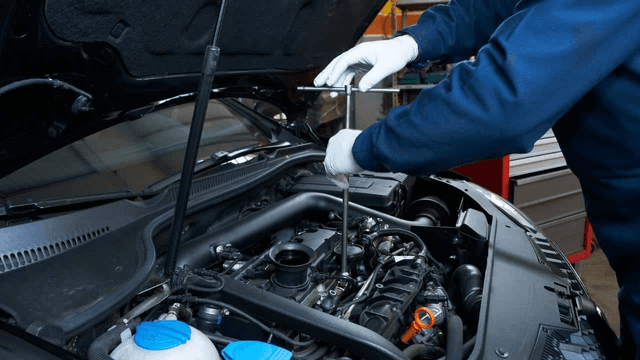
Solving the problem of sudden breakdowns starts with understanding the right type of maintenance. Many drivers confuse routine maintenance with preventive maintenance, which increases the risks. So what is the step that stops these faults before they happen?
What is the key difference between routine maintenance and preventive maintenance?
The most important differences between routine and preventive maintenance are:
- Routine maintenance follows a fixed schedule set by the manufacturer and includes recurring tasks aimed at keeping the car performing normally without major changes.
- Preventive maintenance focuses on stopping faults before they occur by inspecting sensitive parts that may wear out due to heat, friction or prolonged use.
- Routine maintenance is carried out at set distances, while preventive maintenance is performed based on the condition of the parts and inspection results, making it more flexible.
- Preventive maintenance reduces the chance of a sudden breakdown on the road, while routine maintenance keeps overall performance stable.
- Combining both types gives the driver the highest level of reliability and lowers long-term costs.
Why is routine maintenance the cornerstone of car care?
- Routine maintenance helps keep the engine clean of the deposits that build up over time, which preserves combustion efficiency.
- It prevents the car’s performance from deteriorating by replacing filters and fluids on time, which is directly reflected in fuel consumption.
- It detects small problems, such as a minor leak or an unusual noise, before they turn into major, costly faults.
- It helps preserve the car’s resale value, because a regular maintenance record shows the owner has taken good care of the car.
How does preventive maintenance help you avoid sudden breakdowns?
Preventive maintenance helps you avoid sudden breakdowns by:
- Preventive maintenance relies on inspecting parts such as the cooling system and brakes, which are under constant stress, allowing any weakness to be detected early.
- It includes assessing the condition of the battery, wiring, belts and pumps, parts that can fail suddenly without warning.
- It prevents sudden breakdowns by replacing parts before the end of their actual lifespan, especially in cars driven over long distances or in harsh conditions.
- It reduces the likelihood of engine overheating or gearbox failure, two of the most common faults that bring a car to a stop.
- It gives the driver peace of mind when traveling long distances, knowing the car has undergone a comprehensive inspection.
What are the main tasks included in routine maintenance?
The main routine maintenance tasks include:
- Changing the engine oil at the interval specified in the owner’s manual to ensure good lubrication and reduce friction.
- Replacing the oil filter and air filter to keep the engine clean and improve combustion efficiency.
- Checking fluid levels such as coolant, brake fluid and transmission oil to make sure there is no shortage affecting performance.
- Inspecting the tires for pressure and wear, because damaged tires affect stability and fuel consumption.
- Making sure the lighting system works properly to ensure good visibility when driving at night or in difficult conditions.
What inspections does preventive maintenance cover in detail?
The most important preventive maintenance inspections are:
- Checking the battery and measuring its voltage to make sure it can start the car in all conditions.
- Assessing the cooling system by inspecting the radiator, hoses and pump to make sure there are no leaks or blockages.
- Inspecting the suspension system for wear in rubber components or weak shock absorbers, because these parts affect stability and comfort.
- Monitoring the condition of belts such as the engine belt and the alternator belt, because they can snap suddenly and bring the car to a stop.
- Inspecting the exhaust system to make sure there is no rust or leak that affects engine performance or causes an annoying noise.
- Checking the car’s sensors, such as the temperature and oxygen sensors, because they play a key role in regulating engine performance.
How does routine maintenance affect a car’s lifespan?
Routine maintenance affects a car’s lifespan as follows:
- Routine maintenance reduces friction inside the engine by maintaining oil quality, which extends the life of internal parts.
- It prevents the car from overheating by monitoring the coolant level, which protects the cylinder head from damage.
- It maintains gearbox performance by changing its oil on time, preventing slipping or shuddering during acceleration.
- It reduces tire wear by keeping the pressure correctly adjusted, which extends their life and prevents sudden blowouts.
Why is preventive maintenance an economical choice in the long run?
The reasons that make preventive maintenance an economical choice include:
- It prevents major faults that require costly repairs, such as replacing the gearbox or repairing the engine.
- It reduces the likelihood of needing to tow or transport the car due to a sudden breakdown, which adds extra cost.
- It helps preserve the car’s value when selling, because preventive inspections show the owner’s commitment to looking after the car.
- It lowers parts replacement costs by detecting damage early, before it causes greater harm.
- It allows the driver to plan finances, because faults become less of a surprise.
What signs indicate the need for urgent preventive maintenance?
The most important signs that indicate the need for urgent preventive maintenance are:
- Hearing unusual noises such as clicking or squealing while driving.
- Noticing vibrations at high speeds, which indicates a problem with the tires or suspension system.
- Frequent engine overheating, which is a sign of a problem in the cooling system.
- Weak brake performance or a longer stopping distance, which calls for an immediate inspection.
- A warning light appearing on the instrument cluster, which usually indicates a problem that needs a quick check.
How does a driver determine the right time for routine maintenance?
A driver can determine the right time for maintenance as follows:
- Following the schedule in the owner’s manual, which specifies when to change the oil and filters.
- Watching the odometer to know when the next service is due, especially for cars used daily.
- Monitoring the car’s performance and noticing any change in pulling power or fuel consumption, because these signs indicate a need for maintenance.
- Carrying out a comprehensive inspection at every visit to the service center to make sure there are no hidden problems.
- Using modern apps that remind the driver of maintenance dates.
How can routine and preventive maintenance be combined for the best performance?
You can combine routine and preventive maintenance by:
- Carrying out routine maintenance on schedule without any delay to keep the car’s performance stable.
- Adding preventive inspections at every routine service, such as checking the battery, belts and sensors.
- Replacing parts that show signs of wear even if they have not reached the end of their expected lifespan, because waiting may cause bigger faults.
- Monitoring the car’s condition through electronic diagnostics that reveal fault codes stored in the car’s computer.
- Keeping a clear maintenance record that shows what has been repaired and what needs follow-up later.
- Choosing a trusted service center to ensure inspections are carried out accurately with modern equipment.

How to Make Your EV Battery Last as Long as Possible
Table Of Contents:
|
Discover how to avoid degradation of your electric car’s battery with practical steps that protect its daily range and extend its life. Charging and heat issues can quickly threaten its performance, so how do you protect it?
How does keeping the charge level between 20% and 80% help extend battery life?
Maintaining the battery’s charge level helps as follows:
- Keeping the battery within this range prevents chemical stress inside the cells, because lithium-ion batteries work most efficiently when they are in the middle of the charge range rather than at its maximum or minimum.
- Repeatedly charging to 100% raises the voltage inside the cells, which leads to faster degradation of the battery’s active materials and, as a result, reduced capacity over time.
- Fully discharging to 0% puts the battery under heavy stress and makes the cells operate in unstable conditions, reducing their ability to hold a charge in the future.
- The best daily practice is to charge the car to 80% and use it down to 20% before recharging, as this reduces the number of full cycles and extends the battery’s lifespan.
- You can charge to 100% only when planning long trips, because this is occasional rather than daily use and therefore does not significantly affect battery health.
Does fast charging actually damage the battery in the long run?
- Fast charging generates high heat inside the battery, and this heat is the biggest factor in accelerating the degradation of the chemical cells, especially when it is repeated daily.
- It is best to use fast charging only when necessary or while traveling, because relying on it constantly increases the battery’s annual capacity loss.
- Slow (AC) charging at home is much gentler on the battery, because it raises the temperature gradually and gives the battery management system enough time to regulate the heat.
- Relying on fast charging every day can noticeably shorten battery life compared with slow charging, especially in cars without an advanced battery cooling system.
- Some modern cars precondition the battery before fast charging by raising or lowering its temperature to the optimal level, but frequent use is still not recommended for maintaining battery health.
How do high or low temperatures affect battery performance?
Temperature can affect battery performance as follows:
- High heat accelerates the chemical reactions inside the battery, causing faster capacity loss. It also increases the internal resistance of the cells, so the car consumes more energy.
- Extreme cold reduces battery performance and its ability to deliver power, lowering the car’s real-world range and increasing the energy used to warm the battery.
- It is always advisable to park the car in the shade or in an enclosed garage, especially in summer, as this reduces the battery’s exposure to high temperatures while parked.
- Avoid leaving the car fully charged in the sun for long periods, because high heat combined with a full charge is a very harmful combination for the battery.
- Using preconditioning while charging helps bring the battery to the right temperature before driving, reducing energy consumption later and keeping the cells stable.
What is the best driving style to preserve the battery and slow its degradation?
To preserve the battery, follow the best driving practices, including:
- Sudden acceleration and high current draw quickly raise the battery’s temperature, which stresses the cells and shortens their lifespan.
- Calm driving at steady speeds keeps the electrical system stable and reduces energy consumption, which reduces the number of charging cycles per year.
- Using regenerative braking returns some energy to the battery, which reduces the need for frequent charging and indirectly extends battery life.
- Avoid repeated hard braking, as it consumes extra energy and reduces the effectiveness of regenerative braking, so energy is lost instead of recovered.
- Driving smoothly without sudden speed changes extends battery life, increases the car’s range and reduces the load on the energy management system.
How can you store an electric car correctly without harming the battery?
An electric car can be stored without harming the battery in several ways, including:
- Do not leave the battery completely empty or fully charged during long-term storage, as both conditions put significant stress on the cells.
- The ideal storage level is between 40% and 60%, as this range keeps the chemicals inside the battery stable.
- Avoid leaving the car in very hot or very cold environments for long periods, because extreme temperatures directly affect battery health.
- If the car will be parked for more than two weeks, it is best to activate storage mode if available, as this mode reduces energy consumption and regulates the battery temperature.
- Checking the cooling system regularly ensures the battery stays in a stable environment during storage, reducing the chance of unexpected degradation.
Do software updates affect battery health?
- Manufacturers release software updates to improve heat and charging management, and these updates are often based on real data from thousands of users.
- Ignoring updates may deprive you of important battery-efficiency improvements, such as better heat distribution or adjusted optimal charging limits.
- Some updates automatically adjust charging limits to protect the cells, such as preventing a full charge in hot weather or reducing the charging speed when temperatures rise.
- It is best to enable automatic updates if available, because these updates may increase driving range and reduce energy consumption.
- Software updates may improve long-term battery performance by refining the algorithms that manage charging and discharging.
Why should battery health (SOH) be monitored regularly?
It is essential to monitor battery health regularly for several reasons, most importantly:
- The SOH indicator shows the battery’s overall condition and degree of degradation, and it is an important indicator of whether the battery is working efficiently or needs an inspection.
- A battery with health above 90% is considered excellent, while one below 70% needs close monitoring and possibly technical intervention.
- Regular checks help you detect any problem early, such as abnormal heating or rapid capacity loss.
- A drop in SOH may indicate misuse, excessive heat, improper charging or a problem with the cooling system.
- Some cars provide battery health reports through the onboard system or app, making it easy to monitor performance continuously.
How does tire pressure affect battery consumption and the car’s range?
The tire pressure can affect the battery as follows:
- Underinflated tires increase rolling resistance, raising energy consumption and forcing the battery to work harder.
- Higher consumption means more charging cycles and therefore faster battery degradation over time.
- Checking tire pressure weekly maintains the car’s efficiency and noticeably reduces energy consumption.
- Sticking to the manufacturer’s recommended values is essential, because every car is designed to operate within a specific pressure range.
- In hot weather, you may need to raise the pressure slightly to maintain performance, because the air inside the tire expands with heat.
Does the battery type affect its lifespan and how it is used?
- LFP batteries tolerate full charging better than NMC batteries, because they operate at a lower voltage and are subject to less stress.
- LFP batteries offer a longer life that can reach 3000–5000 charge cycles, making them an excellent choice for daily use.
- They operate more efficiently in hot climates, as they are less sensitive to heat than other types.
- They are safer and less prone to catching fire, making them a preferred choice in economy and mid-range cars.
- Choosing a car with an LFP battery is an excellent option for anyone who wants longer battery life without having to follow strict charging restrictions.
What daily habits extend battery life and maintain its performance?
The most important habits to follow to extend battery life include:
- Avoid leaving the car fully charged overnight, because keeping a full charge for long periods raises the voltage inside the cells.
- Do not leave the car parked for long periods without running it, because the battery keeps consuming a small amount of energy even when the car is off.
- Use slow charging as much as possible, because it is gentler on the battery and reduces the heat generated by charging.
- Avoid aggressive driving or sudden acceleration, because it raises the battery’s temperature and increases energy consumption.
- Keep the battery temperature within the optimal range by parking in suitable places and using preconditioning when needed.
How to Know When Your Car Needs a New Air Filter
Table Of Contents:
|
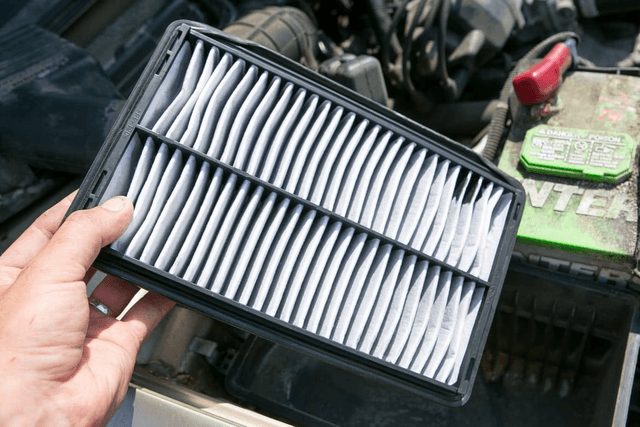
Watch for changes in how your car behaves when you press the accelerator, and for increased vibrations caused by a clogged air filter restricting airflow to the engine. Do you know the signs that reveal this problem?
What are the signs of a clogged air filter?
The most important signs of a clogged air filter include:
- Weak torque appears when the car loses its ability to accelerate smoothly and struggles to climb hills because less air is entering the engine.
- Increased fuel consumption occurs when the engine has to inject more fuel to compensate for the lack of air, leading to a noticeable rise in consumption.
- Engine vibration appears while idling or driving slowly, as the clogged filter disrupts the air-fuel mixture.
- A smell of unburned fuel indicates incomplete combustion inside the cylinders due to weak airflow.
How does a dirty air filter affect engine performance?
A dirty air filter affects engine performance through:
- Lower combustion efficiency occurs when the engine does not get the air it needs, leading to weaker power and reduced overall performance.
- Slower engine response appears when you press the accelerator, as the engine is late in producing the required power due to weak airflow.
- Higher engine temperature results from non-ideal combustion, which puts extra stress on internal parts and increases the likelihood of overheating while driving.
- A louder engine occurs when airflow becomes irregular, making the engine sound louder than usual.
- Reduced acceleration is clearly noticeable when trying to overtake or pull away quickly, due to the lack of air entering the engine.
Does a damaged air filter cause abnormal noise?
- A whistling sound appears when you press the accelerator, as air tries to pass through a clogged filter.
- A rough engine sound occurs when airflow becomes irregular, making the engine louder and harsher than usual.
- Engine misfiring appears during slow driving because not enough air reaches the combustion process.
How does the air filter affect fuel consumption?
The air filter’s effect on fuel consumption:
- Increased fuel delivery occurs when the electronic system tries to compensate for the lack of air, which can raise consumption by up to 20%.
- Lower engine efficiency appears when the engine works harder to produce the same power due to weak airflow.
- Poorer fuel economy shows when the car needs refueling more often than usual even though your driving style has not changed.
- Higher emissions result from incomplete fuel combustion due to the lack of air, which indirectly increases fuel consumption.
Does the air filter affect the car’s emissions?
Yes, the air filter can affect the car’s emissions as follows:
- Higher emissions result from incomplete fuel combustion due to the lack of air, increasing the amount of pollutants coming out of the exhaust.
- Failing an emissions test happens when pollutant levels rise due to a clogged filter, making the car non-compliant with environmental standards.
- Sensor malfunction occurs when a clogged filter leads to inaccurate readings from the oxygen sensor, which confuses the injection system and raises emissions.
- A stronger exhaust smell appears when combustion is incomplete, making the exhaust smell stronger than usual.
What is the ideal air filter replacement interval?
- Replacing the filter every 15,000 to 20,000 km is suitable for most cars to ensure a flow of clean air to the engine.
- Replacing the filter more often in dusty areas becomes necessary, because the filter fills with dirt more quickly.
- The replacement interval varies by filter type, as sports or high-performance filters need more regular maintenance and cleaning than conventional filters.
How do you check the air filter yourself?
You can check the air filter as follows:
- Opening the filter housing gives you easy access to it in the engine bay so you can check its condition directly.
- Checking the filter’s color helps you see how clogged it is, as a dark color or built-up dust indicates it needs replacing.
- A light test reveals the filter’s condition, as light not passing through it indicates that it is clogged.
- Smelling the filter helps detect oil or impurities that may affect airflow.
Can the air filter be cleaned instead of replaced?
Yes, in some cases, including:
- Some filters can be cleaned, such as sports filters designed to be reused after washing or cleaning.
- Cleaning the filter with compressed air helps remove accumulated dust, provided it is dried well before refitting.
- Replacing a damaged filter becomes necessary when it is torn or worn, making cleaning it pointless.
How does the air filter affect engine life?
The air filter affects engine life as follows:
- It protects the engine from dust by preventing dirt from entering, which would wear the cylinders and valves.
- It reduces strain on the engine, as proper airflow helps lighten the load on internal parts.
- It extends engine life, as a clean filter allows ideal combustion, which reduces breakdowns.
- It improves performance stability, as the engine receives a steady amount of air, making it run more smoothly.
What are the best practices for maintaining the air filter?
The most important ways to maintain the air filter include:
- Checking the filter regularly helps detect clogging early and maintain engine performance.
- Avoiding driving on dirt roads reduces dust build-up in the filter and extends its life.
- Using high-quality filters ensures better airflow to the engine and maintains combustion efficiency.
- Cleaning the filter housing regularly prevents dirt from building up around the filter and increases its effectiveness.
- Paying attention to the engine sound helps detect any change that may indicate a clogged filter before bigger problems occur.
Does the air filter affect the car’s acceleration?
Yes, the air filter may affect the car’s acceleration as follows:
- Weak acceleration appears when the engine does not get enough air, making the car slow to respond when you press the accelerator.
- Reduced ability to pull away quickly occurs due to lower airflow into the combustion chamber, which reduces the power available to the engine.
- Slow response when overtaking becomes noticeable when the filter is clogged, because the engine cannot produce the required power quickly.
What is the difference between a genuine and an aftermarket air filter?
The most important differences between a genuine and an aftermarket air filter include:
- A genuine filter provides steady airflow to the engine because it is made to precise standards that match the car’s intake system.
- An aftermarket filter may reduce engine performance because it is often made of lower-quality materials, leading to faster clogging and poorer combustion.
- A genuine filter’s service life is much longer than an aftermarket one’s, making it a better choice for maintaining engine efficiency.
- An aftermarket filter may let fine impurities into the engine, increasing the likelihood of internal parts wearing over time.
Can the air filter cause problems with the air sensor?
Yes, the air filter can cause some problems with the air sensor, including:
- A clogged filter disrupts airflow, causing the air sensor to give inaccurate readings to the electronic control unit.
- Dust build-up on the filter may let small particles into the air passage, affecting the sensor’s performance and making it send incorrect information to the engine.
- Weak airflow caused by a dirty filter makes the sensor think the amount of air is lower than it actually is, which leads to an imbalance in the air-fuel mixture.

How Low Tire Pressure Damages Car Performance
Table Of Contents:
|
Low tire pressure causes hidden problems that start with weak control and may end with costly breakdowns while driving. How does this simple neglect turn into a real danger that threatens your safety on the road?
What makes low tire pressure a direct danger while driving?
Low tire pressure can be dangerous while driving in some cases, including:
- An underinflated tire loses its ideal geometric shape, which reduces the actual contact area with the road and weakens the car’s stability in corners.
- This loss of grip makes the car more prone to skidding during sudden maneuvers or quick lane changes, especially on highways.
- Insufficient pressure increases vibrations, which affects passenger comfort, puts more stress on the suspension system, and affects the car’s stability on uneven roads.
- In extreme cases, low tire pressure can cause loss of control during sudden braking, especially if the front tires are the ones affected.
How does low tire pressure cause dangerous tire overheating?
- When a tire is underinflated, it flexes more as it rotates, which multiplies the friction between the tire and the road surface and raises its internal temperature.
- This rise in heat weakens the tire’s inner layers and increases the likelihood of invisible cracks that may later develop into a blowout.
- With continued driving over long distances, the heat may reach a dangerous level that leads to a tire blowout, especially on highways or in hot weather.
- Excess heat may spread to the rim, causing a slight bend that affects the car’s balance and increases the likelihood of air leaks.
How does low tire pressure affect fuel consumption?
- An underinflated tire increases rolling resistance, forcing the engine to work harder to maintain the same speed.
- This extra effort is reflected directly in fuel consumption, and the increase can reach 3–5% depending on the condition of the tires and the type of road.
- In the long run, this leads to higher running costs, especially for drivers who cover long distances every day.
- It also contributes to higher exhaust emissions, making the car less environmentally efficient and affecting engine performance.
How does low tire pressure cause uneven tire wear?
Low tire pressure can cause tire wear through the following:
- When pressure drops, the sides of the tire carry most of the load instead of its center, leading to rapid wear on the outer edges.
- This uneven wear causes annoying vibrations at medium and high speeds and affects the car’s balance and stability.
- This reduces the tire’s lifespan by up to 30%, forcing you to replace it before its normal time.
- It also increases the likelihood of surface cracks that may later develop into small punctures that are hard to detect without a specialist inspection.
What risks does low tire pressure pose to the braking system?
Low tire pressure can pose many risks to the braking system, the most common of which are:
- Poorly inflated tires reduce the car’s ability to stop quickly, as braking distance can increase by up to 17%.
- On wet roads, grip becomes weaker, increasing the likelihood of skidding when the brakes are applied suddenly.
- This reduces the effectiveness of safety systems such as ABS and ESP, because they depend on the tire’s grip on the road.
- In emergencies, the driver may lose control completely if more than one tire is underinflated.
How does low tire pressure affect steering and control?
Low tire pressure can affect the steering system as follows:
- It makes the steering wheel heavier and maneuvering more difficult, especially when driving in the city or while parking.
- The car may pull to one side due to unbalanced tires, forcing the driver to correct the course constantly.
- Insufficient pressure causes vibrations in the steering wheel, which tires the driver on long trips and affects steering precision.
- It also puts extra strain on the power steering pump and the suspension system, which speeds up the appearance of faults.
What signs indicate that a tire is underinflated?
Signs that a tire is low on air:
- The tire pressure monitoring system TPMS warning light appears on the instrument cluster.
- Noticeable vibrations in the car at high speeds or when pulling away from a stop.
- An unexplained rise in fuel consumption compared with previous days.
- Uneven tire wear or a faint rubbing noise while driving.
- A heavy steering wheel and difficulty turning, especially at low speeds.
- The car tending to drift right or left without driver input.
What are the common causes of low tire pressure?
The main causes of low tire pressure include:
- Temperature changes between summer and winter, as pressure drops automatically when the temperature falls.
- A small puncture or a sharp object in the tire, even if it is not visible to the eye.
- A damaged air valve, or one that was not sealed properly after the last fill.
- A bent rim caused by hitting potholes or curbs, which leads to a gradual air leak.
- Natural deterioration of the rubber over time, especially in old tires.
When does low tire pressure call for a specialist inspection?
There are several cases in which a specialist inspection is necessary, including:
- When the pressure keeps dropping even though the tire has been inflated correctly.
- When the TPMS light keeps appearing for no clear reason.
- When there are abnormal vibrations while driving or at high speeds.
- When you notice rapid or uneven tire wear within a short period.
- When a bent rim or damaged valve is suspected, as these cannot be fixed without a specialist inspection.
How can you prevent damage from low tire pressure?
There are many tips for preventing damage from low tire pressure, the most important of which are:
- Check tire pressure at least once a month, or before any long trip.
- Stick to the manufacturer’s recommended values, which are usually found on the driver’s door or in the owner’s manual.
- Avoid potholes and hitting curbs as much as possible, as they are the most common cause of rim damage.
- Replace the air valves when fitting new tires to prevent future leaks.
- Carry a portable air pump for emergencies, especially on long trips.
- Check the spare tire regularly, as it is often neglected despite its importance.

4WD vs Rear-Wheel vs Front-Wheel Drive: Key Differences
Table Of Contents:
|
A car’s behavior on the road changes with its drivetrain, which can leave the driver facing unexpected situations in terms of stability and traction. So how do you choose the system that prevents these problems before they happen?
What are drivetrain systems in cars?
- The drivetrain refers to the way engine power is transferred to the wheels, which determines how the car moves and how stable it is on the road. Systems vary between front-wheel drive, rear-wheel drive and four-wheel drive, and each offers a different driving experience in terms of control, acceleration and grip.
- Manufacturers choose the appropriate drivetrain according to the car’s segment and intended use: some systems suit the city, others suit highways, and others suit rough terrain.
- Understanding these systems helps the driver anticipate how the car will behave in different conditions, which increases safety and makes it easier to choose the right car for their needs.
How does front-wheel drive work in cars?
Front-wheel drive works as follows:
- In a front-wheel drive system, power is transferred from the engine to the front wheels, making them responsible for both traction and steering at the same time. This design reduces the number of mechanical components and improves fuel efficiency.
- Front-wheel drive provides good stability on wet or slippery roads, because the weight of the engine over the front wheels improves grip.
- However, combining traction and steering limits sporty performance, especially under hard acceleration or sharp cornering, when the front wheels may lose some of their grip.
What are the advantages of front-wheel drive?
Front-wheel drive offers several advantages, the most important of which are:
- It delivers low fuel consumption thanks to lighter weight and fewer components.
- It provides more interior space because the car does not need a driveshaft running to the rear.
- It offers good stability in everyday conditions, especially in cities and on paved roads.
- It suits drivers looking for a practical, economical car for daily use.
What are the disadvantages of front-wheel drive?
The main disadvantages of front-wheel drive include:
- It offers weaker sporty performance, especially at high speeds or in sharp corners.
- Front-wheel slip can occur under heavy throttle, because the front wheels handle both traction and steering.
- Unbalanced weight distribution can affect control in corners.
- It is not suitable for rough roads or aggressive driving.
How does rear-wheel drive work in cars?
Rear-wheel drive works as follows:
- In a rear-wheel drive system, power is sent to the rear wheels while the front wheels handle steering only, giving the car a better balance between traction and control.
- This separation of traction and steering makes the car better able to handle strong acceleration and gives it excellent stability at high speeds.
- This system relies on a driveshaft and a rear differential, which adds a little weight but gives the car greater maneuverability.
What are the advantages of rear-wheel drive?
The most important advantages of rear-wheel drive include:
- It delivers distinctive sporty performance and excellent stability at high speeds.
- It allows ideal weight distribution between the front and rear, improving control in corners.
- It provides better acceleration, especially in sports and luxury cars.
- It suits drivers who want an enjoyable drive or need extra towing power.
What are the disadvantages of rear-wheel drive?
The disadvantages of rear-wheel drive include:
- It has weaker grip on wet or snowy roads, because the rear wheels do not carry the engine’s weight.
- Fuel consumption is relatively higher due to the larger number of components.
- Maintenance costs are higher because of the driveshaft and rear differential.
- It may be less suitable for daily driving in congested cities.
How does four-wheel drive work?
Four-wheel drive works as follows:
- In a four-wheel drive system, power is sent to all four wheels, either permanently or when needed, giving the car tremendous grip in difficult conditions.
- This system relies on additional differentials and electronic systems that distribute power between the wheels as needed, helping the car overcome obstacles and rough roads.
- Four-wheel drive is used in SUVs and trucks, and it is the best choice for sandy, muddy and snowy roads.
What are the types of four-wheel drive?
The main types of four-wheel drive are:
- Permanent four-wheel drive: it works all the time and continuously distributes power between the front and rear, providing excellent stability on all types of roads.
- Part-time four-wheel drive: it works when the driver engages it, and is usually used on rough roads to save fuel.
- Intelligent AWD: an advanced electronic system that automatically distributes power according to road conditions, combining the efficiency of front-wheel drive with the capability of four-wheel drive.
- AWD is well suited to daily use because it balances performance and economy.
How do you choose the right drivetrain for your needs?
Choosing a drivetrain to match your needs depends on the following:
- If you drive in the city and want an economical car: front-wheel drive is the most suitable.
- If you want an enjoyable drive and stability at high speeds: rear-wheel drive offers the best experience.
- If you travel on difficult roads or in mountainous areas: four-wheel drive is the strongest and safest choice.
- The decision depends on your budget, the type of roads and your daily driving style, so it is important to understand the differences between the three systems before deciding.
- Fuel consumption should also be considered, because four-wheel drive consumes more, while front-wheel drive is the most economical.
What is the difference between AWD and 4WD?
The most important differences between AWD and 4WD are:
- AWD automatically distributes power between the wheels as needed, giving the car extra stability on normal roads and in moderate conditions without driver intervention. The system works through sensors that detect slip and instantly redistribute power.
- 4WD, on the other hand, is a stronger mechanical system, usually used on rough roads, and allows the driver to manually engage full four-wheel drive. This system provides high traction in sand, mud and mountains.
- The main difference between them is that AWD is suitable for daily driving, while 4WD is designed for difficult roads that require strong traction.
How does climate affect the choice of drivetrain?
Climate affects the choice of drivetrain as follows:
- Climate plays a key role in determining the most suitable drivetrain, as each system handles weather conditions differently. In areas that see rain or snow, AWD or four-wheel drive provides greater grip on slippery roads.
- In dry or hot areas, front-wheel or rear-wheel drive is sufficient, especially if the roads are paved and do not require extra traction.
- Understanding how climate affects the choice of drivetrain helps improve safety, reduce fuel consumption and ensure consistent performance in different conditions.
What is the best drivetrain for mountain roads?
The best drivetrain for mountain roads:
- Mountain roads demand high grip and strong traction, so four-wheel drive is considered the strongest option for these conditions. This system distributes power to all wheels, helping the car climb steadily and handle steep slopes.
- Some modern AWD systems also perform excellently on mountain roads, especially in mid-size crossover cars.
- Choosing the right system depends on the severity of the terrain and the type of car, but four-wheel drive remains the most reliable in mountains and rugged areas.
How does fuel consumption differ between front-wheel, rear-wheel and four-wheel drive?
- Front-wheel drive is the most fuel-efficient, because it uses fewer components and weighs less, reducing the energy needed to move the car.
- Rear-wheel drive consumes slightly more fuel because of the driveshaft and rear differential, but it offers better sporty performance and greater stability at high speeds.
- Four-wheel drive has the highest fuel consumption, because it runs additional components and needs more energy to turn all the wheels, especially in permanent systems.
- The driver should therefore choose the right system based on how they use the car and the running costs they can afford.
Which is better: front-wheel, rear-wheel or four-wheel drive?
- Front-wheel drive offers the best fuel economy and good stability on everyday roads, making it suitable for cities and normal use.
- Rear-wheel drive offers higher sporty performance and excellent stability at high speeds, making it an ideal choice for those who enjoy driving.
- Four-wheel drive offers the best ability to handle difficult and rough roads, and provides strong grip in harsh conditions such as rain and snow.
- Choosing the best system depends on the driver’s usage, the climate, the type of road and the budget, so no single system suits everyone; each has its own strengths and weaknesses.