

Table Of Contents:
|
Should you buy your car in cash or with financing? Paying cash usually means you pay the lowest total amount and own the car immediately with no monthly commitments, but it can drain your savings. Financing lets you get the car now and spread its price over installments, but what you pay in the end is usually higher because of the financing cost and fees. The right decision depends on your savings, the stability of your income, and the total cost of each option, not on the monthly installment alone. In this article we compare the two methods and explain how to calculate the cost, compare offers, and read the contract before signing.
When you buy in cash, you pay the full price of the car at the time of purchase and the financial relationship with the seller ends. When you buy with financing or installments, you pay part of the price as a down payment, the rest is split into monthly installments over a period set by the contract, and the financing cost is added to it.
Do not compare the cash price with the monthly installment; compare the total amount that will come out of your pocket with each option.
There is no single best option for everyone; cash saves you the financing cost, and installments give you flexibility. Calculate the total amount in both cases, keep an emergency reserve for yourself, and read the whole contract before signing. Once you have set your budget, browse the cars available at Saleh Cars and choose what suits your needs.

Table Of Contents:
|
To buy a new car with confidence and without surprises, set your full budget rather than just the car's price, choose the body type and trim that suit your daily use, take a test drive yourself, ask for a written quotation that clearly states the warranty and everything the price includes, and inspect the car carefully before taking delivery. In this guide we explain these steps in order, from planning to the first service, keeping in mind the needs of drivers in the Kingdom, from summer heat to long highway trips between cities.
A realistic budget does not stop at the car's showroom price; it includes everything you will pay to own and run it during the first years.
Start from how you will use the car, not from how it looks; the right car for an employee commuting within the city differs from the right car for a large family that often travels between cities.
A single model usually comes in several trims that differ in equipment and engine, and the gap between them can be significant in both price and everyday use.
Even a new car can pick up a scratch or a minor defect during shipping or storage, so set aside enough time to inspect it before signing for delivery.
Buying a new car is a big decision, and good planning saves you a lot of money and regret. Set your full budget, choose what suits your use, and test, read, and inspect before you sign. When you are ready, browse the cars available at Saleh Cars and compare models and trims at your own pace.
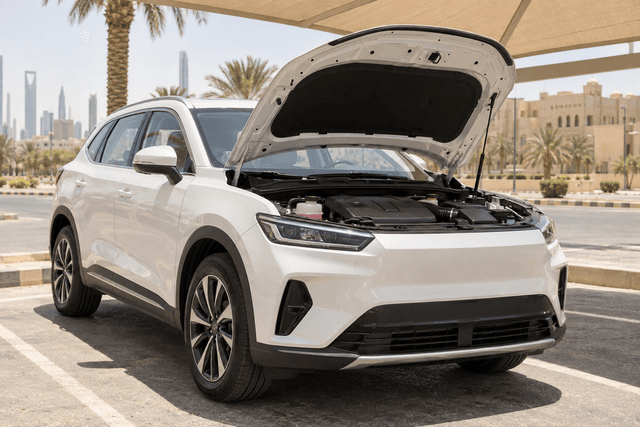
Table Of Contents:
|
Summer car care means focusing on the systems that heat strains the most: check the cooling system and radiator coolant, the battery, tire pressure, AC performance, and engine oil before the peak of the heat, and protect the paint and cabin from direct sun. The Kingdom's long summer, with its high temperatures, dust, and desert trips, doubles the strain on the car, and most summer breakdowns can be avoided with a simple, regular review. In this guide, we show you what to check and how to act if a problem appears on the road.
Air and asphalt temperatures rise sharply in the summer months, so the car's systems work in harsher conditions than usual, and the strain on them increases with traffic, hours of AC use, and long trips.
The cooling system is the first line of defence in summer, and neglecting it is one of the most common causes of costly breakdowns in this season.
Many people believe that batteries only struggle in winter, but summer heat speeds up their internal wear, and the weakness then appears suddenly at the first hard start.
In summer, the AC is not a luxury, and any weakness in it shows quickly as temperatures rise; servicing it early before the season is easier than repairing it at the peak.
The tire is the only part that touches the hot asphalt directly, so it needs closer monitoring in summer, especially before a trip.
Strong sunlight affects the car's appearance and value over time, and simple daily protection is better than repairs later.
If you notice the temperature gauge rising or steam coming from the front of the car, acting calmly and quickly reduces the damage to the engine.
Summer in Saudi Arabia is a real test for every car, but most of its breakdowns start with small signs that can be noticed early. Review the cooling system, battery, tires, and AC before the peak of the heat, protect the paint and cabin from the sun, and never ignore the temperature gauge or any strange noise; with these simple habits, the summer months pass without surprises on the road.
Table Of Contents:
|
To prepare your car for the periodic technical inspection, check it yourself a few days before the appointment: make sure all lights and signals work, the tires and brakes are in good condition, the dashboard is free of warning lights, and no visible smoke comes from the exhaust, then fix any minor issue before you go. This quick review saves you the time of a re-inspection and reveals faults that affect your safety before they affect the result. In this guide, we present a practical, ordered checklist that you can apply at home or with a technician you trust.
The periodic technical inspection is carried out by accredited centres to confirm that the car is roadworthy and safe for its driver and other road users, and it usually focuses on the basic safety systems, emissions, and vehicle identity, not on appearance or extras. The checklist in this article is a general self-check and not an official list of inspection criteria; the approved requirements of the competent authority are always the reference.
Lights are among the most common and easiest faults to fix, and you can check them in minutes with the help of someone standing outside the car, or by parking in front of a wall in a shaded spot and watching the reflection.
Tires and brakes are what connect your car to the road, so they usually receive a careful check, and any fault in them directly affects stopping distance and the car's stability.
Usually, yes; warning lights that stay on indicate a fault in a system, and thick smoke or a strong smell from the exhaust points to improper combustion whose effect may show up in the emissions test.
After the main systems, there are small details that many people overlook, even though they relate to safety and are easy to check.
After fixing the issues, what remains is organising the inspection day itself so that everything goes smoothly without unnecessary waiting.
Failing the inspection is not the end of the matter; it is a clear list of what needs fixing, and dealing with it calmly saves you time.
Preparing your car for the periodic inspection does not require great expertise, just an organised review well before the appointment. Check the lights, tires, brakes, and dashboard warning lights, fix the minor issues yourself, and leave the deeper faults to a qualified technician; this way you pass the inspection more easily and, more importantly, you drive a safe car all year round.

Table Of Contents:
|
If your car stalls right after starting, shuts off when you stop at traffic lights or in traffic, or the engine dies when you press the brake to stop, the cause is usually that the engine cannot hold a steady idle speed. The most common causes are a dirty throttle body, a leak in the vacuum hoses, a faulty mass air flow sensor, or low fuel pressure, and in cars with an automatic transmission the cause may lie in the transmission itself. This article focuses on these specific situations; for the engine shutting off suddenly while driving, see our article on the causes of sudden car engine shutdown.
A car that stalls after starting, at idle, or when braking does not have a single fault; it is a sign whose meaning changes with its timing. Pin down exactly when the problem happens, start with simple checks such as the throttle body, the hoses, and the air filter, and do not put off the repair, because an engine dying in traffic affects your safety before it affects your car.
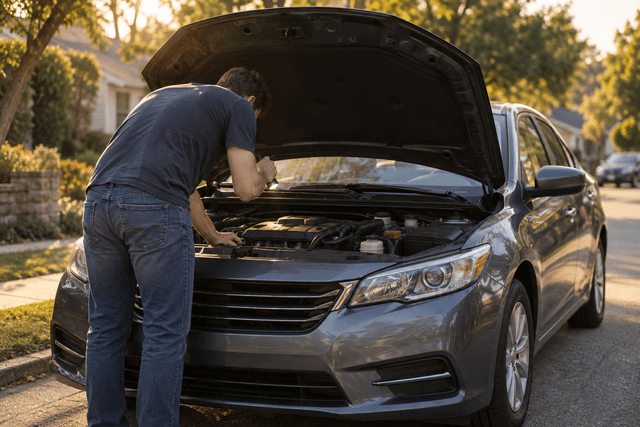
Table Of Contents:
|
If your car cranks but does not start, meaning you hear the starter turning the engine normally but the engine does not fire, the problem is usually that the engine is missing one of three things: fuel, spark, or permission to start from the car’s computer. The most common causes are a weak battery that turns the engine slowly, a fuel pump that is not pumping, worn spark plugs or ignition coils, a faulty crankshaft sensor, or an immobilizer that does not recognise the key. In this article, we put the causes in order and explain simple checks that help you pinpoint the problem before you go to the workshop.
When your car cranks but does not start, begin with the simplest things: fuel, battery, and key, then move on to spark and sensors. Paying close attention to the cranking speed, the sounds, and the dashboard lights saves you a lot of time, and if you cannot find the cause, a scan at a trusted workshop costs less than replacing parts by guesswork.
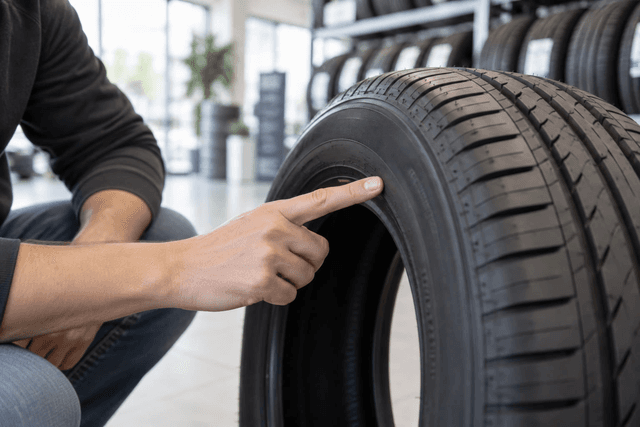
Table Of Contents:
|
You read a tire size from the number printed on its sidewall, such as 265/65R17: the first number is the tire width in millimetres, the second is the ratio of the sidewall height to the width, the letter R means the tire has a radial construction, and the last number is the rim diameter in inches. The tire manufacture date is found in the last four digits of the DOT code; the first two digits are the week number and the last two are the year of manufacture, so the code 2324 means the twenty-third week of 2024. In this article we explain the rest of the numbers and symbols printed on tires, and how to use them when replacing tires or buying a car.
All the information you need is printed on the tire sidewall, but the original size recommended by the car manufacturer has other sources too:
Right after the size you will usually find a number and a letter such as 112T, and these are among the most important things to match when replacing tires:
Reading the numbers printed on the sidewall takes no more than a minute, but it protects you from buying the wrong size or a tire that has been sitting in storage for a long time. Remember three rules: the size must match the car manufacturer’s recommendation, the last four digits of the DOT code tell you the tire’s age, and the correct pressure is written on the driver’s door, not on the sidewall.
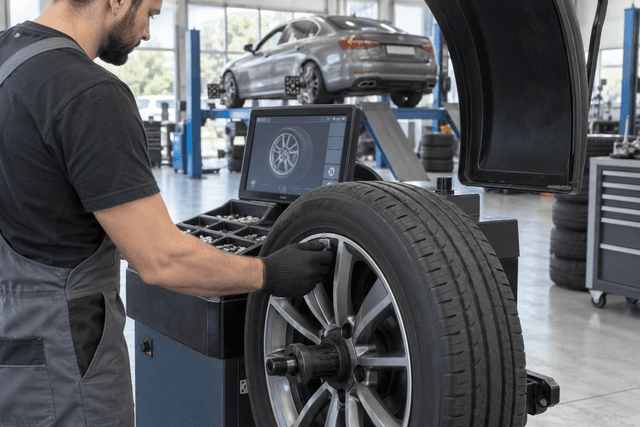
Table Of Contents:
|
Wheel balancing means distributing weight evenly around the tire and rim so they spin without vibration, while wheel alignment, known in tire shops as alignment or arm alignment, means adjusting the direction and tilt of the wheels relative to the car body and the road so the car tracks straight and the tires wear evenly. In short: balancing fixes shaking and vibration, and alignment fixes the car pulling to one side, an off-centre steering wheel, and uneven wear. In this article we explain each service separately, the signs that you need it, and when you need both together.
Many drivers confuse the two services because they are usually done at the same tire shop, but each has a different purpose, machine, and set of symptoms:
Alignment is not about the tire itself but about how the wheels are mounted on the suspension and steering systems. The car is placed on a special rig with sensors or cameras that measure the angles and compare them with the manufacturer’s specifications, and the technician then adjusts them. The most important angles are:
Balancing and alignment are simple services, but they protect your tires and suspension and make driving more comfortable and safer. Remember the easy rule: vibration usually means balancing, and pulling or wear on one edge usually means alignment. If the symptoms continue after both services, do not ignore them; ask for a full check of the tires, rims, suspension, and brakes.
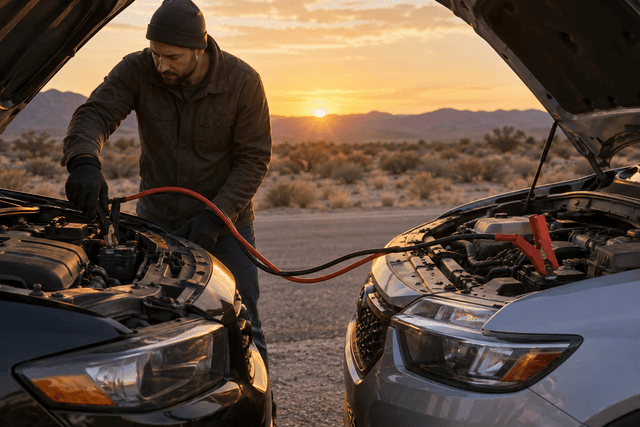
Table Of Contents:
|
To jump-start a car you need jumper cables and another car with a healthy battery, or a charged portable jump starter. Connect the red cable to the positive terminal on both batteries, and the black cable to the negative terminal on the helper car and to an unpainted metal point on the engine of the car that will not start, then run the helper car for a few minutes before starting yours. The correct order is what protects you from sparks and protects the electrical systems of both cars from damage. If your battery keeps giving you this problem, first read about the symptoms of car battery failure and how to extend its life; here, we explain how to jump-start a car in practice, step by step.
A portable jump starter saves you from waiting for another car, and it is useful on desert trips and roads between cities, but it has steps that must be followed.
Jump-starting a car is simple if you stick to the correct order and safety precautions: red on positive first, the last black clamp on a metal point away from the battery, and disconnecting in reverse order. Always keep jumper cables or a portable jump starter in your car, and treat repeatedly needing a jump-start as a signal to check the battery and charging system before it leaves you stranded somewhere remote.